 Ukraine · 17. Jahrhundert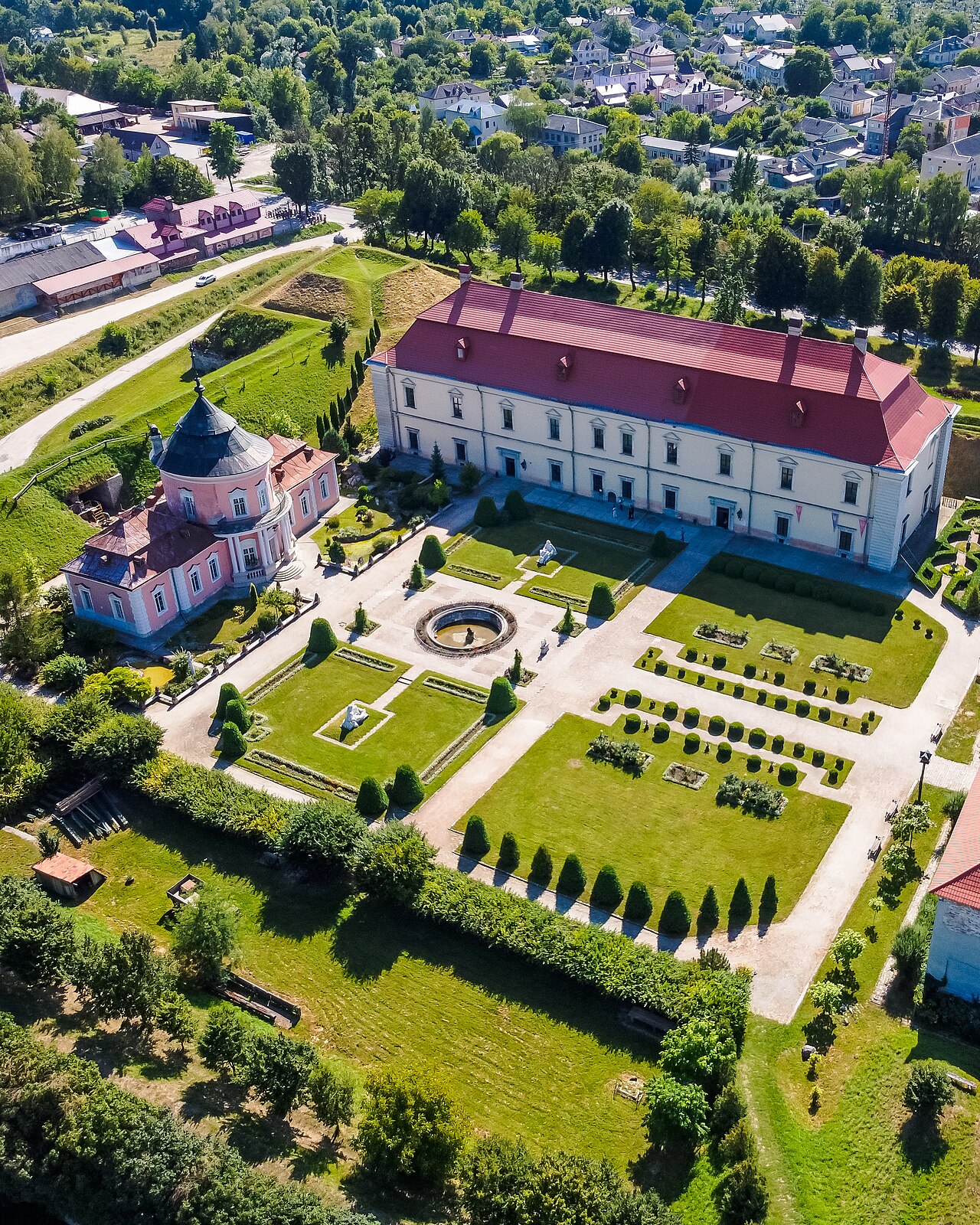
Die Burg Solotschiw (ukrainisch: Золочівський замок, Solotschiwskyj samok) war eine Residenz der Adelsfamilie Sobieski auf einem Hügel am Zusammenfluss zweier kleiner Flüsse im südöstlichen Teil von Solotschiw (polnisch: Złoczów), Galizien (heute Teil des ukrainischen Gebiets Lwiw).
Die rechteckige Festung wurde 1634–36 von Jakub Sobieski unter Einsatz der Arbeitskraft versklavter Krimtataren erbaut. Die Sobieski-Burg umfasste solide Mauern im damals aktuellen niederländischen Stil, mit vier fünfeckigen Türmen an jeder Ecke, sowie den sogenannten „Großen Palast“. Der Chinesische Palast, eine kleine, malvenfarbene Rotunde, flankiert von eingeschossigen Flügeln, wurde später im Jahrhundert als Geschenk König Johann III. Sobieskis an seine in Frankreich geborene Ehefrau, Königin Marie, hinzugefügt.
1672 wurde die Burg nach einer sechstägigen Belagerung durch die Türken unter Kapudan Pascha eingenommen. Drei Jahre später überstand sie eine erneute Belagerung durch das osmanische Heer. Nach dem Tod Jakub Ludwik Sobieskis 1737 ging die Burg an die Fürstenfamilie Radziwiłł über und danach (1801) an Graf Łukasz Komarnicki-Pawlikowicz (aus dem Haus Sas), dessen Erben sie 1834 an die österreichische Krone verkauften.
Im 19. Jahrhundert wurde die Burg als Krankenhaus und Kaserne genutzt. 1872 wurde sie zu einem Gefängnis umfunktioniert und blieb auch nach dem Septemberfeldzug in dieser Nutzung. Auf dem Gelände der Burg befindet sich eine Kapelle zum Gedenken an die Opfer des NKWD.
Tausende Menschen jüdischen Glaubens wurden aus Solotschiw verschleppt und von den Deutschen zu Beginn des Unternehmens Barbarossa getötet.
Maschinell übersetzt aus „Zolochiv Castle“ in der englischsprachigen Wikipedia, CC BY-SA 4.0.
Festung Solotschiw steht weltweit auf Platz 1.078 von 9.079 im Burgen-Bekanntheitsranking des Atlas und Nr. 17 der 195 in der Ukraine verzeichneten. Die Gründung fällt auf 1634: früher als bei 28% der datierten Objekte des Atlas, eines von 721 Atlas-Objekten, die im 17. Jahrhundert gegründet wurden. Die Wikipedia-Artikel dazu wurden in den letzten 60 Tagen 4.216-mal geöffnet, mehr als 84% des Atlas. Im Umkreis von 25 km stehen 3 weitere Objekte des Atlas. Der nächste Ausflugs-Guide ist Iwano-Frankiwsk, 99 km entfernt. Sehen Sie in der Burgen-Statistik, wie die Ukraine abschneidet.
Auf der interaktiven Burgenkarte ansehen →