 Croatia · 13th century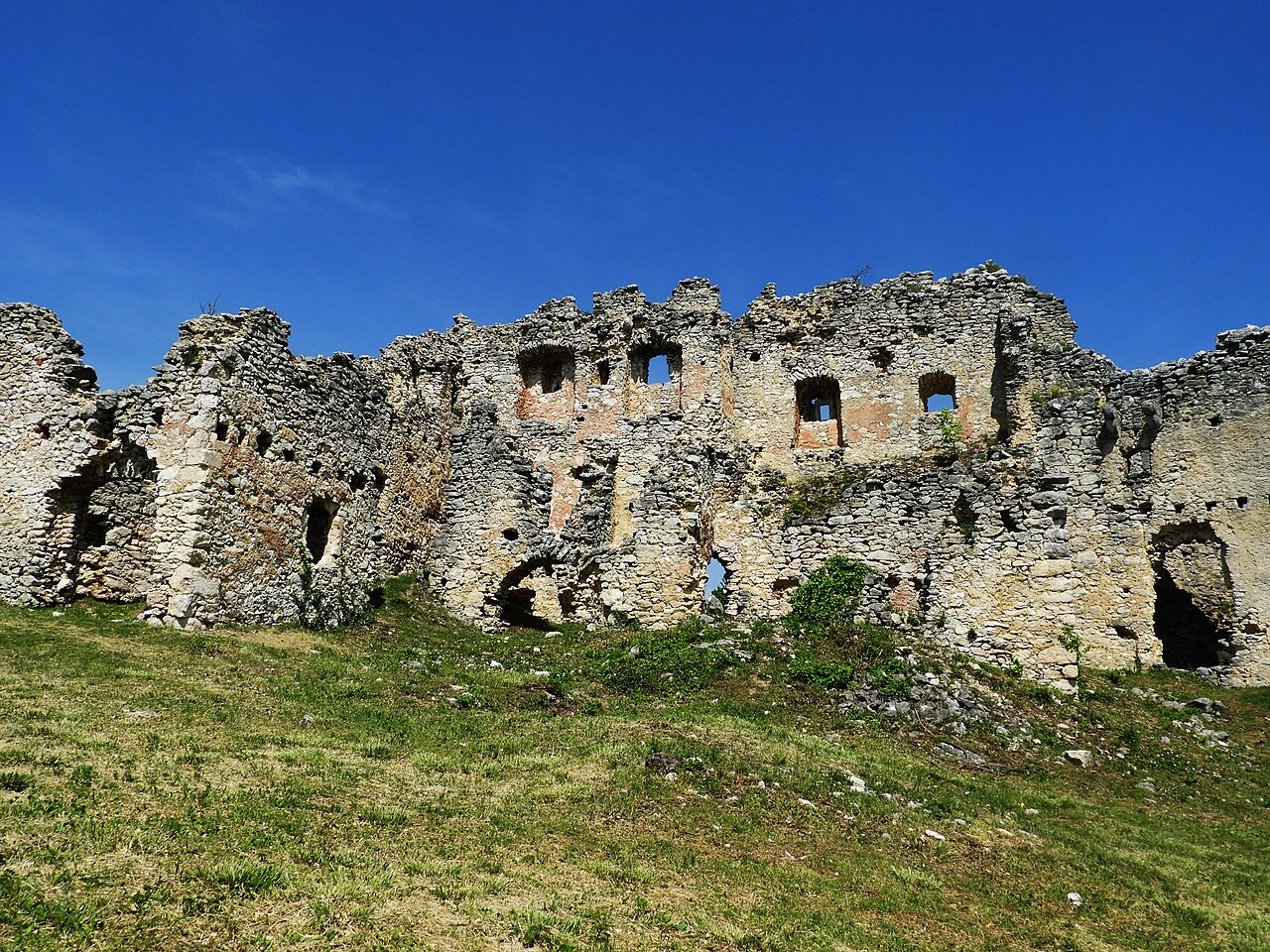
Milengrad (Hungarian: Milen vára) is a mediaeval castle 2 kilometres (1.2 mi) northwest from Zajezda village, in Budinščina municipality, Krapina-Zagorje County, Croatia.
Milengrad is a compound name – Milen being a proper noun and grad meaning castle or fortress in Croatian. Thus Milengrad is Milen's castle. In mediaeval documents it was called Mel(l)en, Milen and Miluan. Its Hungarian equivalents, Milen vára or Mileni vár, derive from the Croatian form and have the same meaning.
Milengrad was built during the reign of Hungarian–Croatian King Béla IV after the Mongol invasion of 1241–1242. Around 1303, King Charles Robert donated the fortress to the Cseszneky family in compensation for their loss of Ipolyvisk Castle. The counts Cseszneky sold it soon to Ban Mikcs, who, in 1309, ceded the lordship to the Herkffy family. In 1536, by the marriage between Katalin Herkffy and Miklós Patačić, Milengrad became the two families' shared property. In the 17th century, the Herkffy family became extinct, and the Patačićs followed in the 19th century. Due to the constant warfare with the Ottomans, and probably as well to an earthquake, by the late 17th century several walls of Milengrad fell down, and in 1683 it was already mentioned as arx diruta, a castle in ruins.
Text adapted from “Milengrad” on Wikipedia, CC BY-SA 4.0.
Milengrad ranks #6,914 of 9,079 worldwide in the atlas's castle fame ranking, and #65 of the 79 mapped in Croatia. Founded c. 1300, it is older than 61% of the atlas's dated landmarks — one of 1080 atlas entries founded in the 13th century. 6 more atlas landmarks stand within 25 km. The nearest day-trip guide is Zagreb, 42 km away. See how Croatia compares in the castle statistics.
View on the interactive castle map →