Ruine
Castillo de Gauzón
🇪🇸 Spanien · 9. Jahrhundert
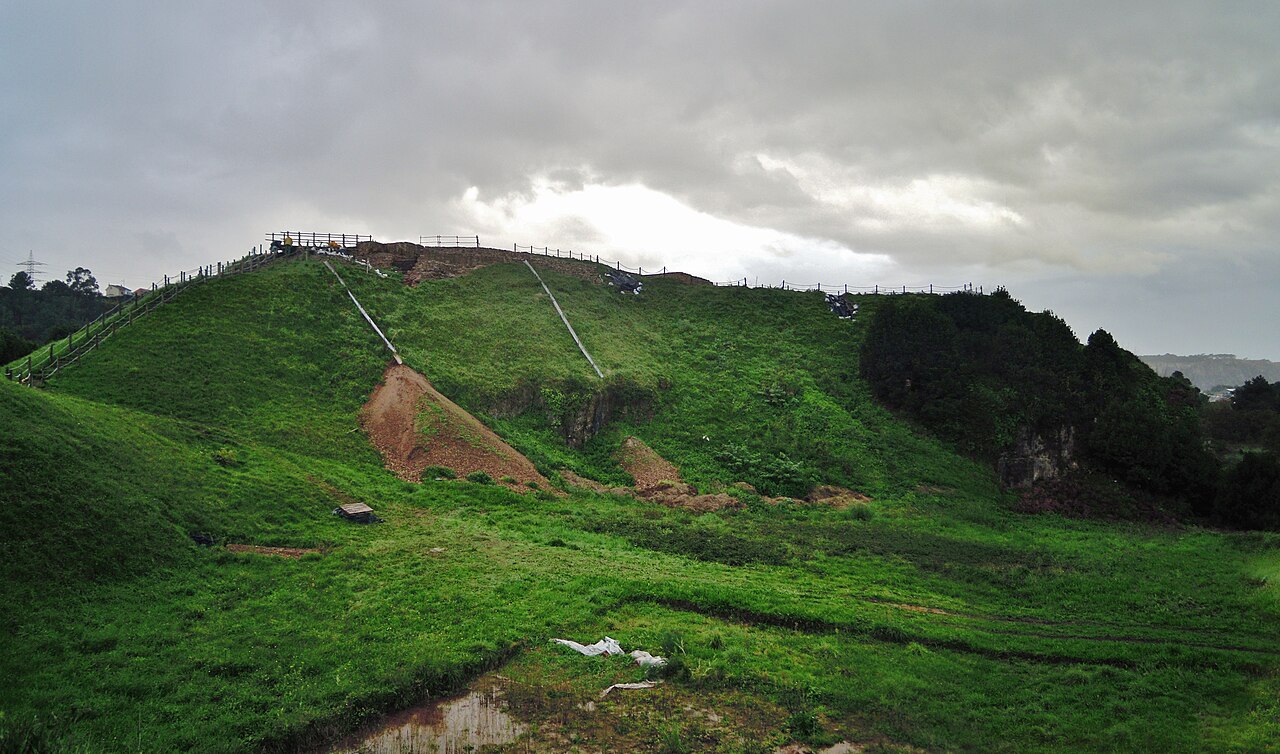
Die Burg Gauzón liegt in Raíces Nuevo, in der Gemeinde Castrillón, Fürstentum Asturien. Derzeit laufen Arbeiten zum teilweisen Wiederaufbau der Burg, da sie teilweise verfallen war. Grund dafür war unter anderem, dass viele der zu ihrem Bau verwendeten Steine im Laufe der Jahrhunderte von der örtlichen Bevölkerung entnommen wurden, um Häuser und andere Bauten zu errichten. Die Burg ist für die Geschichte Asturiens von besonderer Bedeutung, da hier das Siegeskreuz mit Edelsteinen besetzt wurde.
Die Burg Gauzón, die bedeutendste Festung der Könige von Asturien, liegt auf einem natürlichen Vorsprung namens Peñón de Raíces. Von ihrer Lage aus beherrschte sie die Mündung des Avilés und die Küstenlinie. In früheren Zeiten reichte das Meer bis an den Fuß des Vorsprungs. Bei Ebbe wurde ein großes Gebiet aus Dünen und Sümpfen sichtbar. 1972–77 leitete Vicente José González García die ersten Ausgrabungen. Seit 2007 läuft ein archäologisches Grabungsprojekt.
2013 fand das Grabungsteam eine Münze westgotischen Ursprungs, ein im Norden Spaniens ungewöhnlicher Fund. Es handelt sich um einen von König Recared I. geprägten goldenen Triens, der in einer Schicht aus dem 9. Jahrhundert gefunden wurde. Da ein Loch hineingebohrt wurde, wird angenommen, dass er als Anhänger getragen wurde. Er ist derzeit im Archäologischen Museum von Asturien ausgestellt.
Die spätantike Siedlung (6./7.–8. Jahrhundert n. Chr.): die Ursprünge des Königreichs Asturien Archäologische Ausgrabungen haben Gebäude einer Siedlung freigelegt, die bis ins 6./7. Jahrhundert n. Chr. zurückreicht. Diese bestehen aus Mauern aus Stein und Kalkmörtel sowie verschiedenen Spuren der Besiedlung. Diese Befunde weisen auf eine Enklave hin, die mit einer mächtigen sozialen Schicht verbunden war, welche bei der Bildung des Königreichs Asturien eine wesentliche Rolle spielen sollte.
Maschinell übersetzt aus „Castillo de Gauzón“ in der englischsprachigen Wikipedia, CC BY-SA 4.0.
Castillo de Gauzón steht weltweit auf Platz 4.430 von 8.134 im Burgen-Bekanntheitsranking des Atlas und Nr. 192 der 602 in Spanien verzeichneten. Die Gründung fällt auf um 850 — früher als bei 94% der datierten Objekte des Atlas — eines von 65 Atlas-Objekten, die im 9. Jahrhundert gegründet wurden. Die Wikipedia-Artikel dazu wurden in den letzten 60 Tagen 1.254-mal geöffnet — mehr als 55% des Atlas. Sehen Sie in der Burgen-Statistik, wie Spanien abschneidet.
Auf der interaktiven Burgenkarte ansehen →Häufige Fragen
Wo liegt Castillo de Gauzón?
Castillo de Gauzón liegt in Spanien, bei 43.57544°, -5.94392°.
Wann wurde Castillo de Gauzón erbaut?
Der Atlas nennt als Gründungsjahr um 850. Frühere Anlagen mögen an dieser Stelle bestanden haben; dies ist das älteste dokumentierte Gründungsjahr.
Wie bekannt ist Castillo de Gauzón?
Im Bekanntheitsranking dieses Atlas: Platz 4.430 von 8.134 weltweit, Platz 192 in Spanien. Bekanntheit misst hier, in wie vielen Wikipedia-Sprachversionen ein Denkmal steht und wie oft diese gelesen werden.
Welche Burg liegt in der Nähe von Castillo de Gauzón?
Castle of Tudela (Olloniego), rund 32 km entfernt.
Weitere Burgen in Spanien
- Castelo de Vilalba Spanien
- Castle of Torrelobatón Spanien · 15. Jahrhundert
- Castle of Monteagudo Spanien
- Burg Arnedo Spanien · 9. Jahrhundert
Weitere Ruinen
- Castillo de Peña Spanien
- Ushiberd Armenien
- Rasuwa Fort Nepal · 19. Jahrhundert
- Korets Castle Ukraine · 14. Jahrhundert