Forteresse
Puerta de Alarcones
🇪🇸 Espagne
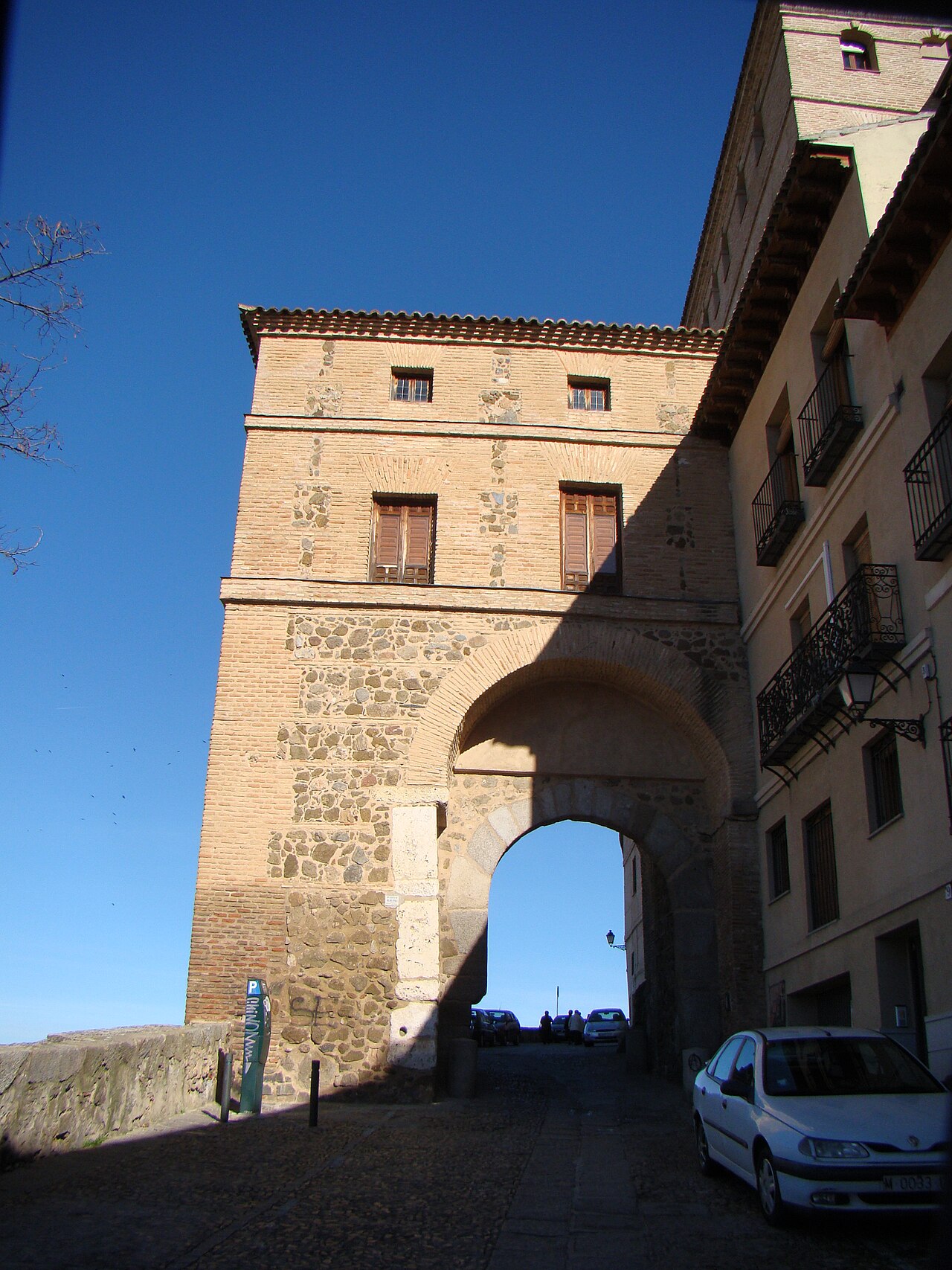
La porte des Alarcones (en espagnol : Puerta de Alarcones) est une porte de ville située dans la ville de Tolède, en Castille-La Manche, en Espagne. Elle est également connue sous le nom de Puerta de Moaguía, tel qu'il est cité dans des documents mozarabes de 1216, et de Puerta Alta de la Herrería, parce qu'elle se trouve à l'extrémité de la rue où étaient situés les ateliers consacrés au travail du fer.
La porte constituait l'accès obligé à la place de Zocodover avant l'ouverture de la montée de la calle de las Armas, par le belvédère, si bien que, avec la Puerta del Sol, elle était ornée chaque fois que Tolède recevait la visite de quelque personnage important, en hommage rendu au passage de son cortège.
C'est l'une des plus anciennes de la ville, appartenant à l'enceinte fortifiée wisigothique. La Puerta de Alarcones devait posséder également un couronnement militaire, qui fut détruit lors de sa construction.
Un escalier a récemment été découvert dans sa tourelle de droite, dont la porte existait antérieurement, plus en profondeur que cette tourelle, et qui donnait peut-être accès aux murailles.
Traduction automatique de « Puerta de Alarcones » de la Wikipédia en anglais, CC BY-SA 4.0.
Puerta de Alarcones occupe la 7 261e place sur 8 134 au classement de renommée de cet atlas et le 459e rang des 602 que l’atlas recense en Espagne. Dans un rayon de 25 km se dressent 12 autres monuments de l’atlas. Le guide d’excursion le plus proche est Tolède, à 1 km. Voyez comment l’Espagne se compare dans les statistiques des châteaux.
Voir sur la carte interactive des châteaux →Questions fréquentes
Où se trouve Puerta de Alarcones ?
Puerta de Alarcones se trouve en Espagne, aux coordonnées 39.86113°, -4.02323°.
Quelle est la renommée de Puerta de Alarcones ?
Au classement de renommée de cet atlas : 7 261e place sur 8 134 dans le monde, 459e place en Espagne. La renommée combine le nombre d’éditions de Wikipédia qui couvrent un monument et leur lectorat.
Quel château est le plus proche de Puerta de Alarcones ?
La Puerta del Sol (Tolède), à environ 1 km.
D’autres châteaux en Espagne
- Castro of Burela Espagne
- Walls and gates of Plasencia Espagne · XIIe siècle
- Muralles de Girona Espagne
- Puerta de los Doce Cantos Espagne
D’autres forteresses
- Puerta de Santa Ana, Melilla Espagne
- Redoute Lion Suède · XVIIe siècle
- Watchtower in Rujm Al-Malfouf Jordanie · VIIe siècle av. J.-C.
- Fort Dunree Irlande · XIXe siècle