Forteresse
Suvarnadurg Fort
🇮🇳 Inde
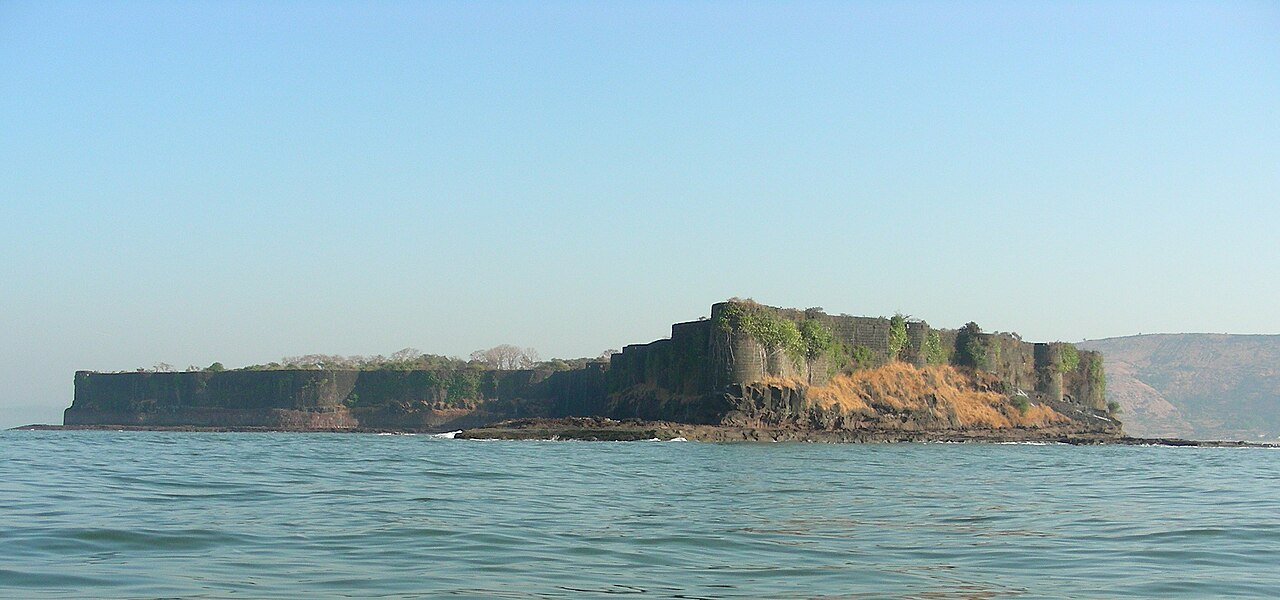
Suvarnadurg (traduction : « fort d'or », aussi orthographié Severndroog en anglais, orthographe parfois également utilisée pour Savandurga) est un fort situé sur une petite île de la mer d'Arabie, près de Harnai, dans le Konkan, dans l'État indien du Maharashtra, sur la côte ouest de l'Inde, entre Mumbai et Goa.
En marathi, Suvanadurga signifie littéralement « fort d'or », étant considéré comme la fierté ou le « joyau de la couronne dorée des Marathes ». Construit par la marine des Adilshahis à des fins défensives, le fort disposait également d'un chantier naval. Son objectif premier était de contrer les attaques ennemies, principalement celles des puissances coloniales européennes ainsi que des chefs locaux.
Autrefois, le fort terrestre et le fort maritime étaient reliés par un tunnel, aujourd'hui hors d'usage. L'accès actuel au fort maritime se fait uniquement en bateau, depuis le port de Harnai, sur le promontoire. C'est un monument protégé.
Le fort comprend également un autre petit fort terrestre, appelé Kanakadurga, à la base du promontoire du port de Harnai, sur la côte. La construction du fort est attribuée à Chhatrapati Shivaji Maharaj, fondateur de l'Empire marathe, en 1660. Par la suite, Chhatrapati Shivaji Maharaj, d'autres Peshwas et les Angre le fortifièrent davantage à des fins défensives.
Traduction automatique de « Suvarnadurg » de la Wikipédia en anglais, CC BY-SA 4.0.
Suvarnadurg Fort occupe la 2 882e place sur 8 134 au classement de renommée de cet atlas et le 109e rang des 179 que l’atlas recense en Inde. Ses articles Wikipédia ont été ouverts 1 653 fois en 60 jours, plus que 62 % de l’atlas. Voyez comment l’Inde se compare dans les statistiques des châteaux.
Voir sur la carte interactive des châteaux →Questions fréquentes
Où se trouve Suvarnadurg Fort ?
Suvarnadurg Fort se trouve en Inde, aux coordonnées 17.81687°, 73.08445°.
Est-ce que Suvarnadurg Fort est un site du patrimoine mondial de l’UNESCO ?
Oui : selon Wikidata, le site fait partie d’un bien du patrimoine mondial de l’UNESCO.
Quelle est la renommée de Suvarnadurg Fort ?
Au classement de renommée de cet atlas : 2 882e place sur 8 134 dans le monde, 109e place en Inde. La renommée combine le nombre d’éditions de Wikipédia qui couvrent un monument et leur lectorat.
Quel château est le plus proche de Suvarnadurg Fort ?
Le fort de Pratapgad, à environ 54 km.
D’autres châteaux en Inde
- Salimgarh Fort Inde · XVIe siècle
- Sikandar Bagh Inde · IIe siècle
- Fort de Bangalore Inde · XVIe siècle
- Palais de Padmanabhapuram Inde
D’autres forteresses
- Fort Vredenburgh Ghana · XVIIe siècle
- Fort Orange (Ghana) Ghana · XVIIe siècle
- Umarkot Pakistan · XIe siècle
- Fort Tigné Malte · XVIIIe siècle