 Morocco · 19th century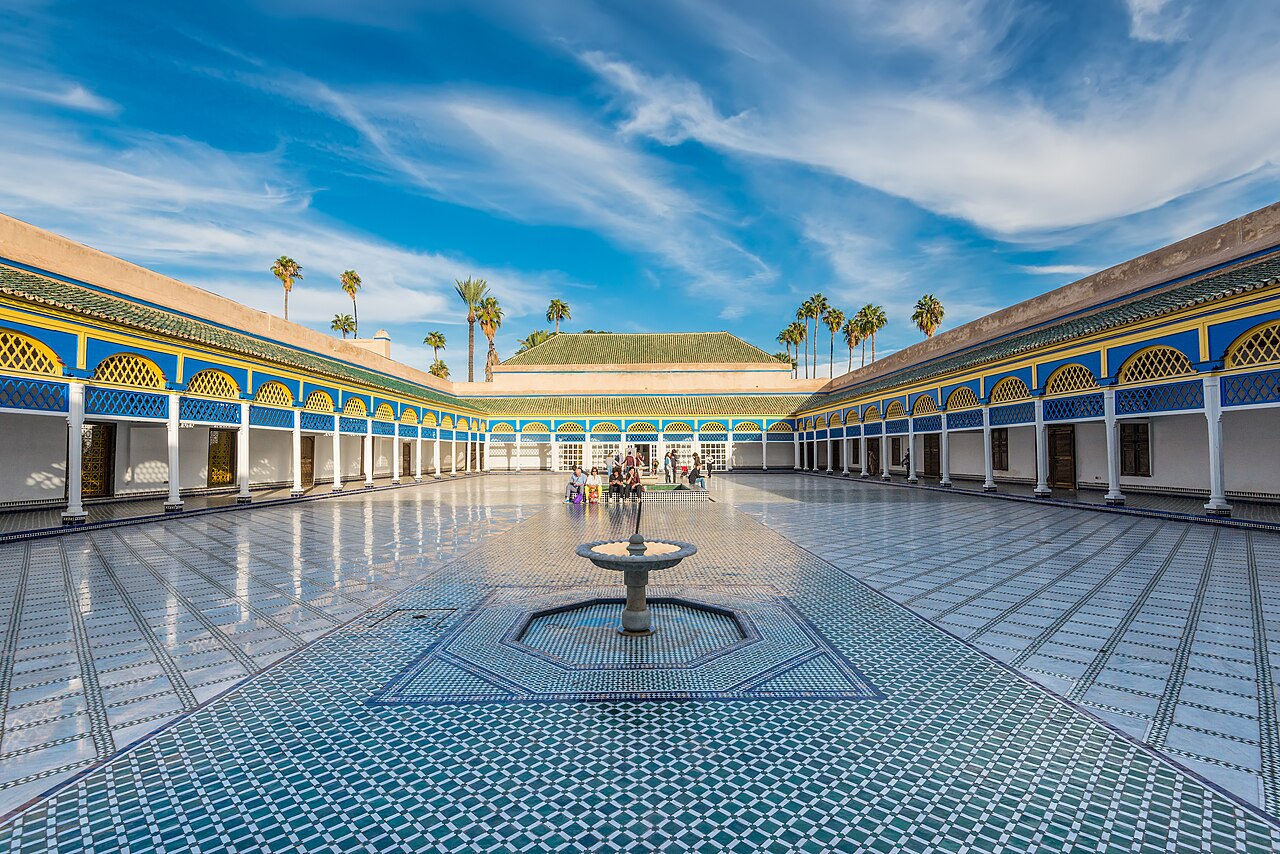
The Bahia Palace (Arabic: قصر الباهية) is a mid to late 19th-century palace in Marrakesh, Morocco. The palace was first begun by Si Musa, grand vizier under the Alawi sultan Muhammad ibn Abd al-Rahman, in the 1860s. It was expanded by his son Si Ba Ahmed ibn Musa, grand vizier of Sultan Moulay Abdelaziz, between 1894 and 1900. Today it is a well-known historic monument and tourist attraction in the city.
The palace has an irregular layout comprising around 150 rooms organized around multiple internal courtyards and riad gardens. It is most notable for its decoration, particularly its painted wood ceilings, along with sculpted stucco and zellij tilework. The original grounds of the palace also encompassed a wider area with gardens, parks, stables, a mosque, and other annexes.
Text adapted from “Bahia Palace” on Wikipedia, CC BY-SA 4.0.
Bahia Palace ranks #673 of 9,079 worldwide in the atlas's castle fame ranking, and #3 of the 42 mapped in Morocco. Founded 1866, it is older than 6% of the atlas's dated landmarks — one of 717 atlas entries founded in the 19th century. Its Wikipedia articles were opened 8,977 times in the last 60 days, more than 93% of the atlas. 3 more atlas landmarks stand within 25 km. See how Morocco compares in the castle statistics.
View on the interactive castle map →