 Switzerland · 12th century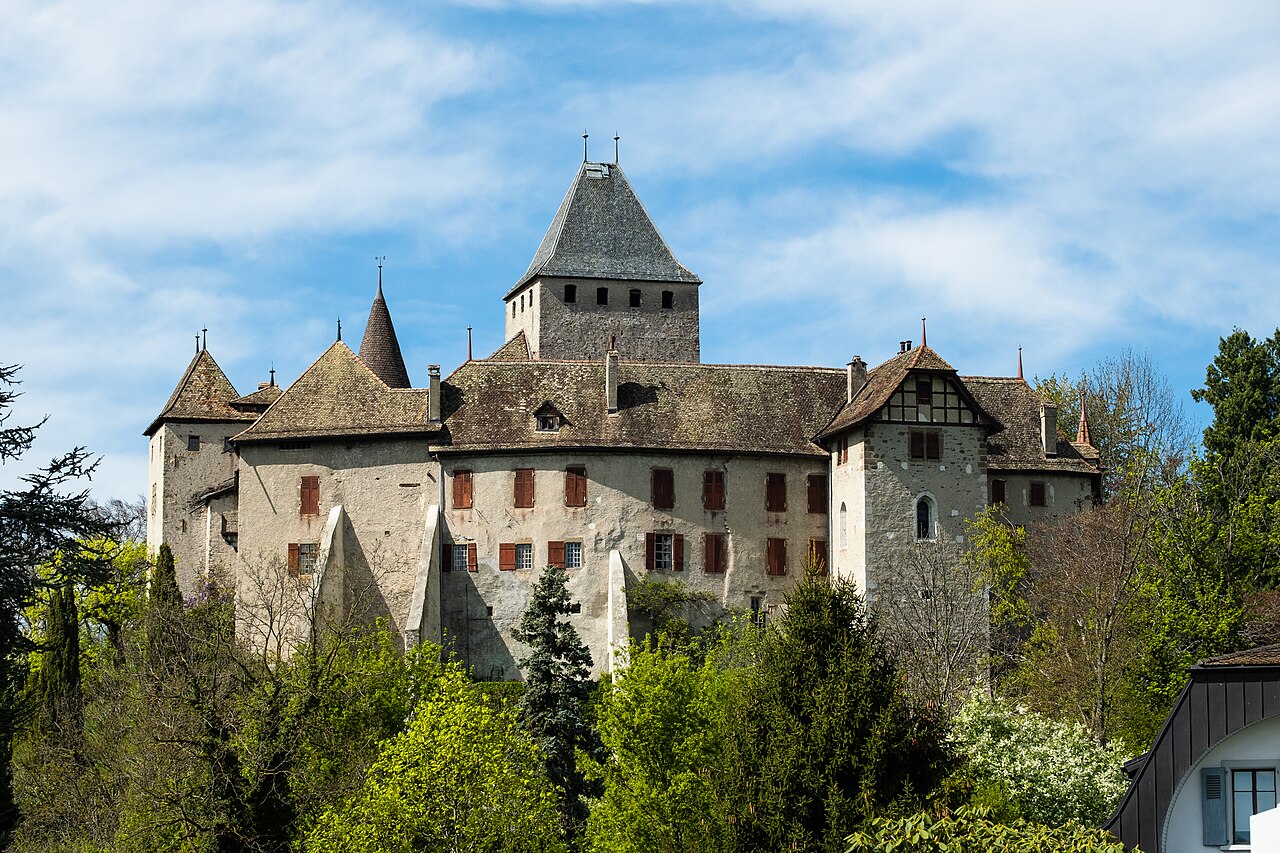
Blonay Castle is a castle in the municipality of Blonay of the Canton of Vaud in Switzerland. It is a Swiss heritage site of national significance.
The castle was built in 1175, by William II of Blonay (died 1197), a ministerialis in Savoy, on the site of a fortified structure that dated from 1095. It has served as the Blonay family seat since that time, aside from a brief interruption in the 18th century.
The oldest remaining portion of the structure is the sturdy, square castle keep, which has been strengthened, and seen a row of buildings attached to create another courtyard. Only two of four towers remain, around an irregular rectangular plan. There is a forecourt with a Renaissance-style loggia, from 1677 on the western edge, and a chapel dating from the 15th century, with stained glass windows from 1577. Residential quarters built between the 18th and 20th centuries have undergone renovations and alterations. By the 19th century, a moat had been filled in.
Gustave Courbet created a painting of the castle in about 1875, during the artist's self-imposed exile from France, living in neighboring La Tour-de-Peilz.
Text adapted from “Blonay Castle” on Wikipedia, CC BY-SA 4.0.
Blonay Castle ranks #6,981 of 9,079 worldwide in the atlas's castle fame ranking, and #121 of the 213 mapped in Switzerland. Founded 1175, it is older than 79% of the atlas's dated landmarks — one of 756 atlas entries founded in the 12th century. 14 more atlas landmarks stand within 25 km. The nearest day-trip guide is Lausanne, 21 km away. See how Switzerland compares in the castle statistics.
View on the interactive castle map →