 Slovakia · 16th century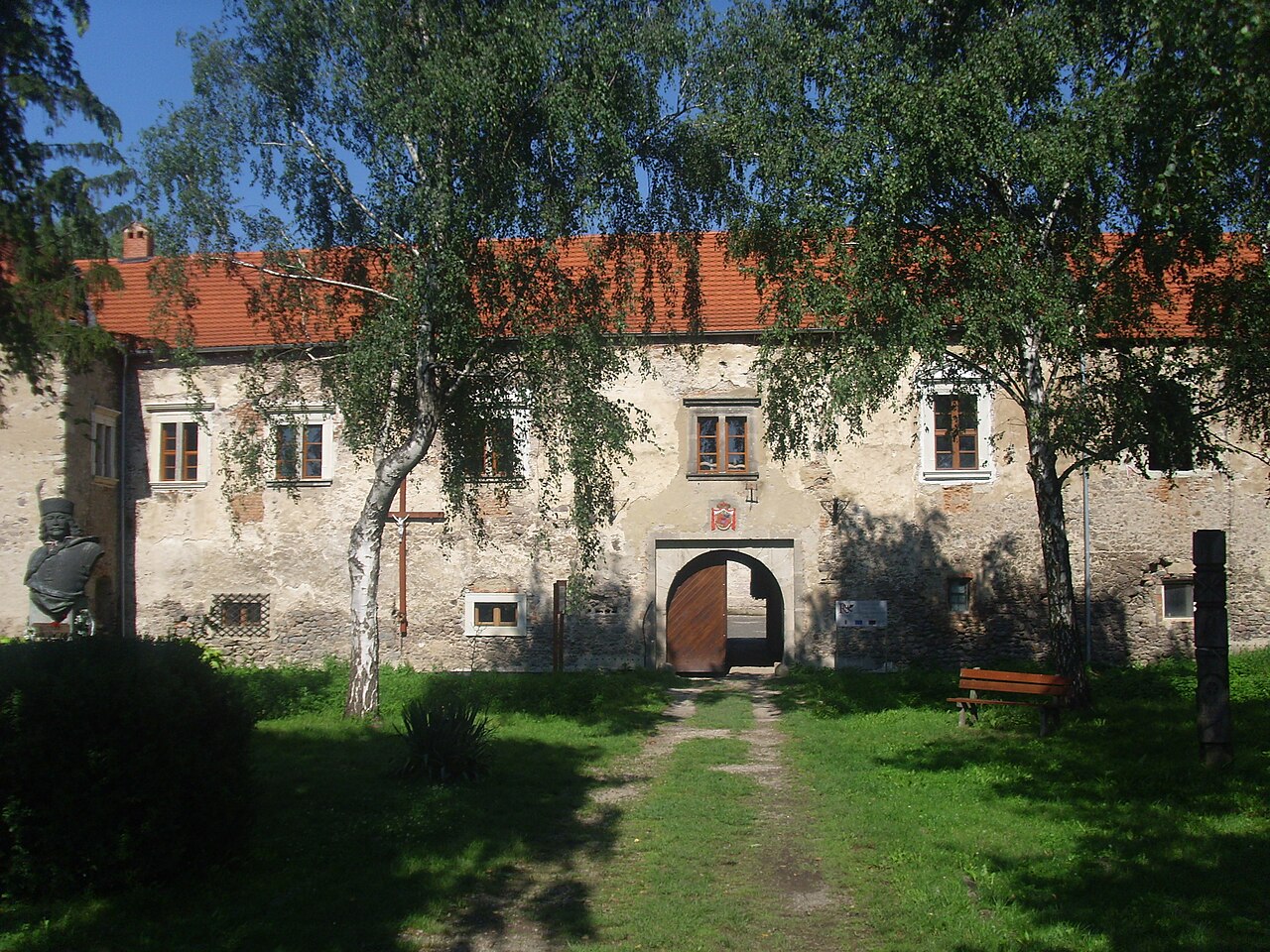
Borša is a defunct castle, on whose site a chateau was built in the 16th century. The castle is located in the village of Borša in the Košice Region of Slovakia. Originally it was probably a moated castle. The castle is most known as the birthplace of the Hungarian national hero and Kuruc leader Francis II Rákóczi.
The predecessor of the current castle was a medieval moated castle, protected by moats fed by water from the Bodrog River. The stone castle likely dates back to the early 13th century. While its exact appearance is unknown, it is known to have belonged to families such as the Perínyi and Polónyi families.
In 1570, a Renaissance castle was built, incorporating some of the castle's remains. Miklós Zeleméry Kamarás, from the area of what would later become Hajdú County, is credited as the builder. In 1602, the castle passed into the hands of the Lórantffy family, and in 1616 it became the property of the Rákóczi family. Originally L-shaped, the castle now has an irregular U-shaped floor plan due to later additions of outbuildings. A bastion, possibly a remnant of the medieval keep, stood at the junction of the two older wings. Renaissance vaults still adorn the castle today. The old moats are partially preserved on the exterior, and the castle park, with the exception of a small section, is now built over by village houses.
The castle is primarily known as the birthplace of the Hungarian national hero and Kuruc leader Francis II Rákóczi, who was born here on March 27, 1676. However, he only stayed at the castle for a short time and grew up mainly at Munkács Castle (now Palanok Castle in Ukraine). A bust by J. Mayer, created in 1907, commemorates his birth. During the Hungarian Revolutions, the castle suffered damage several times and was subsequently renovated on a smaller scale in the 18th and again in the 20th centuries. With the Treaty of Trianon in 1920, the town of Borsi (since then Borša), including the castle, became part of Czechoslovakia.
Following the First Vienna Award, Czechoslovakia was forced to cede the territory to Horthy's Hungary. During World War II, the castle housed a small museum. After the war and the restoration of Czechoslovakia in 1945, the castle was used partly as a warehouse and partly as a primary school. However, due to a lack of renovation, it gradually fell into disrepair.
Text adapted from “Borša Castle” on Wikipedia, CC BY-SA 4.0.
Borša Castle ranks #4,801 of 9,035 worldwide in the atlas's castle fame ranking, and #67 of the 135 mapped in Slovakia. Founded c. 1550, it is older than 36% of the atlas's dated landmarks, one of 886 atlas entries founded in the 16th century. 6 more atlas landmarks stand within 25 km. The nearest day-trip guide is Nyíregyháza, 49 km away. See how Slovakia compares in the castle statistics.
View on the interactive castle map →