Castle
Burg Karlstein
 Austria · 12th century
- Founded
- 1112
- Style
- Gothic architecture
- Heritage status
- Listed objects in Austria
- Location
- Karlstein an der Thaya
- Coordinates
- 48.8817°, 15.4016°
- Open data
- Wikidata Q1439221
- Links
- Wikimedia Commons
Description
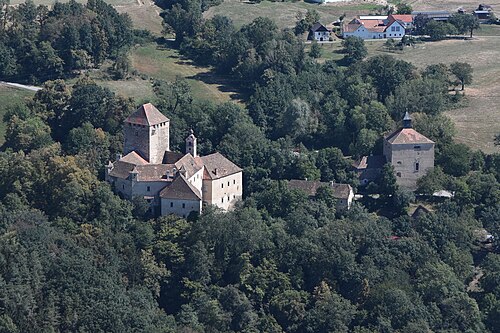
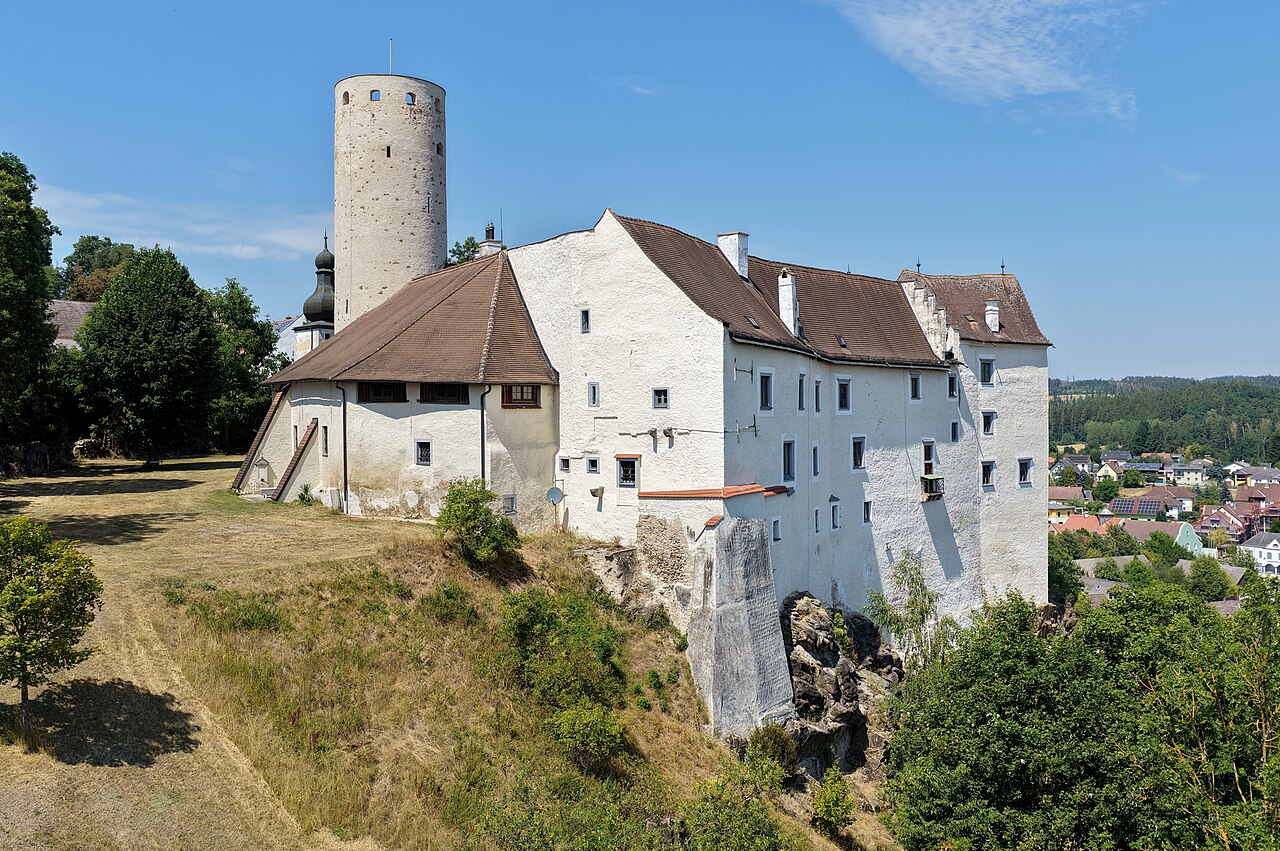
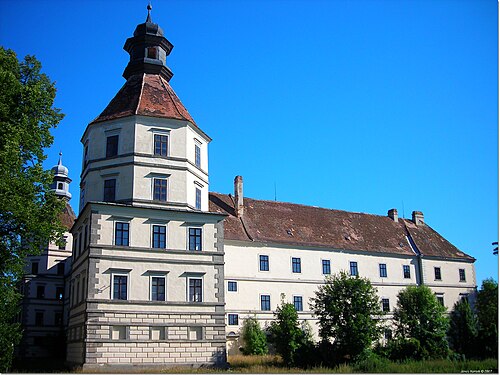
Burg Karlstein is a castle in Lower Austria, Austria.
Karlstein was first mentioned as Chadelstain in 1112. As a Feudal castle (castle held in fief) of various noble families, Karlstein belonged to the respective sovereign. Under the Puchheim family, it briefly became a centre of the Reformation from 1576 onward.
Since it was not continuously owned by one family for extended periods, it was continually rebuilt and expanded. Virtually no elements of the original castle remain. The preserved castle chapel dates back to the 16th century.
Its use has also changed over the centuries. Originally a noble residence, it was also a clock factory from 1880 onwards. The castle also served as a prison for a time. It is believed that the peasant leader Georg Schrembser was imprisoned there until his execution in 1597.
Although the castle, owned by Count van der Straten, was uninhabitable in 1914, an internment camp was established here during the First World War. The Montenegrin General Staff was also imprisoned here.
Before and after the end of the Hungarian Soviet Republic on August 1, 1919, its most important representatives fled to German-Austrian territory, where they were granted asylum and initially housed in the Drosendorf internment camp. Subsequently, Béla Kun and Jenő Landler, a total of approximately 40 people, were brought together at Karlstein Castle, where they faced possible extradition by the Hungarian successor state.
Later the castle was also used as a youth hostel and in the 1960s as a guesthouse.
Text adapted from “Burg Karlstein” on Wikipedia, CC BY-SA 4.0.
In the rankings
Burg Karlstein ranks #8,471 of 9,902 worldwide in the atlas's castle fame ranking, and #289 of the 316 mapped in Austria. Founded 1112, it is older than 85% of the atlas's dated landmarks, one of 810 atlas entries founded in the 12th century. 10 more atlas landmarks stand within 25 km. The nearest day-trip guide is St. Pölten, 77 km away. See how Austria compares in the castle statistics.
Castles nearby
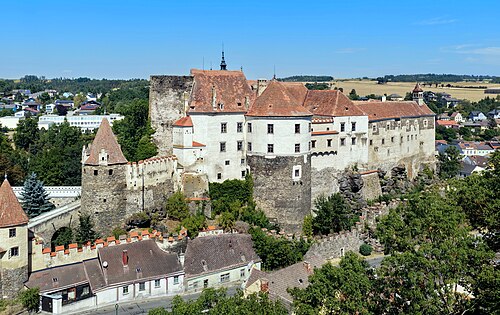
- Burg Raabs an der Thaya8 km · Austria
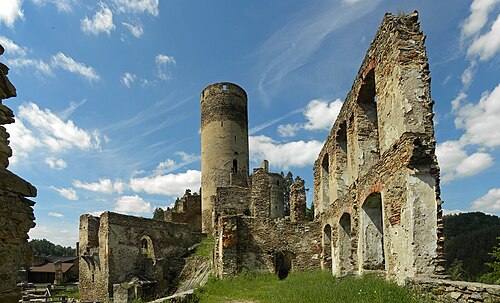
- Burgruine Kollmitz12 km · Austria
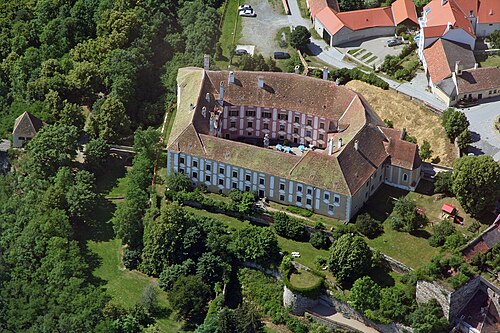
- Schloss Drosendorf16 km · Austria
- Schloss Schwarzenau18 km · Austria
More castles in Austria
- Burg NeubergAustria
- Burg ObervoitsbergAustria
- Feistritz CastleAustria
- FrauenburgAustria · 13th century