 Italy · 13th century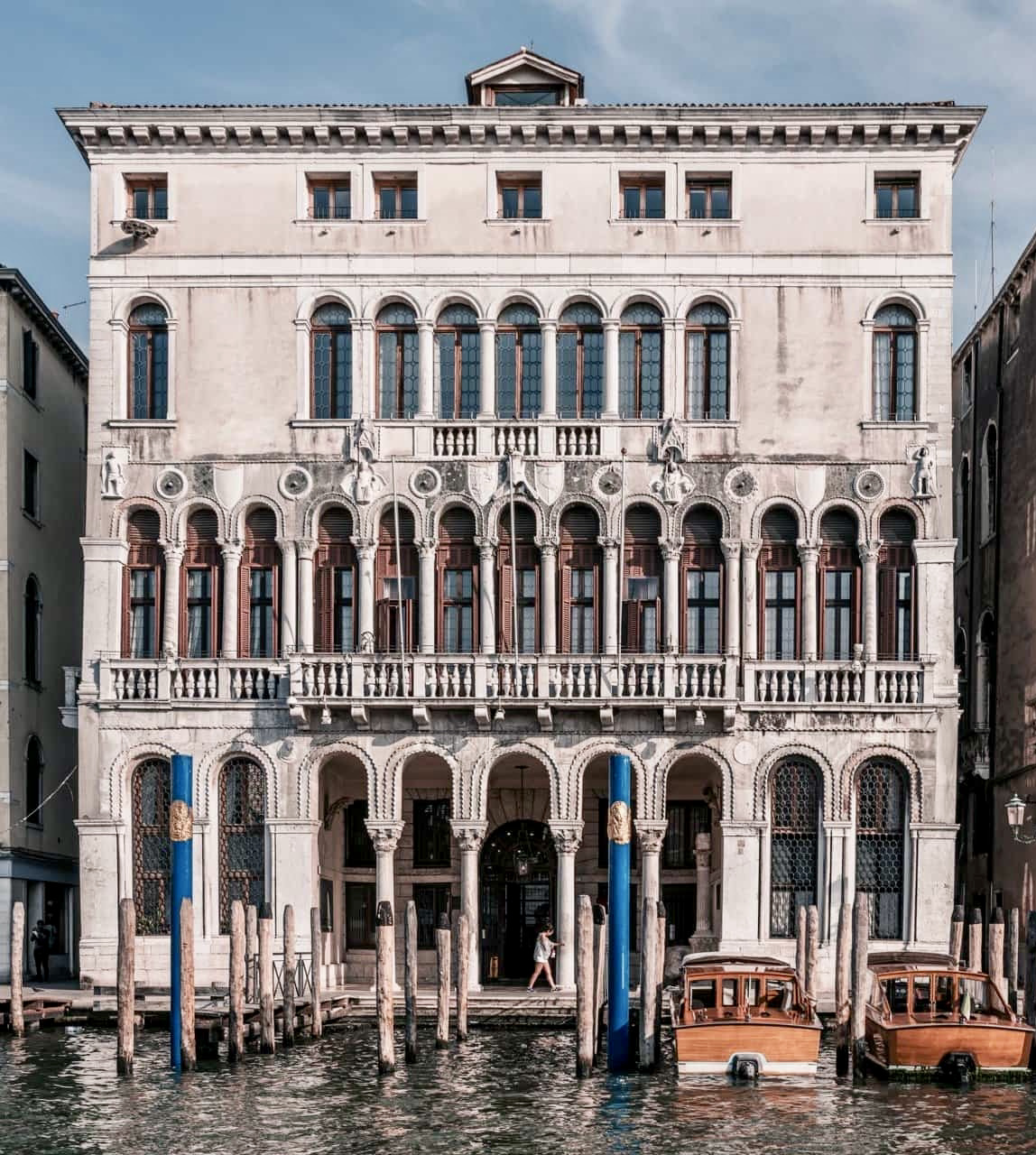
Ca' Loredan is a 13th-century Romanesque-style former palace of the Loredan family located on the Grand Canal in Venice, northern Italy. It is located in the sestiere (district) of San Marco and faces the Grand Canal, not far from the Rialto Bridge. Together with the annexed Ca' Farsetti, it is currently home to the city's municipal council.
Ca' Loredan was built in the 13th century as a Venetian-Byzantine fondaco for the Boccasi family, which died out in the 15th century. According to some historians, it became the residence of Doge Jacopo Contarini after he retired to private life, and passed to the Zane family. In the following centuries it was enlarged and heavily modified, by the Cornaro Piscopia family, who took possession of it during the fourteenth century according to the will of Federico Corner, the richest merchant of his time. The most significant restructuring was carried out during the sixteenth century. In 1646, Elena Lucrezia Cornaro Piscopia was born there, a philosopher, who went down in history for being the first female graduate in history: she received this title on 25 June 1678.
The event, which had a wide international impact, is commemorated by a marble plaque. In 1703 it became the home of the Loredan family, who obtained it thanks to a marriage between a daughter of Girolamo Corner and Giovanni Battista Loredan. It became the property of Countess Campagna Peccana in 1816 and was transformed into a hotel. In 1867 it passed to the municipality of Venice and became the seat of the city hall together with Ca' Farsetti.
Ca' Loredan is a building whose oldest nucleus is in the Venetian-Byzantine style, being among the buildings on the Grand Canal that most preserve its traces despite the renovations. The ground floor has a central portico closed by five raised arches, supported by four Corinthian columns, above which, on the noble floor, there is a heptaphora (seven windows) in the same style. On the two sides of the portico, symmetrically, there are two round windows, which correspond to a three-light window on the main floor. This hole is closed by mostly circular Byzantine decorations. The second piano nobile, which, albeit at the rear, attempts to emulate the style of the first, is characterized by a large central multi-lancet window, echoed by lateral single-lancet windows.
Text adapted from “Ca' Loredan” on Wikipedia, CC BY-SA 4.0.
Ca' Loredan (Venice) ranks #2,428 of 9,035 worldwide in the atlas's castle fame ranking, and #184 of the 555 mapped in Italy. Founded c. 1300, it is older than 60% of the atlas's dated landmarks, one of 1090 atlas entries founded in the 13th century. Its Wikipedia articles were opened 994 times in the last 60 days, more than 50% of the atlas. 41 more atlas landmarks stand within 25 km. The nearest day-trip guide is Venice, 1 km away. See how Italy compares in the castle statistics.
View on the interactive castle map →