 Portugal · 12th century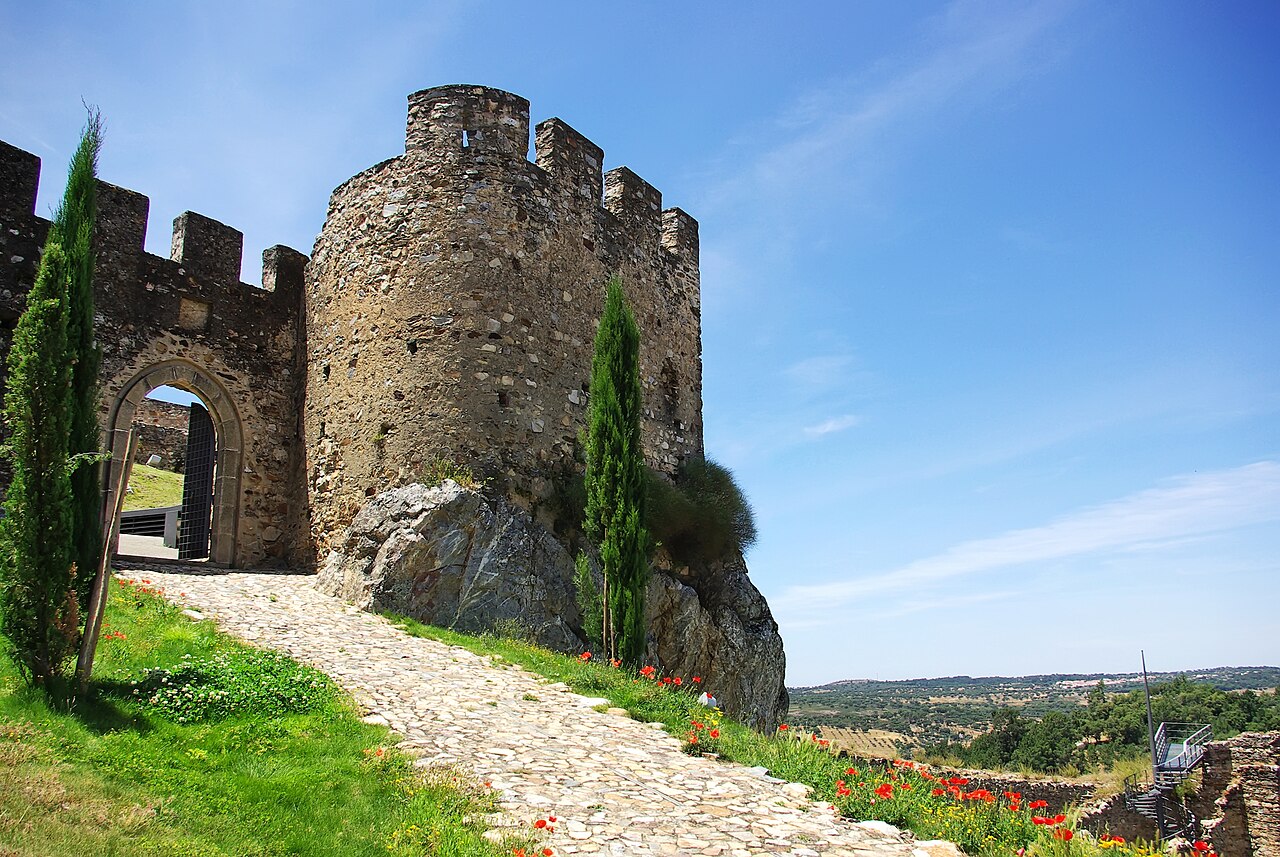
The Castle of Alegrete (Portuguese: Castelo de Alegrete) is a Portuguese medieval castle in the civil parish of Alegrete, in the municipality of Portalegre, in the district of the same name.
Just 10 kilometres (6.2 mi) from Portalegre, the castle of Alegrete is one of the more important fortress in the Alto Alentejo, assuming since the Middle Age, a fundamental position in regional defense. Most of the references to its origins are obscure. Traditional literature suggest that its history extends to the primordials of the Portuguese kingdom. Legend suggests that Alegrete was reconquered from the Moors in 1160 by D. Afonso Henriques.
The first documents suggest it dated from the 13th century, during the reign of King D. Afonso III, when the fortifications were either constructed or reconstructed.
On 16 February 1267, the settlement was effectively incorporated into the possessions of the Portuguese Crown, in the Treaty of Badajoz, celebrated between King D. Afonso III and his father-in-law King D. Alfonso X of Castile.
The reconstruction of the fortifications are attributed to the foral (charter) of King D. Dinis in 1319. Most of the building on the site occurred between the 13th and 14th century, but likely began immediately after the accord at Badajoz. The perimeter of the fortification was quite irregular, and did not adopt the oval plan generally used during the Portuguese Gothic period. The keep tower was erected alongside the eastern walls and located near a cistern, that supported the community within the walls and military garrison. The main gateway was in the south (today concealed) and crowned by small tower with machicolations towards the interior. Complementing the military garrison was a curtain of walls connected to the castle. In the following centuries, Alegrete took on an important role in the wars with Castile.
On 8 April 1384, D. Nuno Alvares Pereira visited Alegrete as part of his defense of Portugal.
A new foral was issued on 14 February 1516 by King D. Manuel I. The transition between medieval warfare and pyroballistic warfare determined the slow decline of the castle. Meanwhile, though, the dynastic crisis resulting from the death of King Sebastian at Alcácer Quibir, revitalized the importance of the medieval castle, owing to its frontier position along the Spanish border.
Text adapted from “Castle of Alegrete” on Wikipedia, CC BY-SA 4.0.
Castle of Alegrete ranks #6,123 of 9,035 worldwide in the atlas's castle fame ranking, and #104 of the 212 mapped in Portugal. Founded 1160, it is older than 79% of the atlas's dated landmarks, one of 763 atlas entries founded in the 12th century. 5 more atlas landmarks stand within 25 km. The nearest day-trip guide is Évora, 89 km away. It is one of the 48 landmarks on the atlas's regional map of the Alentejo. See how Portugal compares in the castle statistics.
View on the interactive castle map →