 Portugal · 11th century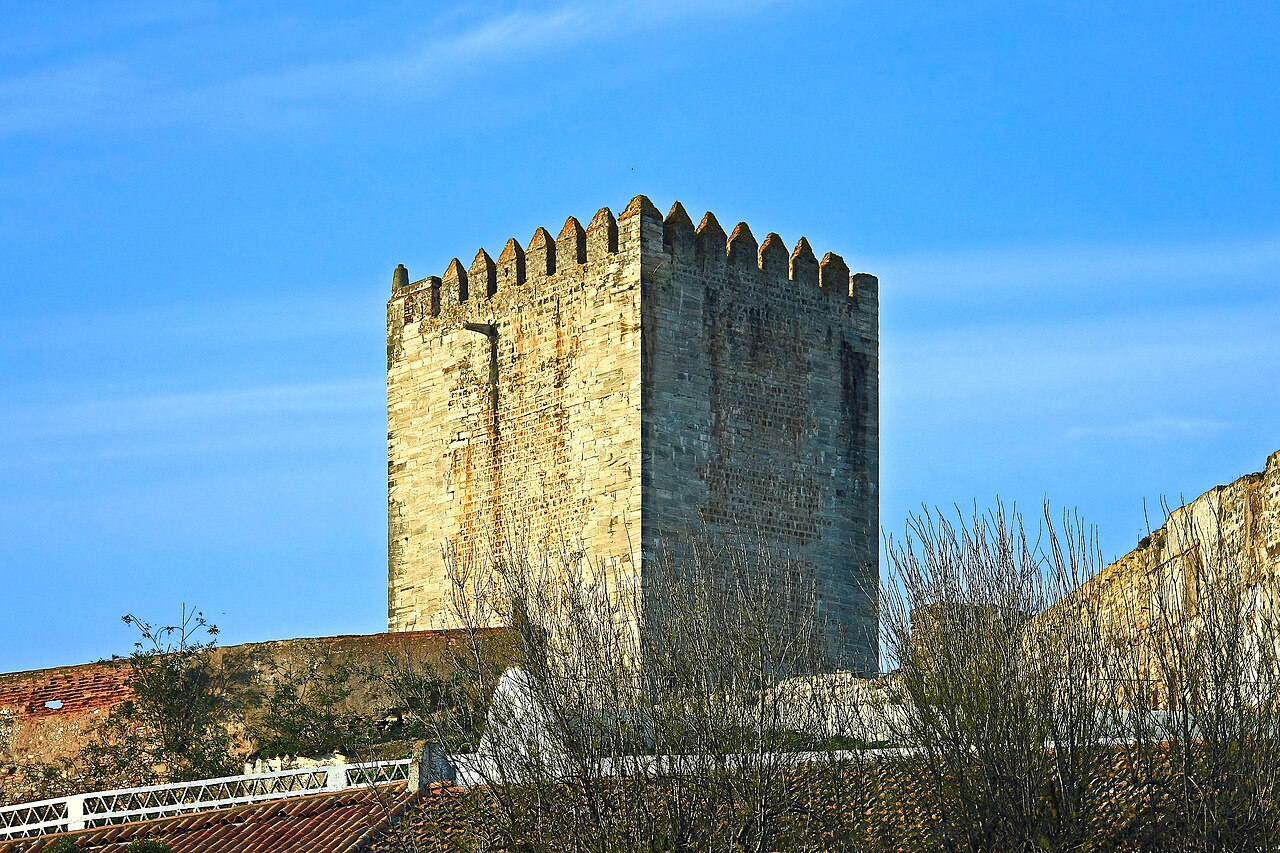
The Castle of Moura (Portuguese: Castelo de Moura) is a Portuguese medieval castle in civil parish of Moura (Santo Agostinho e São João Baptista) e Santo Amador, in the municipality of Moura, in the district of Beja.
The construction of the Moorish walls began in the middle of the 11th century and lasted to 12th century, probably over a castro dating to the Iron Age settlement. The site successively occupied by the Romans, the Visigoths and Muslims, who turned the town into the capital of the Al-Manijah province.
In 1166, as legend relates, the princess Salúquia, daughter of Abu-Hassan and governor of the city, fell in love with Bráfama, the Moorish mayor of Aroche. On the eve of their marriage, Brfafama went with a party to Al-Manijah, ten leagues away. But the entire Alentejo territory to the north and west had already been conquered by the Christians and the journey proved dangerous. Pedro Rodrigues and his brother, being aware of the wedding preparations that were taking there, ambushed Brfafam's party in an olive grove near the limits of the village and easily defeated and killed. The Christians then disguised themselves in the robes of their Muslim foes and headed for the town.
Meanwhile, Salúquia was at the top of the castle tower, where she awaited the arrival of her fiancé. Seeing that a group of seemingly Islamic knights were approaching, the princess believed them to be Aroche's entourage, and allowed them to cross the fortification gates. But as soon as they entered, the Christians threw themselves upon the defenders of the city. Taken by surprise, the Muslim forces were defeated. Realizing her error and wounded by the certainty of Brafama's death, she took the keys of the town and rushed from the tower. Moved by the love story that the Islamic survivors told them, the Rodrigues brothers renamed the town Terra da Moura Salúquia, but over time the name would devolve to Terra da Moura, later Moura.
A mud-brick tower (taipa) within the Castle of Moura is still referred to as Salúquia Tower, and an olive grove in the vicinity of Moura, where Brfafama and his entourage were ambushed, the people call Brfafama de Aroche. Moura's coat-of-arms would eventually incorporate figure of a dead Moor, with the tower in the background, alluding to the legend of Moor Salúquia.
Text adapted from “Castle of Moura” on Wikipedia, CC BY-SA 4.0.
Castle of Moura ranks #7,471 of 9,079 worldwide in the atlas's castle fame ranking, and #154 of the 212 mapped in Portugal. Founded c. 1050, it is older than 89% of the atlas's dated landmarks — one of 436 atlas entries founded in the 11th century. 1 more atlas landmarks stand within 25 km. The nearest day-trip guide is Évora, 62 km away. It is one of the 48 landmarks on the atlas's regional map of the Alentejo. See how Portugal compares in the castle statistics.
View on the interactive castle map →