Castle
Castle of Santo Estêvão
🇵🇹 Portugal · 11th century
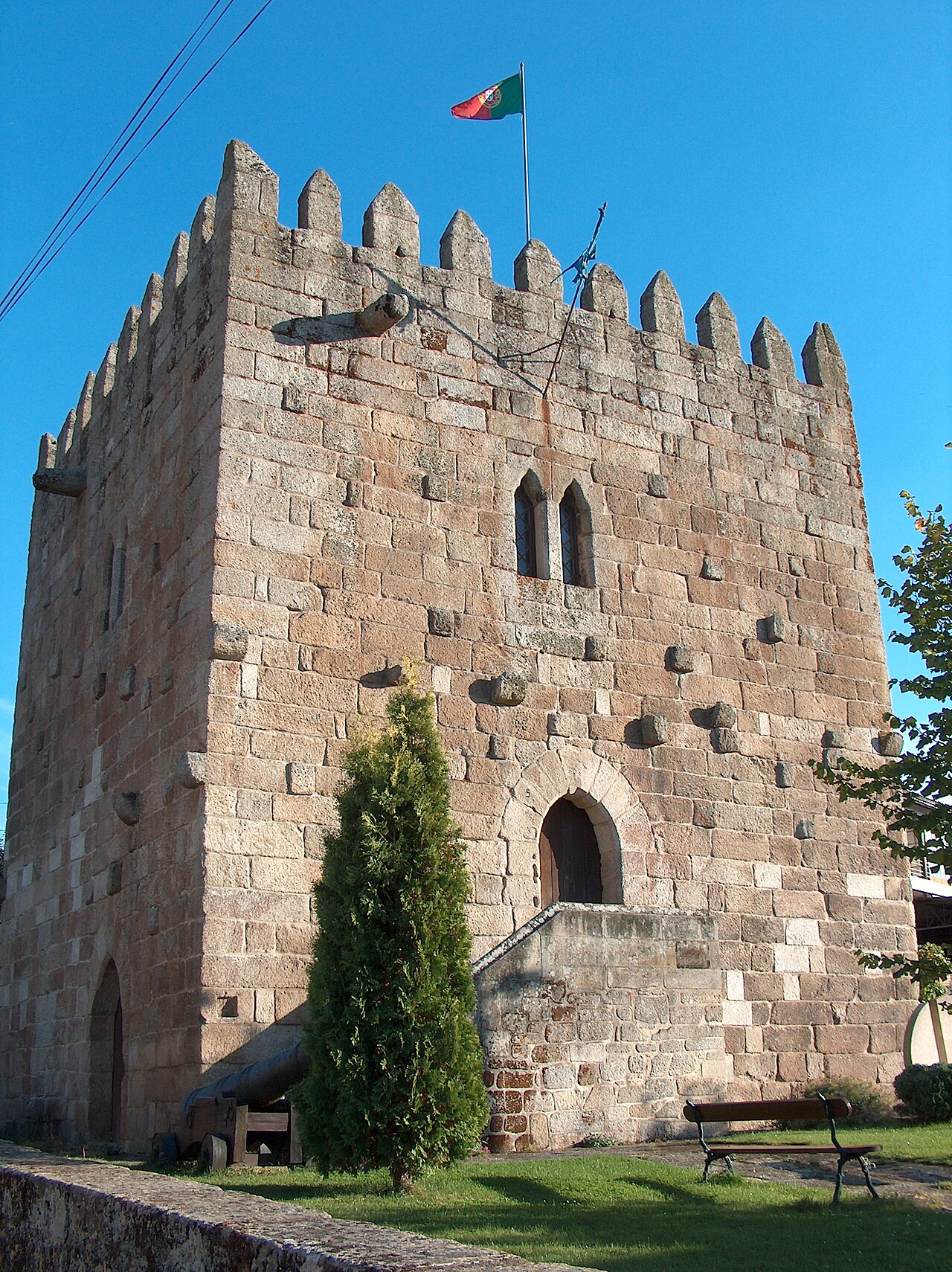
The Castle of Santo Estêvão (Portuguese: Castelo de Santo Estêvão) is a medieval castle located in the civil parish of Santo Estêvão, municipality of Chaves, in the Portuguese district of Vila Real. Located in a dominant position over the village, the castle is within walking distance of the course of the river Tamega and the border with Spain.
The first references to this location date to the 11th century, and suggest a rural property of great dimensions, that were eventually fortified.
During the Christian reconquest of the Iberian peninsula, the areas of Chaves (Aqua Flaviae) and Santo Estêvão were integrated into the dowry of Teresa of Leon and Castile, when she married Count Henry of Burgundy in 1093. In 1129, the region of Chaves was retaken by Muslim forces, but reconquered by Rui and Garcia Lopes in 1160, two brother-knights who offered their services to the first Portuguese king, Afonso I (1112-1185). The construction of the castle of Santo Estêvão began during his reign, his son and successor Sancho I (1185-1211).
Here they celebrated the wedding of Infanta Theresa (daughter of King Sancho I) and Alfonso IX of León, and was the home of several of Sancho's other daughters (D. Mafalda and D. Sancha); and his son, Infante D. Afonso, who succeeded the King.
In 1212, the castle was captured by Alfonso IX under the pretext of defending the rights of Infanta D. Theresa. For the next 19 years, the fortress remained on the hands of Castile, but, eventually returned to the possessions of the Portuguese Crown in 1231, during the sequence of the peace of Sabugal. The strategic position to Santo Estêvão determined that Castile and Portugal would maintain contacts between the two Crowns, as in 1253. In that year, D. Afonso III came to Santo Estevão, to receive his future wife, the Infanta D. Beatriz, daughter of Alfonso X of León and Castile. The residences of the town was adapted to serve as citadel to receive the newlyweds, and later residence.
These first years proved the strategic relevance of the locality along the frontier. The castle was a signeurial possession, with a tower connected to other dependencies, likely by long-since disappeared awnings.
Santo Estêvão received a foral (charter) in 1258 from King D. Afonso III. His son and successor, King Dinis, to await the arrival of his bride, Isabel, daughter of Pedro III of Aragon.
Text adapted from “Castle of Santo Estêvão” on Wikipedia, CC BY-SA 4.0.
Castle of Santo Estêvão ranks #6,769 of 8,134 worldwide in the atlas's castle fame ranking, and #152 of the 205 mapped in Portugal. Founded c. 1050, it is older than 90% of the atlas's dated landmarks — one of 325 atlas entries founded in the 11th century. 5 more atlas landmarks stand within 25 km. The nearest day-trip guide is Vila Real, 58 km away. See how Portugal compares in the castle statistics.
View on the interactive castle map →Frequently asked questions
Where is Castle of Santo Estêvão?
Castle of Santo Estêvão stands in Portugal, at 41.75924°, -7.41902°.
When was Castle of Santo Estêvão built?
The atlas dates its founding to c. 1050. Earlier structures may have stood on the site; this is the earliest documented founding year.
How famous is Castle of Santo Estêvão?
In this atlas's fame ranking: #6,769 of 8,134 worldwide, and #152 in Portugal. Fame here combines how many Wikipedia language editions cover a landmark with how many people read them.
What is the nearest castle to Castle of Santo Estêvão?
Forte de São Neutel, about 4 km away.
More castles in Portugal
- Castelo de Sesimbra Portugal
- Castle of Trancoso Portugal
- Castle of Torres Novas Portugal
- Castle of Valongo Portugal
More castles
- Gijang Japanese Castle South Korea · 16th century
- Narin Castle Iran
- Castle of Numão Portugal
- Numazu Castle Japan · 18th century