 Sweden · 13th century
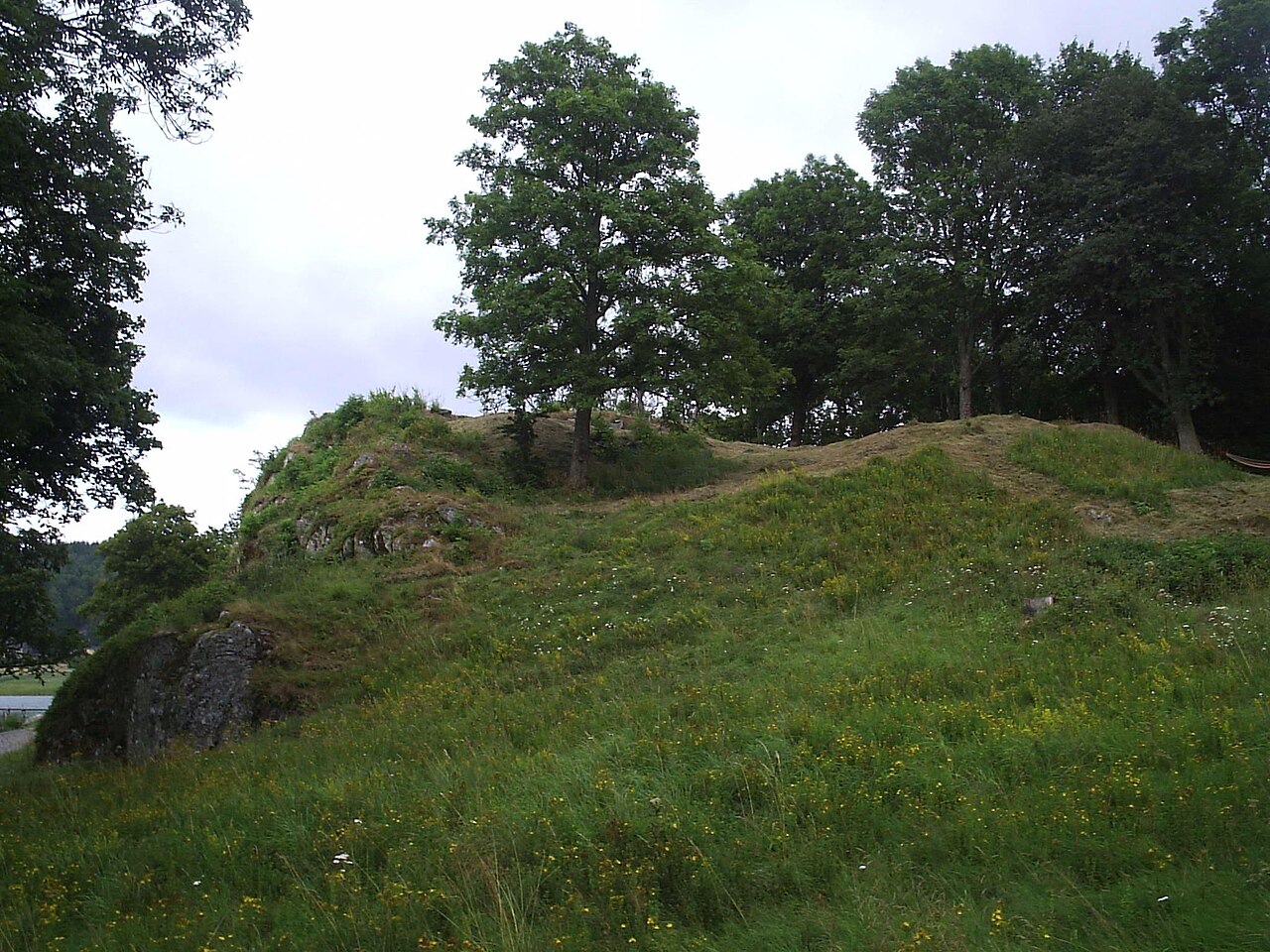
Dynge Castle ranks #5,768 of 9,040 worldwide in the atlas's castle fame ranking, and #161 of the 209 mapped in Sweden. Founded 1250, it is older than 67% of the atlas's dated landmarks, one of 1091 atlas entries founded in the 13th century. The nearest day-trip guide is Gothenburg, 77 km away. See how Sweden compares in the castle statistics.
Dynge Castle (Swedish: Dynge borgruin), also formerly known as Dyngehus, is a castle ruin in central Bohuslän, Sweden. It was built around 1250 when the area was under Norwegian rule and was in use until the beginning of the 16th century, when it burned down. It is one of few remaining medieval structures in Uddevalla Municipality, alongside Dragsmark Abbey and Bokenäs Old Church.
The castle was in shape similar to a motte-and-bailey, with a stone keep surrounded by a small moat, standing on top of a cliff overlooking Gullmarsfjorden. The foundations of the central keep's walls remain clearly visible, as does the moat.
The site was excavated between 1912 and 1913 by Swedish archaeologist Wilhelm Berg (1839–1915).
Berg was the secretary of the Gothenburg and Bohuslän Antiquities Association and had also excavated the contemporary and similar Ragnhildsholmen fortification at Kungahälla during the 1880s and Olsborg at Tanum.
Text adapted from “Dynge Castle” on Wikipedia, CC BY-SA 4.0.
View on the interactive castle map →