 Germany · 17th century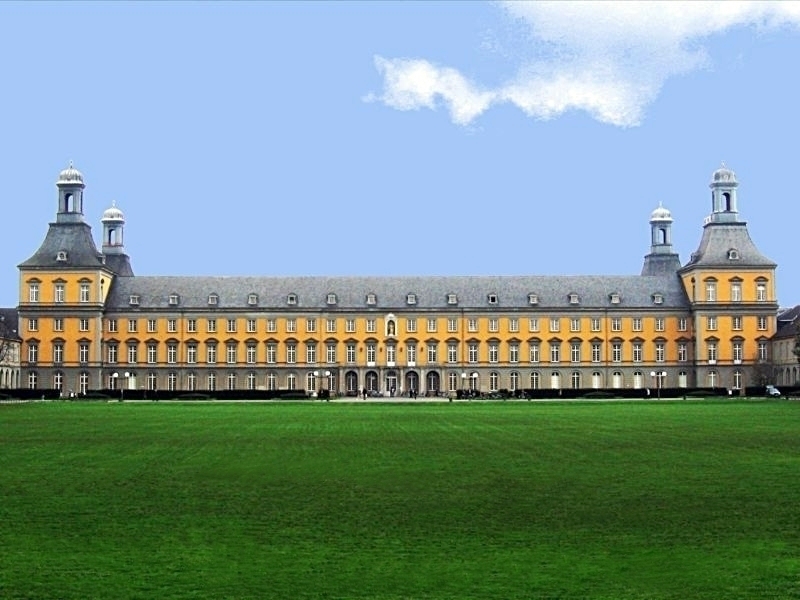
The Electoral Palace (German: Kurfürstliches Schloss) in Bonn is the former residential palace of the Prince-Electors of Cologne. Since 1818, it has been the University of Bonn's main building in the city center, home to the University administration and the faculty of humanities and theology.
It was built by Enrico Zuccalli for the prince-elector Joseph Clemens of Bavaria from 1697 to 1705. The Hofgarten, a large park in front of the main building, is a popular place for students to meet, study and relax. The Hofgarten was repeatedly a place for political demonstrations, as for example the demonstration against the NATO Double-Track Decision on 22 October 1981, with about 250,000 participants.
Text adapted from “Electoral Palace, Bonn” on Wikipedia, CC BY-SA 4.0.
Electoral Palace (Bonn) ranks #2,203 of 9,079 worldwide in the atlas's castle fame ranking, and #172 of the 711 mapped in Germany. Founded 1697, it is older than 22% of the atlas's dated landmarks — one of 721 atlas entries founded in the 17th century. Its Wikipedia articles were opened 3,188 times in the last 60 days, more than 79% of the atlas. 11 more atlas landmarks stand within 25 km. The nearest day-trip guide is Cologne, 25 km away. See how Germany compares in the castle statistics.
View on the interactive castle map →