 Spain · 15th century
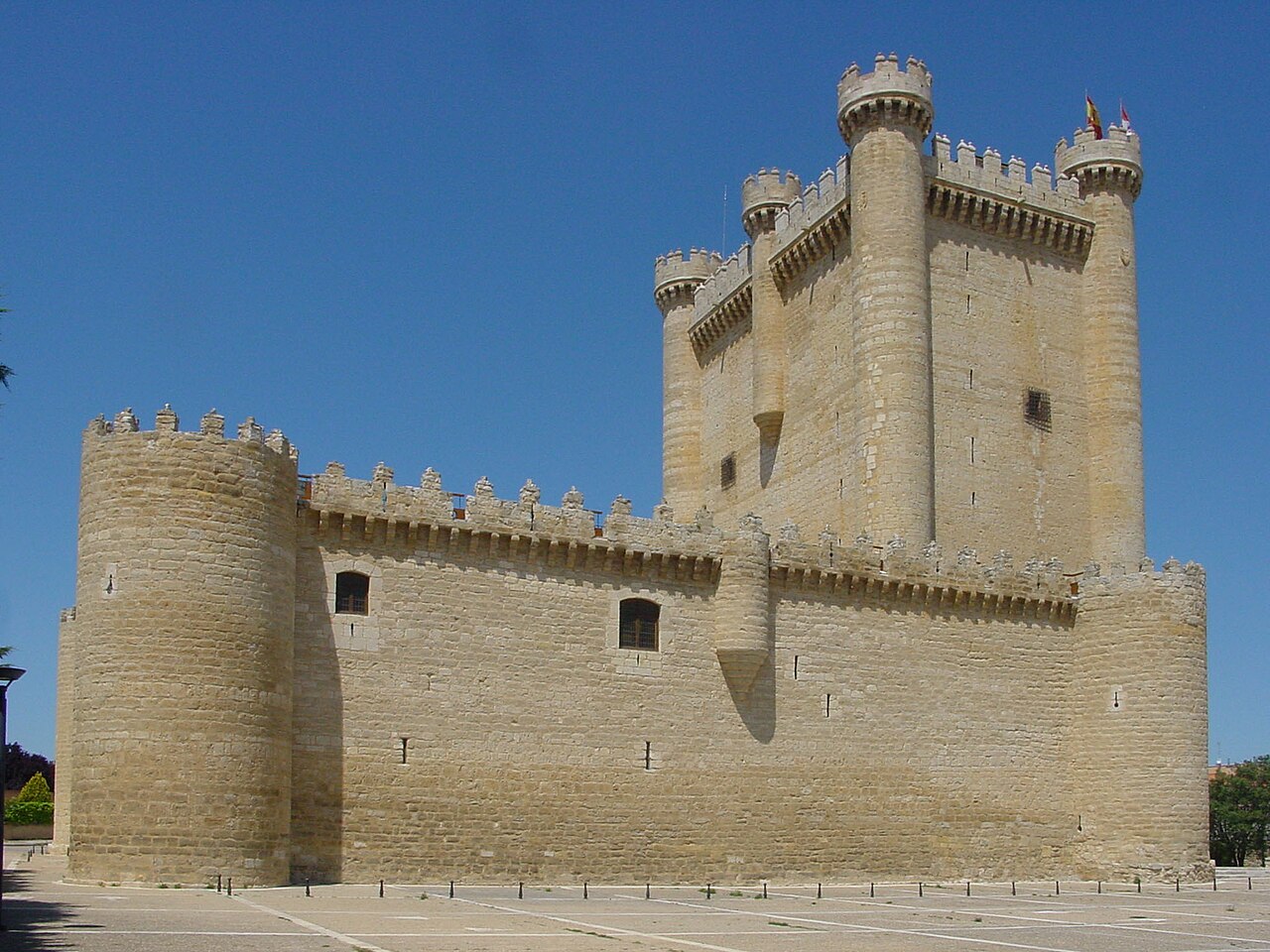
Fuensaldaña Castle (Spanish: Castillo de Fuensaldaña) is a castle in the Spanish village of Fuensaldaña, situated 6 kilometres from Valladolid, the largest city of Castile and León.
Construction on the site began in the 13th century, but the castle did not take its current form until the mid-15th. Captive Moors were used to build it.
Alonso Pérez de Vivero, who ordered its construction, was murdered for conspiring against Álvaro de Luna, a favourite of John II of Castile. The Catholic Monarchs of Spain confiscated the castle from the Vivero family due to their opposition in the War of Castilian Succession; it was returned in 1490. The Catholic Monarchs themselves spent their honeymoon in the castle in 1469, and in 1521 the castle was occupied in the Revolt of the Comuneros.
In July 1983 Demetrio Madrid, the President of the Junta of Castile and León, chose the castle to be the seat of the Cortes of Castile and León, the regional legislature. In 2007 the legislature moved to a brand new building in Valladolid, in an economic blow to both the castle's owners the Province of Valladolid and the people of the village.
Renovations started in 2011 ended in late 2012 when the castle was opened to the public as a tourist site, and venue for weddings, conferences and concerts. By 2015, it was safe for tourists to access the roof of the tower.
Text adapted from “Fuensaldaña Castle” on Wikipedia, CC BY-SA 4.0.
Fuensaldaña Castle ranks #4,688 of 9,035 worldwide in the atlas's castle fame ranking, and #195 of the 606 mapped in Spain. Founded c. 1500, it is older than 42% of the atlas's dated landmarks, one of 556 atlas entries founded in the 15th century. 5 more atlas landmarks stand within 25 km. See how Spain compares in the castle statistics.
View on the interactive castle map →