Palace & château
Gjorslev
🇩🇰 Denmark · 14th century
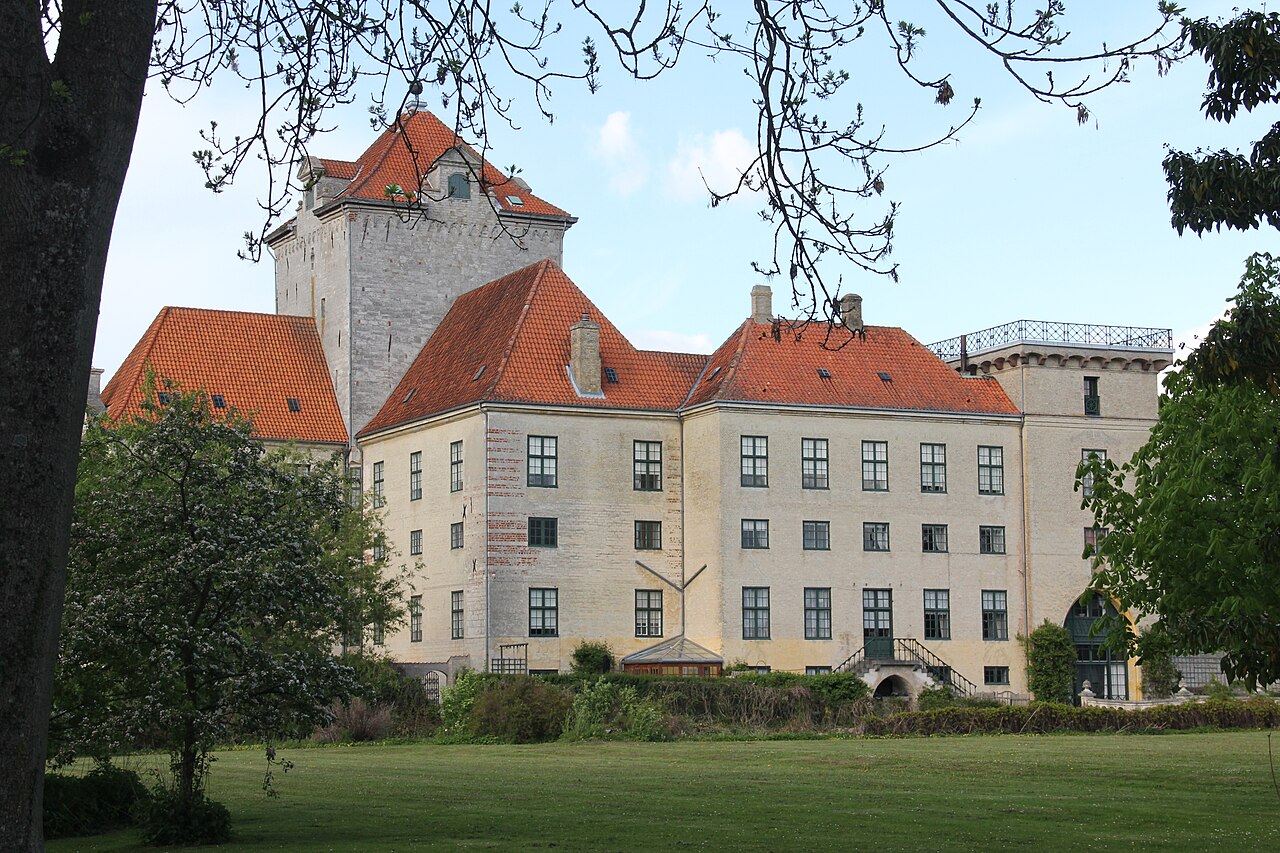
Gjorslev is a cruciform medieval castle located 17 km south-east of Køge, on the Stevns Peninsula, Stevns Municipality, some forty kilometres south of Copenhagen, Denmark. Originally owned by the Bishop of Roskilde, it is considered one of the most well-preserved examples of Gothic secular architecture in Denmark.
Gjorslev was built in about 1400 by Peder Jensen Lodehat, Bishop of Roskilde. It remained in the possession of the Roskilde bishops until the Reformation which led to its confiscation in 1537. It was sold in 1540 and was then in the possession of changing owners until 1678 when it came under the Crown once again.
In 1743, Christen Lindencrone purchased the estate. He had made a fortune as a supercargo on ships owned by the Danish Asiatic Company. In 1756, he was raised to the peerage under the name Lindencrone. He also constructed the Lindencrone Mansion at the corner of Sankt Annæ Plads and Bredgade in Copenhagen. Limestone from his estate on Stevns was used in the construction of his town mansion.
The Gjorslev estate was after Lindencrone's death passed to his son Johan Frederik Lindencrone.
In 1793, Jacob Brønnum Scavenius purchased the estate. His widow kept the estate for five years after her husband's death. In 1825, it passed to their son Peder Brønnum Scavenius. It was after his death owned by his son Jacob Frederik Brønnum Scavenius until 1915 and then by his grandson (1915–1923) Frederik Scavenius until 1922.
In 1925, Adolph Tesdorpf purchased the estate. It has remained in the possession of the Tesdorpf family since then.
In January 2018, Peter Henrik Tesdorpf sold Gjorslev to his son Jens Edward Tesdorpf. In 2020–21, he gave up milk production on the estate.
Gjorslev is surrounded by moats and built to a cruciform design in the Gothic style. The building materials are a combination of local limestone from the Cliffs of Stevns and large bricks (Danish "monk stones").
The central tower is just under 30 m tall and has seven storeys. The south arm of the cross is slightly longer than the other three. A lower north wing was added in 1638.
Access to the main building was originally through the cellar from an entrance below the bishop's chapel which was located on the east side of the southern cross arm. From the vaulted cellar below the tower, a flight of stairs led to the domed hall in its ground floor.
Text adapted from “Gjorslev” on Wikipedia, CC BY-SA 4.0.
Gjorslev ranks #6,313 of 8,764 worldwide in the atlas's castle fame ranking, and #56 of the 59 mapped in Denmark. Founded 1396, it is older than 55% of the atlas's dated landmarks — one of 649 atlas entries founded in the 14th century. 2 more atlas landmarks stand within 25 km. The nearest day-trip guide is Roskilde, 37 km away. See how Denmark compares in the castle statistics.
View on the interactive castle map →Frequently asked questions
Where is Gjorslev?
Gjorslev stands in Denmark, at 55.3545°, 12.3779°.
When was Gjorslev built?
The atlas dates its founding to 1396. Earlier structures may have stood on the site; this is the earliest documented founding year.
How famous is Gjorslev?
In this atlas's fame ranking: #6,313 of 8,764 worldwide, and #56 in Denmark. Fame here combines how many Wikipedia language editions cover a landmark with how many people read them.
What is the nearest castle to Gjorslev?
Vallø Castle, about 12 km away.
More castles in Denmark
- Gram Palace Denmark
- Brundlund Castle Denmark
- Ledreborg Denmark · 18th century
- Kronborg Castle Denmark · 15th century
More palaces & châteaux
- Buranlure France
- Château d'Aucors France · 15th century
- Château de Bannes France
- Château de Bertangles France · 18th century