Ruin
Gladsaxehus
🇸🇪 Sweden
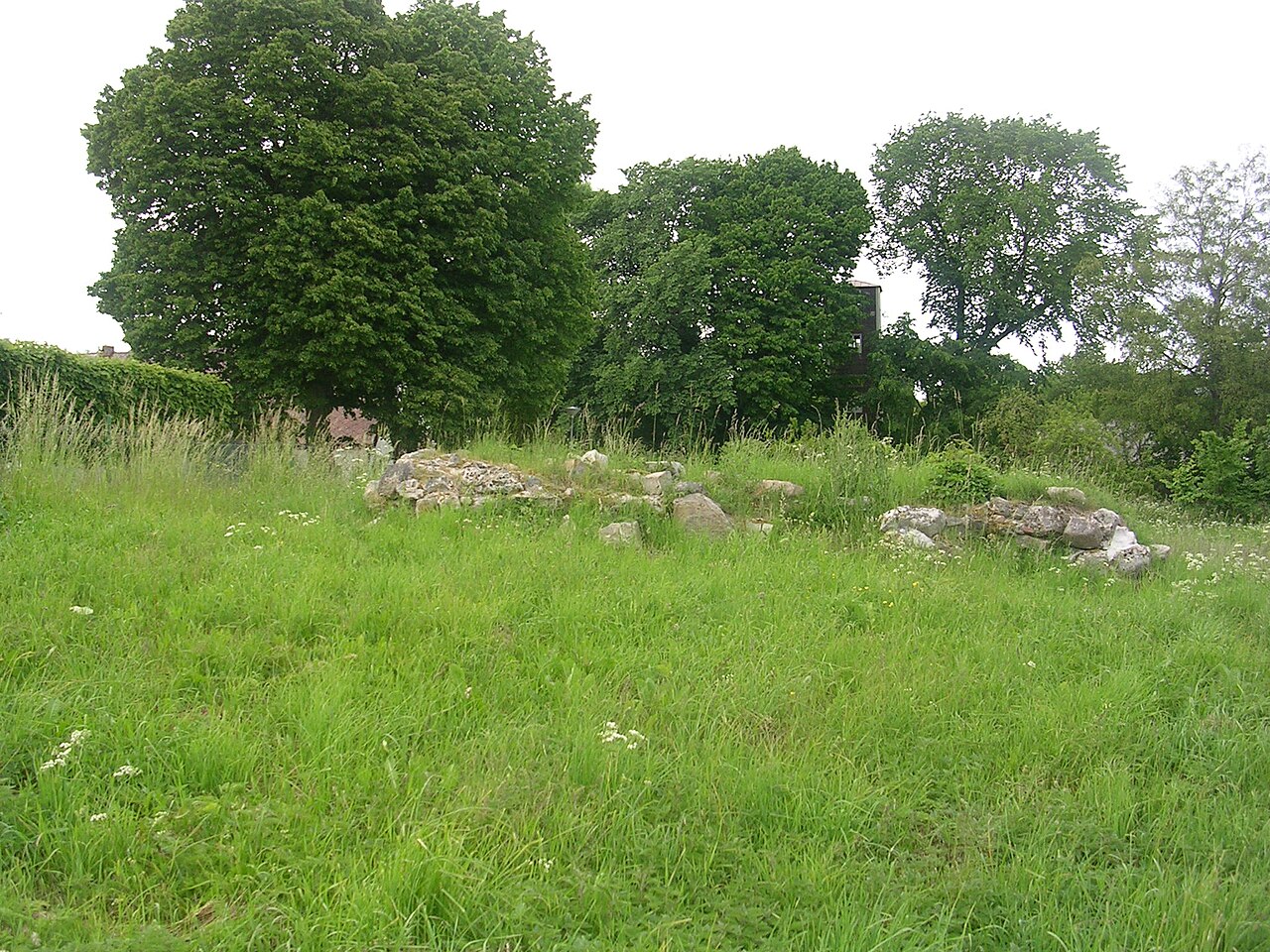
Gladsaxehus (Swedish: Gladsax hus; earlier Gladsaxehus, also Glathsax or Glatzsax) is a ruined castle in Gladsax parish, in the Simrishamn Municipality of Skåne in south-eastern Sweden. The ruins lie immediately to the east of the church and cemetery of Gladsax.
The first written mention of the property is a charter issued in 1322 by Archbishop Esger Juul affirming the ruling by Archbishop Eskil in the 12th century that four churches were subordinate to the monastery at Tommarp, amongst which was "ecclesiam sancti Jacobi in Glathsyas".
In her will dated 11 August 1398, Ide Pedersdatter Falk, widow of Torkil Nielsen Bing, bequeathed her manor at Gladsax, together with a large fortune in property and cash, to be the endowment and seat of a planned Dominican nunnery. She appointed her personal friend, Queen Margaret, to be her executor. However, after Ide Falk's death in 1399, the queen and Bishop Peder of Roskilde realised the strategic importance of the location as a counterweight to the archbishop's castles at Åhus, four miles to the north, and Hammershus on Bornholm. They succeeded in obtaining the Pope's permission to transfer the monastic endowment to Gavnø on Zealand.
The manor then became the royal fief of Gladsaxehus, together with the parish of Gladsax, the settlement of Simrishamn and significant portions of Albo Hundred as the outlying land of the fief. Gladsax county came to be considered one of the primary counties of Skåne.
For about 200 years, the lords of Gladsax resided at Gladsaxehus. They included Eskil Mogensen Göye (enfeoffed in 1471, died 1476), Jens Holgersen Ulfstand (probably enfeoffed 1476, died 1486) and Sten Basse Bille (enfeoffed 1490, died 1506). Gladsax was an independent fief until 1621, when it became part of Kristianstad County, and the king endowed Jacob Beck, priest of Gladsax, Bosjökloster, and Vapnö, with the castle and most of the land.
In the 1770s, C. G. Hilfeling inventoried properties in Skåne on behalf of the king; at Gladsax he described the ruins of a stone walled castle with newer buildings to the west. (The "fishponds" he also mentions near the castle were probably part of a water-driven system for smelting silver from a local mine.) In 1844, C. G. Brunius, a professor at Lund University, visited the site.
Text adapted from “Gladsaxehus” on Wikipedia, CC BY-SA 4.0.
Gladsaxehus ranks #6,520 of 8,134 worldwide in the atlas's castle fame ranking, and #194 of the 206 mapped in Sweden. 8 more atlas landmarks stand within 25 km. The nearest day-trip guide is Kristianstad, 52 km away. See how Sweden compares in the castle statistics.
View on the interactive castle map →Frequently asked questions
Where is Gladsaxehus?
Gladsaxehus stands in Sweden, at 55.56167°, 14.28833°.
How famous is Gladsaxehus?
In this atlas's fame ranking: #6,520 of 8,134 worldwide, and #194 in Sweden. Fame here combines how many Wikipedia language editions cover a landmark with how many people read them.
What is the nearest castle to Gladsaxehus?
Glimmingehus, about 8 km away.
More castles in Sweden
- Lillö Sweden · 13th century
- Ragnhildsholmen Sweden
- Olsborg Castle Sweden · 16th century
- Biskopskällaren Sweden
More ruins
- Ballyallaban ringfort Ireland
- Château du Vieux-Windstein France · 12th century
- Château de Frœnsbourg France · 13th century
- Château de Lœwenstein France · 13th century