Palace
Gråsten Palace
 Denmark · 16th century
- Founded
- c. 1550
- Heritage status
- monument on Kulturstyrelsen register
- Location
- Sønderborg Municipality
- Coordinates
- 54.92569°, 9.59528°
- Open data
- Wikidata Q666117
- Links
- OpenStreetMap · Wikimedia Commons
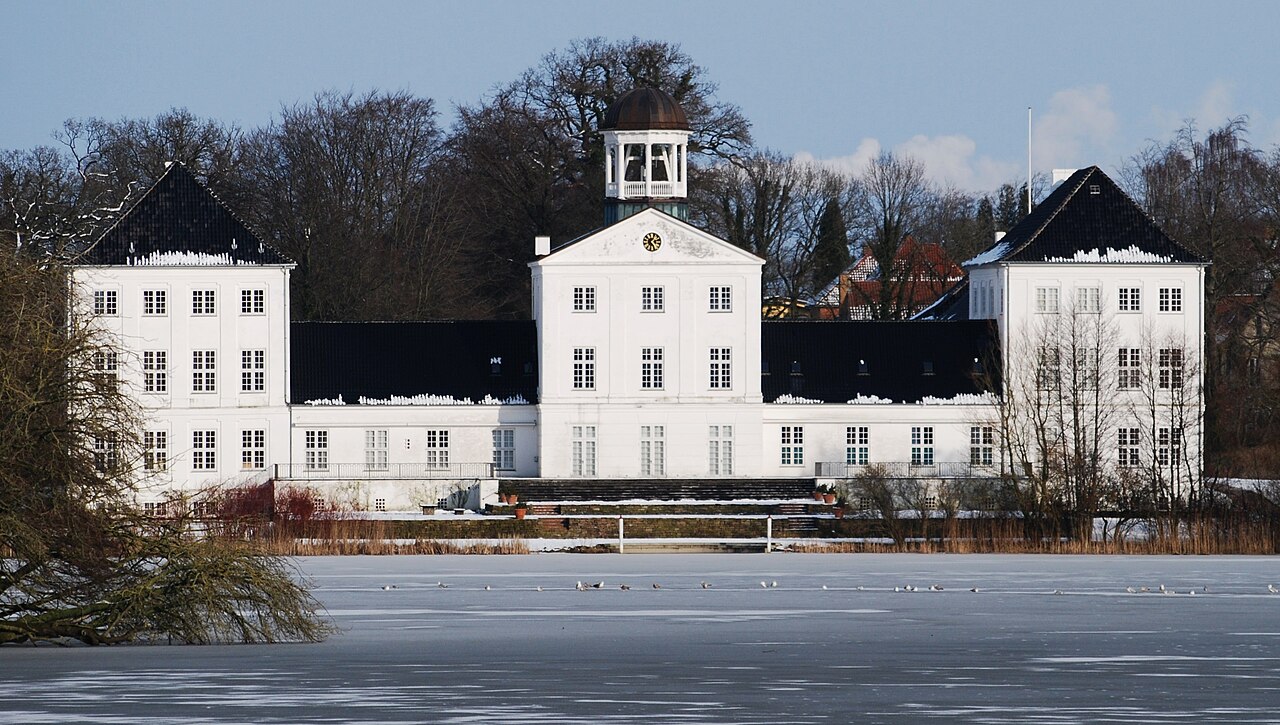
Description
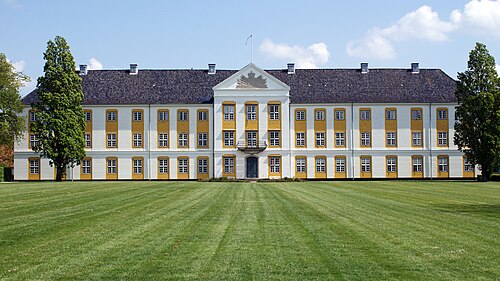
Gråsten Palace (Danish: Gråsten Slot) is located at Gråsten in the Jutland region of southern Denmark. It is best known for being the summer residence of the Danish royal family. The main house has a modern, all-white facade, with Venetian doors opening onto sweeping, manicured lawns and gravel walkways. The grounds include a huge stables court.
In its first edition, Gråsten was a small hunting castle built in the middle of the 16th century. The south wing of the present-day main house is believed to be built on the site of the second structure built in 1603 to replace a hunting lodge which had been destroyed in a fire in the middle of the 16th century. Under the ownership of Carl von Ahlefeldt, the second palace was demolished in favour of a grand Baroque style palace built in the years leading up to 1700. This third palace was however devastated by a fire in 1757 under the ownership of the then Duke of Augustenburg which only the Palace Chapel and two pavilions survived. The Duke then commissioned Johann Gottfried Rosenberg to rebuild the fourth and current palace in Rococo-style in 1759 – though considerably smaller than its former edition.
After about three and a half succeeding centuries of ownership by Danish nobles, Gråsten Slot was taken over by the State and extensively restored. In wake of their wedding in 1935, it was given as a summer residence to Crown Prince Frederik (later King Frederik IX) and his Swedish-born Crown Princess Ingrid (later Queen Ingrid) who especially adored the palace until her death in November 2000. It remains the summer residence of the Danish royal family.
In November 1845, Hans Christian Andersen visited Duke Christian August II at Gråsten Castle. Legend had it that Gråsten Palace was where Andersen wrote The Little Match Girl, during his visit. However, that is not the case. Andersen wrote it when he visited Augustenborg Palace.
The estate area has an area of 6.6 square kilometres (2.5 mi2). The property includes a stables court, manicured lawns and gravel walkways.
Graasten Palace Chapel in the north wing is the only building remaining from the original baroque palace after a 1757 fire. Despite being badly damaged in the Second Schleswig War, the chapel is decorated with 80 paintings. The chapel has bilingual congregations, with German and Danish services to accommodate the mix of local culture.
Text adapted from “Gråsten Palace” on Wikipedia, CC BY-SA 4.0.
In the rankings
Gråsten Palace ranks #1,828 of 9,902 worldwide in the atlas's castle fame ranking, and #21 of the 60 mapped in Denmark. Founded c. 1550, it is older than 37% of the atlas's dated landmarks, one of 933 atlas entries founded in the 16th century. Its Wikipedia articles were opened 2,999 times in the last 60 days, more than 81% of the atlas. 6 more atlas landmarks stand within 25 km. The nearest day-trip guide is Kolding, 63 km away. See how Denmark compares in the castle statistics.
Castles nearby
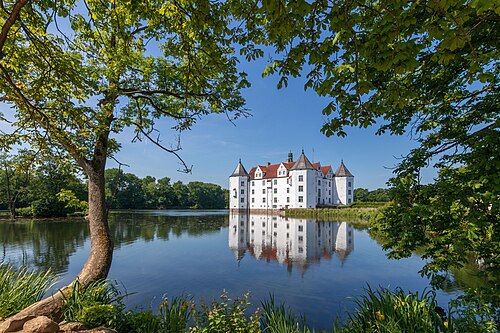
- Glücksburg Castle
 11 km · Germany
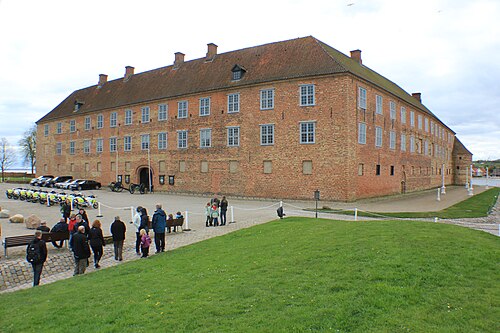
- Sønderborg Castle12 km · Denmark
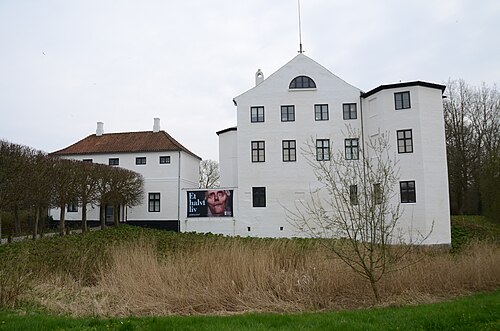
- Brundlund Castle17 km · Denmark
- Augustenborg Palace17 km · Denmark
More castles in Denmark
- Spøttrup BorgDenmark · 16th century
- Kalø CastleDenmark · 14th century
- Jægerspris CastleDenmark · 18th century
- Absalon's CastleDenmark · 12th century