 Japan · 15th century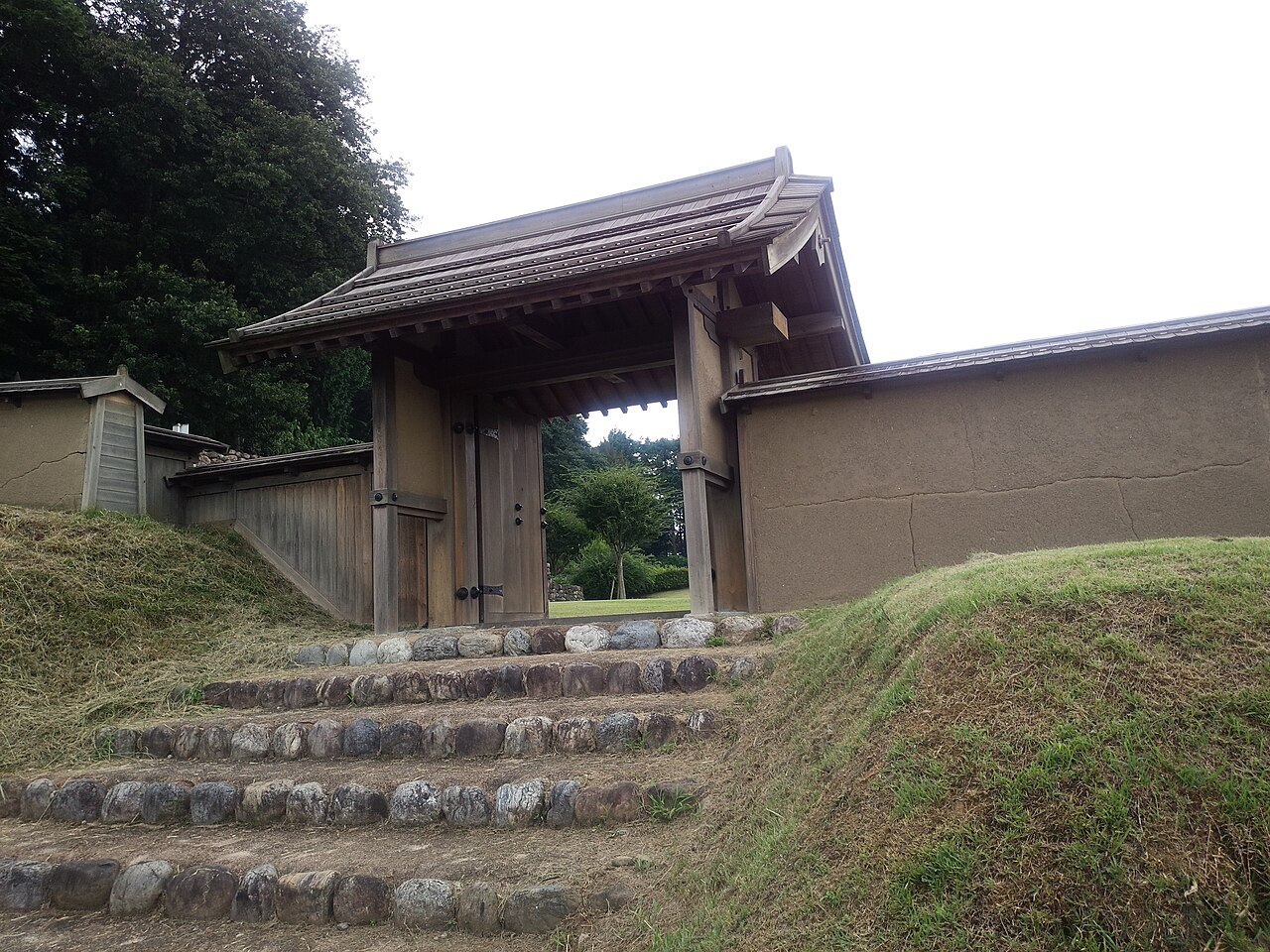
Hachigata Castle (鉢形城, Hachigata-jō) was a Sengoku period Japanese castle, located in the town of Yorii, Saitama Prefecture, in the Kantō region of Japan. Its ruins have been protected as a National Historic Site since 1932.
Hachigata Castle was located on a peninsula surrounded by the Arakawa River and the Fukasawagawa River, which contributed to its defenses. Due to its location at western edge of then Kantō Plain, Hachigata Castle was regarded as a key to the control of Musashi Province and was a major stronghold for the Later Hōjō clan during the Sengoku Period.
Hachigata Castle was built in approximately 1476 by Nagao Kageharu (1443-1514). The Nagao clan was a cadet house of the Yamanouchi Uesugi clan who held the hereditary title of Kantō Kanrei. However, Nagao Kageharu had a falling out with his overlord and fought against the Uesugi intermittently over a 20-year period using this castle as his stronghold. Later, the Nagao were forced from the area and the Uesugi appointed their vassals, the Fujita clan, as castellans. When the Later Hōjō clan under Hōjō Soun expanded into Musashi Province, the Fujita resisted until the defeat of the Uesugi at the Siege of Kawagoe Castle in 1546, at which time they were forced to submit.
Hōjō Ujikuni was assigned rule over the northern Hōjō holdings in 1564, and improved the defences of the castle due to its proximity to the aggressive Takeda clan to the west and the resurgent Uesugi clan to the north. He built a large barricade complex of wide dry moats and clay ramparts at the root of the hill, and extended the outer defensive line. Unlike many other castles of the Hōjō clan, he made use of stone walls in vital areas, including the main gate, which were also to emphasize his power and authority. The castle grew to stretch for nearly a kilometer east to west along the ridge, and 500 meters from north-to-south.
Takeda Shingen attempted to seize the castle in 1568 during the Siege of Hachigata, but failed due to its extensive fortifications. After the death of Takeda Shigen, Hōjō Ujikuni counterattacked and seized large portions of Kōzuke Province. This brought him into conflict with the Sanada clan and by extension, with the Toyotomi clan.
Text adapted from “Hachigata Castle” on Wikipedia, CC BY-SA 4.0.
Hachigata Castle ranks #1,802 of 9,035 worldwide in the atlas's castle fame ranking, and #110 of the 295 mapped in Japan. Founded 1476, it is older than 44% of the atlas's dated landmarks, one of 556 atlas entries founded in the 15th century. Its Wikipedia articles were opened 4,052 times in the last 60 days, more than 83% of the atlas. 3 more atlas landmarks stand within 25 km. The nearest day-trip guide is Sagamihara, 62 km away. See how Japan compares in the castle statistics.
View on the interactive castle map →