 Belgium · 13th century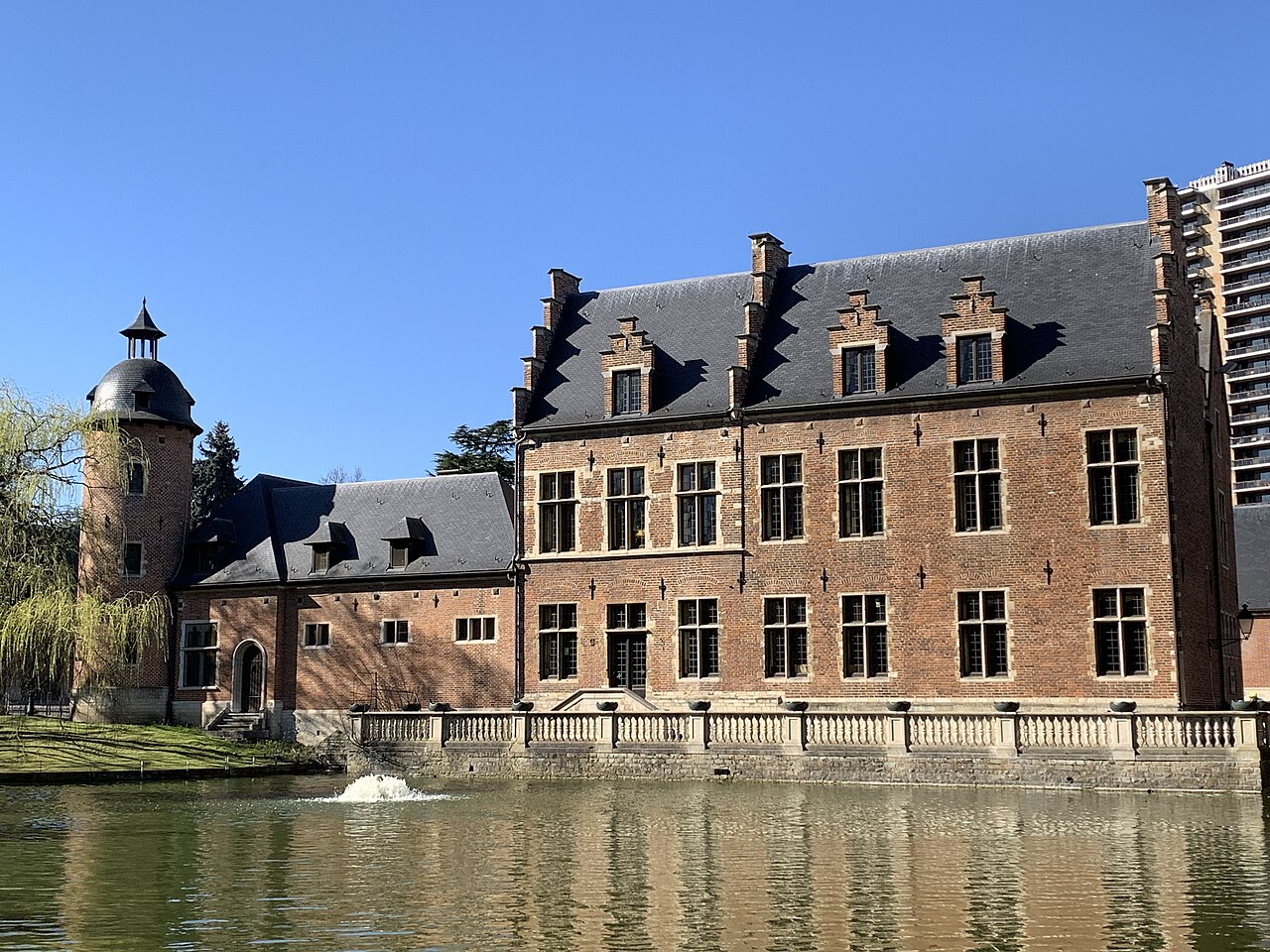
Karreveld Castle (French: Château du Karreveld; Dutch: Kasteel Karreveld) is a castle-farm in Molenbeek-Saint-Jean, a municipality of Brussels, Belgium. The castle and surrounding park are used for cultural events and meetings of the municipal council. It is located at 32, avenue Jean de la Hoese/Jean de la Hoeselaan.
The name Karreveld (originally spelled Carrevelt) was first recorded in 1253 in a deed of donation by John I, Duke of Brabant, to his wife Margaret, daughter of King Louis IX of France. It is sometimes linked to the Dutch words Karel Veld, meaning "Charles Field", based on a legend that Emperor Charles V once stopped at the site. However, official records mention the name long before his birth. A more likely origin is the Old Dutch Karreelvelt, meaning "field of brick earth", referring to the local brickmaking activity that continued into the early 20th century.
The current castle was built in the 16th or 17th century in the Flemish Renaissance style. In 1656, after passing through several owners, the castle and its estate became the property of the Spanish nobleman Don Garcia Osorio y Borgia. In 1780, the House de Villegas, an influential Belgian noble family of Spanish origin, who also owned Rivieren Castle in the nearby municipality of Ganshoren, acquired the Karreveld estate. The family retained ownership for nearly two and a half centuries.
Between 1900 and 1914, the estate was gradually repurposed for recreational and sporting activities. Hot air balloon launches were hosted there, and a wooden velodrome was established in 1908. The castle also accommodated a dairy and tavern. In 1912, Karreveld became one of the sites associated with the early development of Belgian cinema. At the request of Charles Pathé (Pathé Cinémas), the French director Alfred Machin established the country's first film studio there. Stretching across a meadow from the Chaussée de Gand/Gentsesteenweg to the Karreveld velodrome, this studio consisted of glazed sheds with offices, dressing rooms, workshops for set construction, as well as a small menagerie of exotic animals, such as bears, camels and two panthers, for use as 'extras' in films.
Some twenty early Belgian feature films, including Saïda a enlevé Manneken-Pis, La Fille de Delft and Maudite soit la guerre (in hand-painted colours), were shot and produced there.
Text adapted from “Karreveld Castle” on Wikipedia, CC BY-SA 4.0.
Karreveld Castle ranks #6,630 of 9,079 worldwide in the atlas's castle fame ranking, and #112 of the 128 mapped in Belgium. Founded 1253, it is older than 67% of the atlas's dated landmarks — one of 1080 atlas entries founded in the 13th century. 20 more atlas landmarks stand within 25 km. The nearest day-trip guide is Brussels, 3 km away. See how Belgium compares in the castle statistics.
View on the interactive castle map →