 Netherlands · 18th century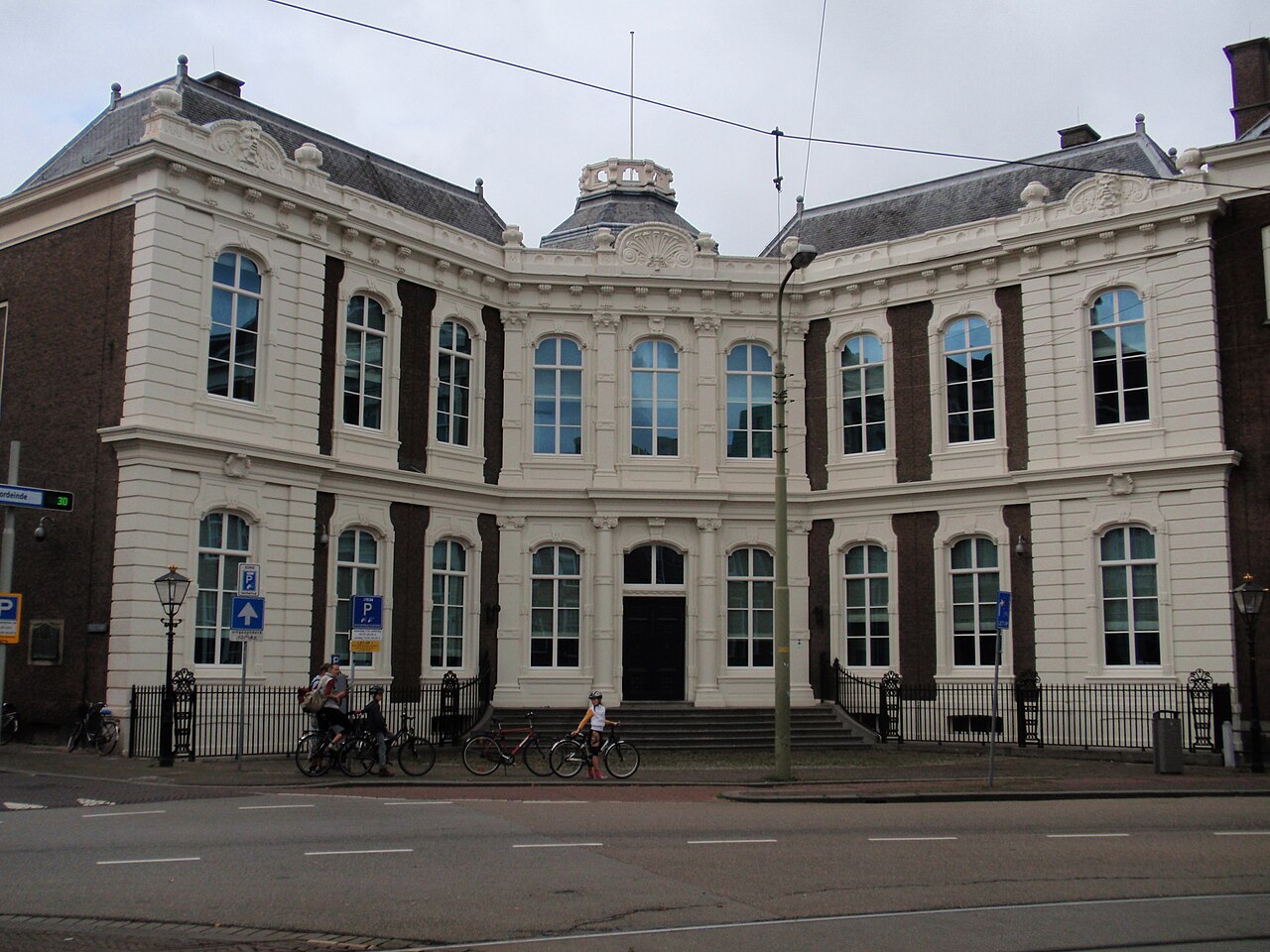
Kneuterdijk Palace (Dutch: Paleis Kneuterdijk [paːˈlɛis knøːtərˈdɛik]) is a former royal palace of the Netherlands located in The Hague, nowadays the seat of the Council of State. Built in 1716 in the Louis XIV style by architect Daniel Marot, it was commissioned by Count Johan Hendrik of Wassenaer-Obdam, member of the House of Wassenaer. The palace served as a residence for King William II of the Netherlands and his wife Queen Anna Paulowna in the first half of the 19th century, when he was still the crown prince. William II added several buildings designed in the English Tudor style, of which only the so-called “Gothic Hall” has survived. The hall was designed after the great dining hall of Christ Church, Oxford, of which William II was an alumnus.
Their grandson Crown Prince William used the palace from 1858 till his death in 1879. In the 1930s the palace was occasionally used by Princess Juliana. After World War II Dutch war criminals were tried in the former ballroom, some of whom were sentenced to death. Then the Ministry of Finance used the building for many years. Since restoration work was completed in 2001 the palace has been in use by the Netherlands' Council of State (Raad van State).
The Palace has been a listed as a National Heritage Site of the Netherlands since 1967.
Text adapted from “Kneuterdijk Palace” on Wikipedia, CC BY-SA 4.0.
Kneuterdijk Palace ranks #2,721 of 9,079 worldwide in the atlas's castle fame ranking, and #22 of the 199 mapped in Netherlands. Founded 1720, it is older than 20% of the atlas's dated landmarks — one of 696 atlas entries founded in the 18th century. Its Wikipedia articles were opened 2,497 times in the last 60 days, more than 74% of the atlas. 18 more atlas landmarks stand within 25 km. The nearest day-trip guide is The Hague, 1 km away. See how Netherlands compares in the castle statistics.
View on the interactive castle map →