Ruin
Nirayama Castle
🇯🇵 Japan · 15th century
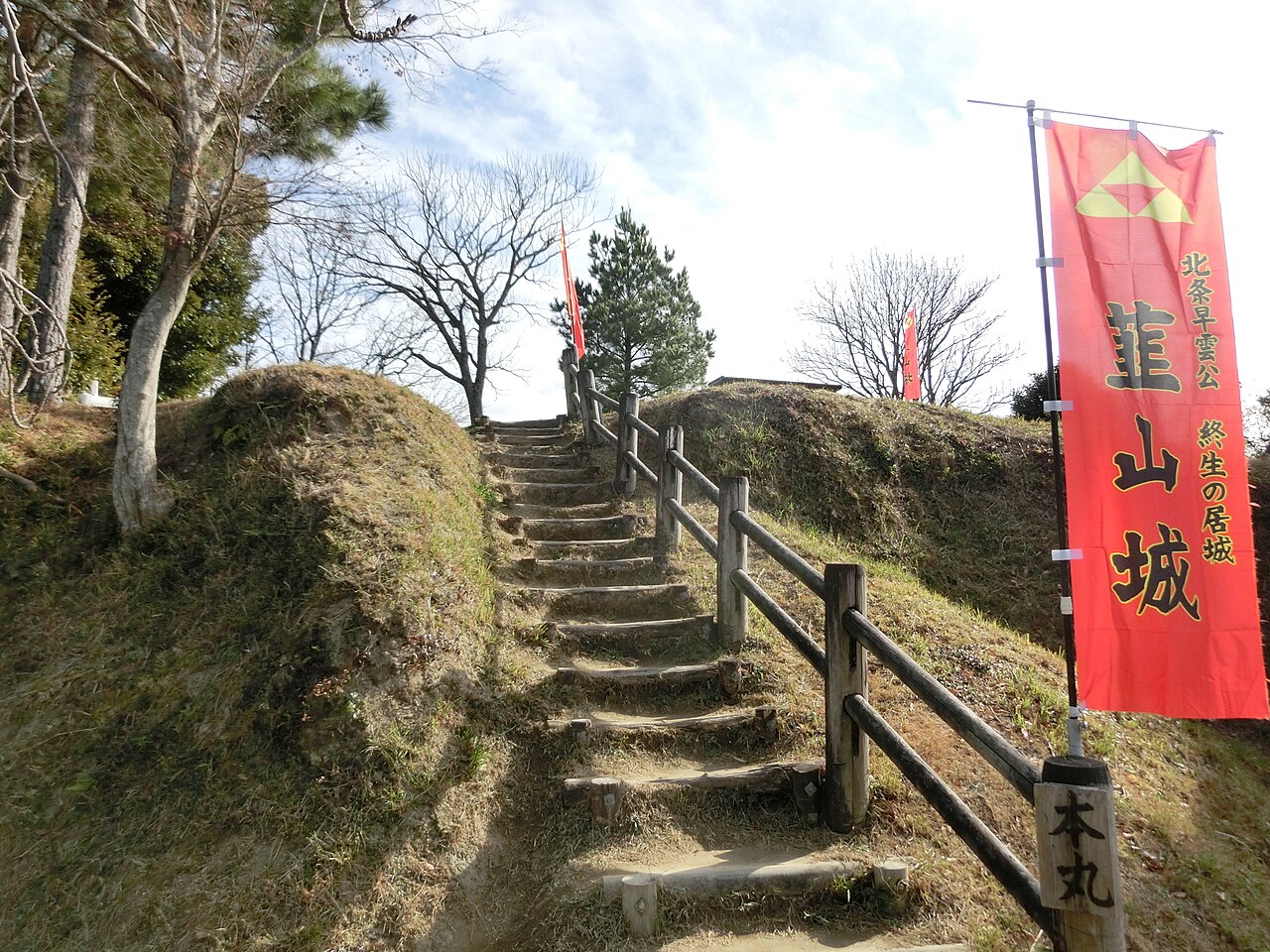
Nirayama Castle (韮山城, Nirayama-jō) was a hilltop Japanese castle, now in ruins, located in the Nirayama neighborhood of the city of Izunokuni, Shizuoka, in the Tōkai region of Japan. It existed from the late Muromachi period to the Azuchi-Momoyama period. Its ruins have been protected as a National Historic Site since 2025.
Nirayama Castle s located at a long and narrow hill at Izunokuni City, at the root of Izu Peninsula. This area was the stronghold of the Hōjō clan in the late Heian period and famous as a place where Minamoto no Yoritomo, founder of the Kamakura Shogunate spent his youth in exile. While the exact date of construction is unclear, according to the "Hōjō Godaiki," a fortification constructed during the Bunmei era (1469-1486) by Toyama Buzen-no-kami, a vassal of the first Horikoshi kubō, Ashikaga Masatomo. Masatomo was brother of Shogun Ashikaga Yoshimasa and had been sent to govern the Kanto region, but had been refused entry to Kamakura by the local lords and was forced to construct the Horigoe Gosho near Nirayama Castle.
In 1491, Ise Moritoki (later known as Hōjō Sōun), who defeated the second Horikoshi kubō, Ashikaga Chachamaru, seized the castle and began full-scale construction as his new stronghold. Sōun claimed to be the successor to the Hōjō clan, and used Nirayama Castle as his base conquer Izu Province and much of Sagami Province. He transferred his seat to Odawara Castle in 1495, but Nirayama remained his preferred residence, and he died at Nirayama Castle in 1519.
Although his successors used Odawara Castle as their primary stronghold, Nirayama Castle remained an important local stronghold for the control of the Izu Peninsula. The castle was well fortified, with western style fortifications, and had supporting forts on four nearby hills. In August 1570, the castle was attacked during Takeda Shingen's invasion of Suruga Province, but Hōjō Ujinobu (the son of Hōjō Ujiyasu managed to defend it. During the Siege of Odawara (1590), Toyotomi Hideyoshi dispatched Oda Nobukatsu with a large army against Nirayama Castle. Hōjō Ujinobu, despite being greatly outnumbered, managed to hold for over 100 days until Hideyoshi dispatched Tokugawa Ieyasu to negotiate a surrender.
Subsequently, Nirayama Castle served as the residence of Ieyasu's vassal, Naito Nobunari. However, in 1601, he was transferred and the castle was abandoned.
Text adapted from “Nirayama Castle” on Wikipedia, CC BY-SA 4.0.
Nirayama Castle ranks #4,446 of 8,134 worldwide in the atlas's castle fame ranking, and #221 of the 297 mapped in Japan. Founded 1493, it is older than 46% of the atlas's dated landmarks — one of 455 atlas entries founded in the 15th century. Its Wikipedia articles were opened 2,022 times in the last 60 days, more than 67% of the atlas. 3 more atlas landmarks stand within 25 km. The nearest day-trip guide is Sagamihara, 69 km away. See how Japan compares in the castle statistics.
View on the interactive castle map →Frequently asked questions
Where is Nirayama Castle?
Nirayama Castle stands in Japan, at 35.05385°, 138.95581°.
When was Nirayama Castle built?
The atlas dates its founding to 1493. Earlier structures may have stood on the site; this is the earliest documented founding year.
How famous is Nirayama Castle?
In this atlas's fame ranking: #4,446 of 8,134 worldwide, and #221 in Japan. Fame here combines how many Wikipedia language editions cover a landmark with how many people read them.
What is the nearest castle to Nirayama Castle?
Numazu Castle, about 9 km away.
More castles in Japan
- Shigisan Castle Japan · 16th century
- Yokote Castle Japan · 16th century
- Agena Castle Japan
- Kanegasaki Castle Japan
More ruins
- Kvasovo Castle Ukraine
- Cembalo Ukraine · 14th century
- Fort Witsen Ghana · 17th century
- Castle of Alcantarilha Portugal