Palace & château
Övedskloster Castle
🇸🇪 Sweden · 18th century
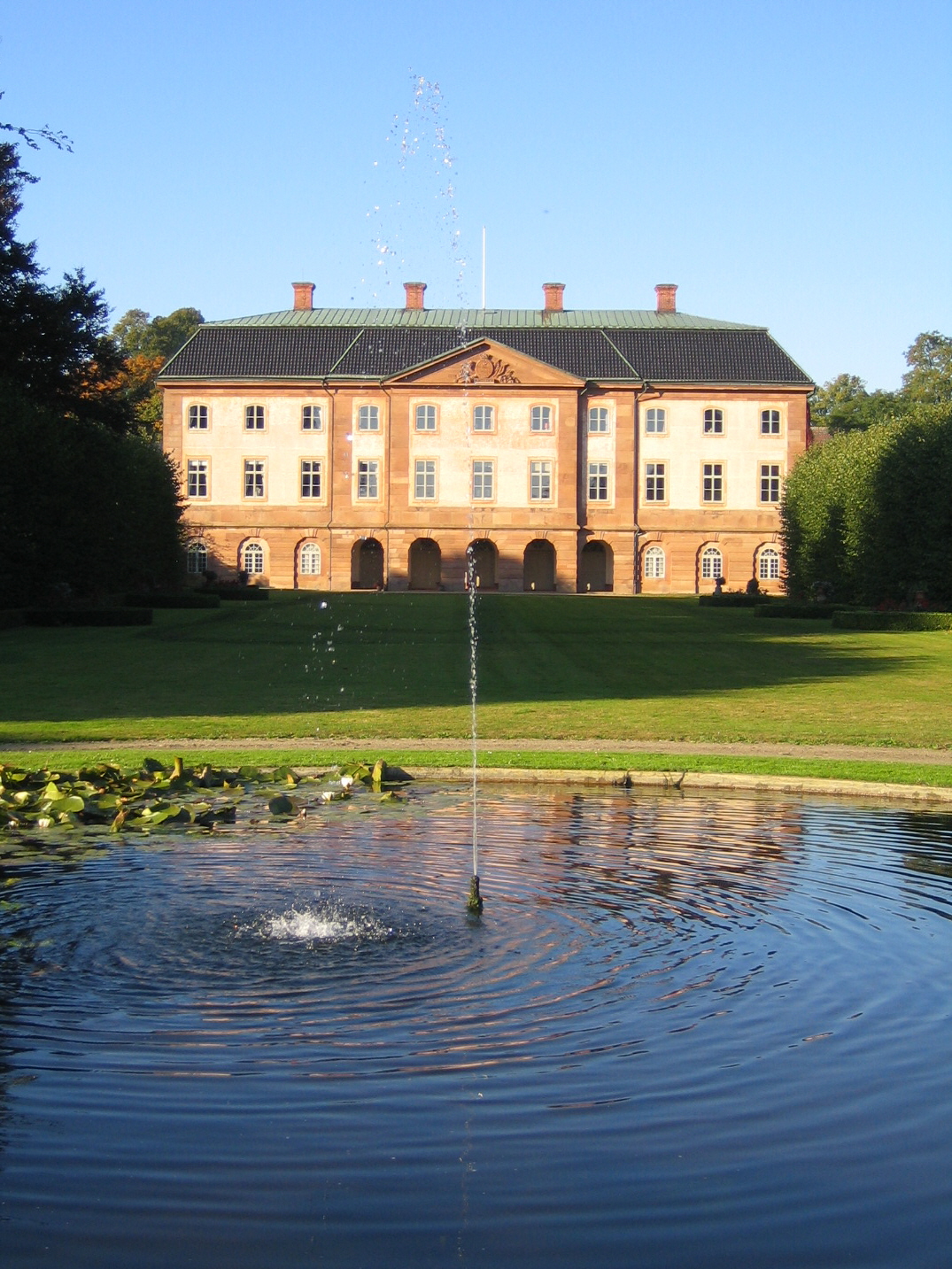
Övedskloster Manor (Swedish: Övedskloster slott) is a manor in Sjöbo Municipality, Scania, in southern Sweden.
Övedskloster derives its name (Swedish: The monastery of Öved) from a Premonstratensian abbey, founded in the 12th century by the archbishop of Lund, Eskil of Lund, on the site of the present manor.
Little is known about the abbey, and there are no visible remains. It was confiscated by the Danish Crown (as the province of Scania was a part of Denmark until the Treaty of Roskilde in 1658) during the Reformation and subsequently turned into a profitable estate, which changed owners several times during the 16th century. A fire sometime after 1594 probably ruined most of the monastic buildings, while others during this time were converted into barns and other outbuildings. Several of the first landowners also did not live at Övedskloster, which was merely used as a profitable source of income. Furthermore, the frequent wars between Sweden and Denmark during the 17th century discouraged any building activity.
The monastery therefore relatively quickly fell into disrepair. Still, from a drawing made in the 1680s it is clear that the walls of the former church were still standing at a considerable height, and some of the monastic buildings were intact. During the early 18th century, the estate probably stayed more or less the same way.
In 1753, the estate was sold to Hans Ramel (1724–1799), landowner and member of the Swedish nobility. His wife Amalia Beata Lewenhaupt was born at Övedskloster estate. Hans Ramel was responsible for the complete reconstruction of the manor ensemble, creating the palatial manor house seen today.
Plans had already been made to reconstruct the manor before Hans Ramel assumed ownership. Sometime before 1753 architect Carl Hårleman had produced blueprints for a new manor, as well as a general plan for the park, a new parish church and outbuildings. These plans were largely followed in the ensuing reconstruction, which didn't start until 1759. The first part of the rebuilding scheme was the replacing of the neglected parish church near the manor with a Rococo church, built in 1759–1761.
Partly in accordance with the general plan for remaking the grounds of the estate, and partly out of necessity for transport to the building site, new roads were constructed at about the same time.
Text adapted from “Övedskloster Manor” on Wikipedia, CC BY-SA 4.0.
Övedskloster Castle ranks #3,367 of 8,134 worldwide in the atlas's castle fame ranking, and #89 of the 206 mapped in Sweden. Founded 1776, it is older than 15% of the atlas's dated landmarks — one of 556 atlas entries founded in the 18th century. Its Wikipedia articles were opened 1,418 times in the last 60 days, more than 58% of the atlas. 11 more atlas landmarks stand within 25 km. The nearest day-trip guide is Malmö, 42 km away. See how Sweden compares in the castle statistics.
View on the interactive castle map →Frequently asked questions
Where is Övedskloster Castle?
Övedskloster Castle stands in Sweden, at 55.68639°, 13.63583°.
When was Övedskloster Castle built?
The atlas dates its founding to 1776. Earlier structures may have stood on the site; this is the earliest documented founding year.
How famous is Övedskloster Castle?
In this atlas's fame ranking: #3,367 of 8,134 worldwide, and #89 in Sweden. Fame here combines how many Wikipedia language editions cover a landmark with how many people read them.
What is the nearest castle to Övedskloster Castle?
Bjärsjölagård Castle, about 6 km away.
More castles in Sweden
- Tunbyholm Castle Sweden · 17th century
- Svenstorp Castle Sweden · 16th century
- Rockelstad Castle Sweden · 17th century
- Kulla Gunnarstorp Castle Sweden · 15th century
More palaces & châteaux
- Castle of Seneffe Belgium · 18th century
- Dybäck Castle Sweden · 13th century
- Gwrych Castle Wales · 19th century
- Crom Castle Northern Ireland · 19th century