 Ireland · 16th century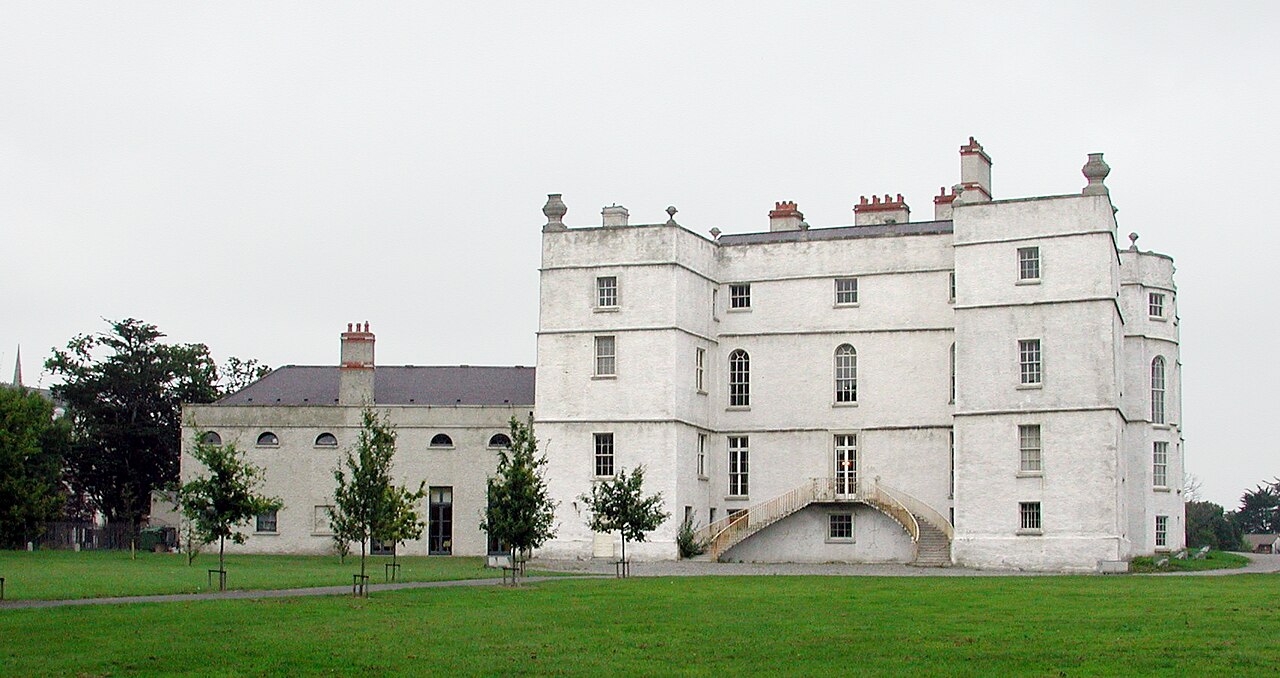
Rathfarnham Castle (Irish: Caisleán Rath Fearnáin) is a 16th-century fortified house in Rathfarnham, South Dublin, Ireland. Originally a semi-fortified and battlemented structure, it underwent extensive alterations in the 18th century. It is in the care of the state, has been restored and is open to the public.
An earlier Irish castle on the site was occupied by the Harold family, who held it as tenants of the le Bret family. It was replaced by the present building, built on lands confiscated from the Eustace family of Baltinglass, to whom it had passed, because of their involvement in the Second Desmond Rebellion. The Geraldines defended the Pale from the Irish clans in the nearby Wicklow Mountains. Rathfarnham was described as a "waste village" when Adam Loftus bought it. It is believed the present castle was built around 1583 for then-Archbishop Loftus. The castle was not long built when in 1600 it had to withstand an attack by the Wicklow clans during the Nine Years' War.
Archbishop Loftus left the castle to his son, Dudley and it then passed in turn to his son Adam in 1616. During Adam's ownership, the castle came under siege in the 1641 rebellion. It was able to hold out against the Confederate army when the surrounding country was overrun. Adam Loftus opposed the treaty of cessation in order to stop the fighting between the Irish Confederates and the English Royalists. Consequently, he was imprisoned in Dublin Castle.
During the subsequent Irish Confederate Wars (1641–53), the castle changed hands several times. From 1641 to 1647, it was garrisoned by English Royalist troops. In 1647, Ormonde, commander of the Royalists in Ireland, surrendered Dublin to the English Parliament and Parliamentary troops were stationed at the castle until 1649 when a few days before the Battle of Rathmines, the castle was stormed and taken without a fight by the Royalists as part of the Siege of Dublin. However, the Roundheads re-occupied it after their victory at the Battle of Rathmines. It has also been reported that Oliver Cromwell held a council there during his campaign in Ireland before going south to besiege Wexford. Adam Loftus, who recovered his castle and lands under Cromwell, sided with the Parliamentarians and was killed at the Siege of Limerick in 1651.
After the English Civil War, the Loftus family retained ownership of the castle.
Text adapted from “Rathfarnham Castle” on Wikipedia, CC BY-SA 4.0.
Rathfarnham Castle ranks #2,923 of 9,079 worldwide in the atlas's castle fame ranking, and #41 of the 178 mapped in Ireland. Founded 1583, it is older than 34% of the atlas's dated landmarks — one of 891 atlas entries founded in the 16th century. 21 more atlas landmarks stand within 25 km. The nearest day-trip guide is Dublin, 6 km away. See how Ireland compares in the castle statistics.
View on the interactive castle map →