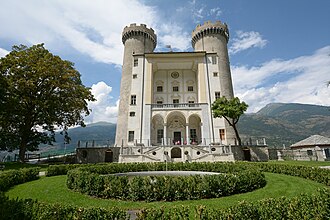
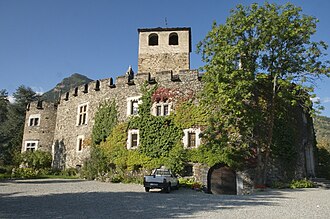
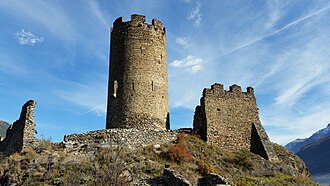
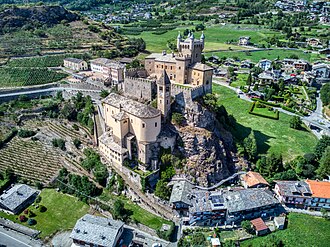
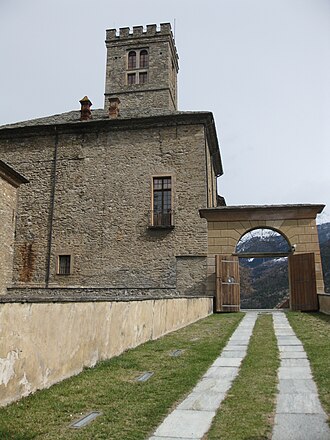
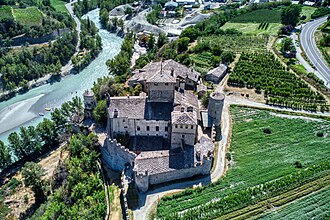
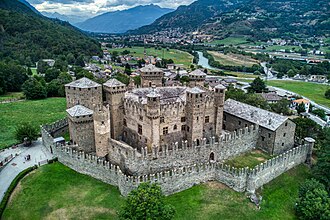
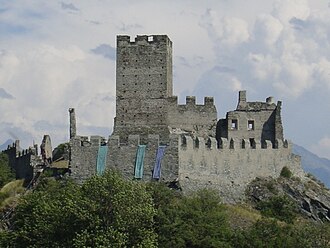
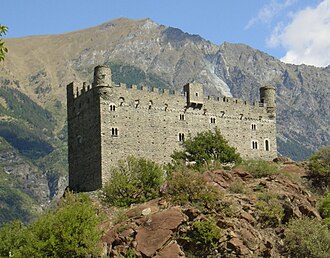
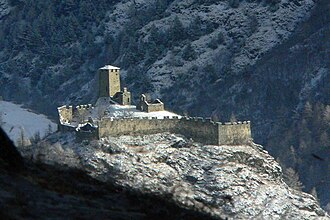
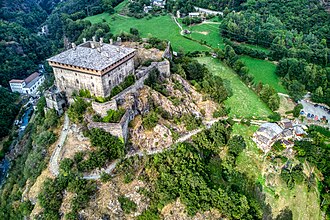
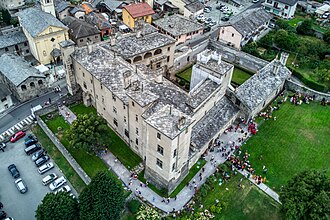
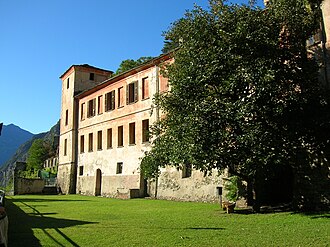
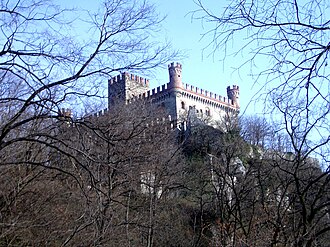
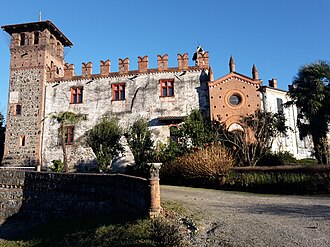
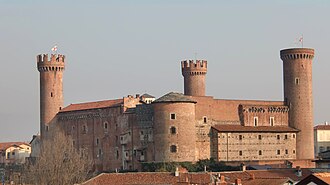
The Aosta Valley is the road to the Great St Bernard and the Little St Bernard passes, which made it the way into Italy from Gaul, and the Challant family who held it for the House of Savoy built a castle at almost every narrowing. Fénis has the double curtain wall and the row of turrets that made it the picture of a medieval castle; Issogne, across the river from Verrès, is the same family’s Renaissance residence of a century later, all courtyard and frescoes.
What this atlas maps on the Aosta Valley castle route
That is every atlas landmark within 15 km of the line, spanning 9th century to 19th century. Nobody picked them: the geography did.
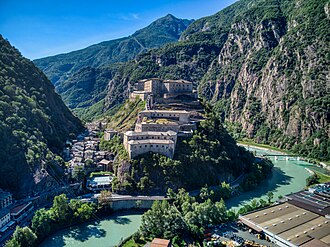
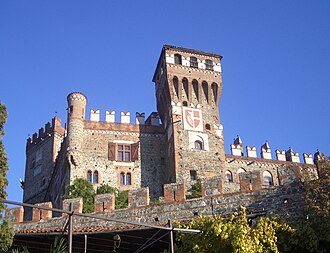
The best known is Fort Bard, ranked 793 of the 9,035 landmarks in the atlas by Wikipedia presence and real readership. The oldest is Castello di Pavone Canavese, founded c. 900.
The route runs through Italy. The same ground, without the itinerary: Castles in the Aosta Valley.
Travelling it
Everything is within sight of the A5 and the SS26 along the valley floor, and the whole run, Aosta to the mouth of the valley at Ivrea, is about an hour end to end without stopping.
Day-trip guides for the towns and cities along it: Turin.
See the route on the map →