Ruin
Saiki Castle
🇯🇵 Japan · 17th century
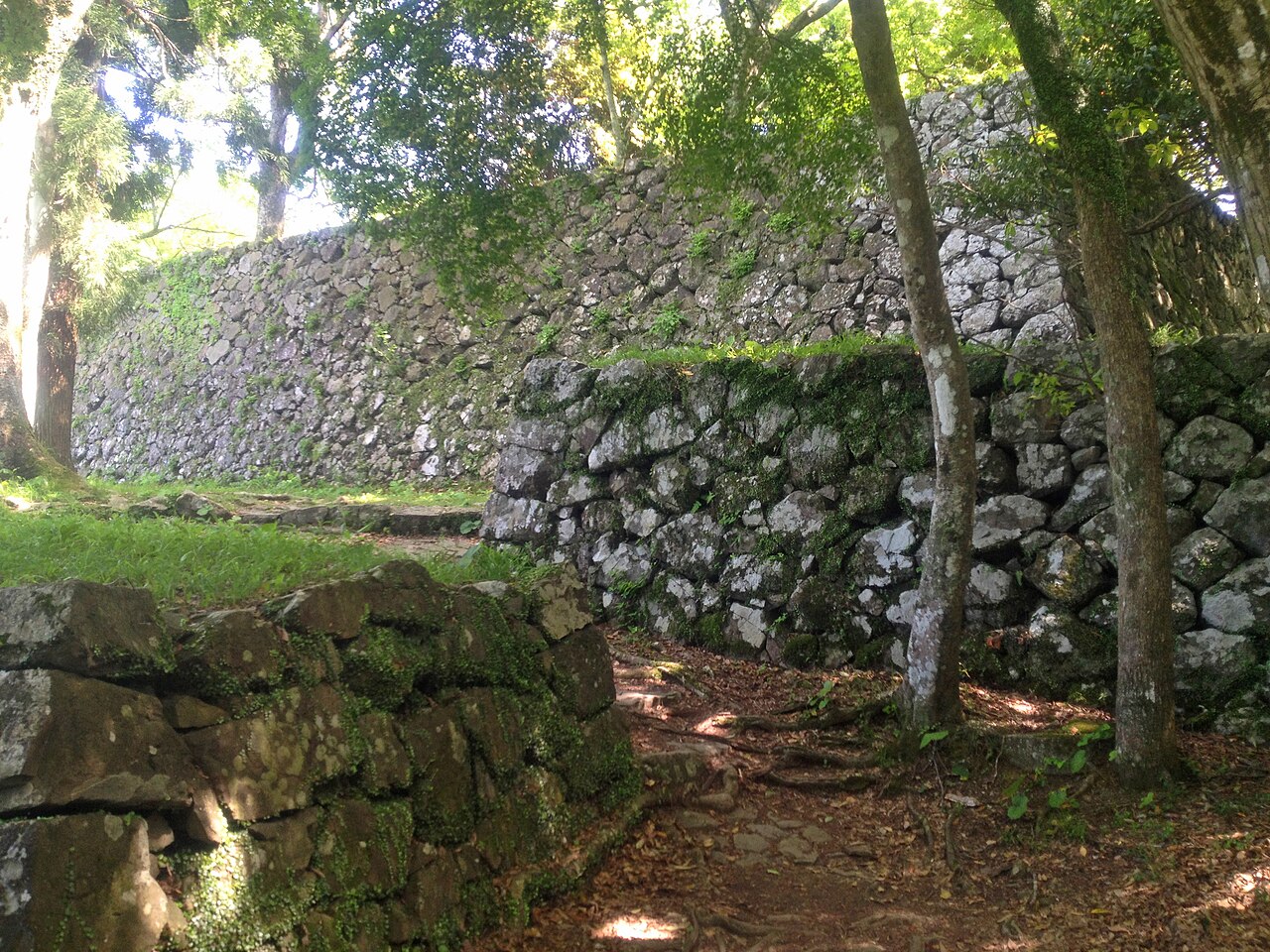
Saiki Castle (佐伯城, Saiki-jō) was an Edo period yamajiro-style Japanese castle located in the city of Saiki, Ōita Prefecture, Japan. Its ruins have been protected as a National Historic Site since 2023. It is No.194 on the list "Continued 100 Fine Castles of Japan".
Saiki Castle is located on the 150-meter Mount Shiroyama at the center of Saiki city. Saiki occupies the alluvial delta at the mouth of the Bansho River, on the south border of former Bungo Province. In the Heian period, this area was under the control of the Saeki clan, an ancient local clan who cooperated when the Ōtomo clan was made shugo of Bungo Province by the Kamakura shogunate. Their stronghold was Togamure Castle on a mountain two kilometers upstream of Saiki Castle. In the Sengoku period, the Ōtomo clan began aggressively expanding their control both to the north and south; however, they suffered a severe defeat in battles against the powerful Shimazu clan from Satsuma Province.
They were saved by the intervention of Toyotomi Hideyoshi, who began his conquest of Kyushu in 1586. The Ōtomo were restored to control of Bungo Province; however, Ōtomo Yoshimune was subsequently accused of cowardice during the Japanese invasions of Korea (1592–1598) and was dispossessed. As retainers of the Ōtomo, the Saeki clan suffered the same fate, eventually becoming retainers of the Tōdō clan.
Mori Takamasa, an old retainer of Hideyoshi, was given control over the Saiki territories, along with the Hita and Kusu regions of Bungo. He constructed Hikuma Castle in Hita as his main stronghold and kept Togamure Castle as a secondary fortification. Despite his dislike for Ishida Mitsunari he still remained loyal to the Western Army and led his forces at the Siege of Tanabe in 1600. He defeated to the Eastern Army shortly after the Battle of Sekigahara at the persuasion of Tōdō Takatora and through his intercession was relocated by Tokugawa Ieyasu to a 20,000 koku holding in Bungo Province in 1601. This marks the start of Saiki Domain, and throughout the Edo period, the Mōri clan continued to rule Saiki for twelve generations.
When Mōri Takamasa entered his territory, he found that the existing stronghold of Togamure Castle was located in a remote area, so he built Saeki Castle at the mouth of the Bansho River and opened a new jōkamachi. Construction started in 1602 and completed in 1606.
Text adapted from “Saiki Castle” on Wikipedia, CC BY-SA 4.0.
Saiki Castle ranks #5,781 of 8,134 worldwide in the atlas's castle fame ranking, and #278 of the 297 mapped in Japan. Founded 1606, it is older than 32% of the atlas's dated landmarks — one of 626 atlas entries founded in the 17th century. Its Wikipedia articles were opened 1,208 times in the last 60 days, more than 54% of the atlas. 1 more atlas landmarks stand within 25 km. It is one of the 37 landmarks on the atlas's regional map of Kyushu. See how Japan compares in the castle statistics.
View on the interactive castle map →Frequently asked questions
Where is Saiki Castle?
Saiki Castle stands in Japan, at 32.96023°, 131.88982°.
When was Saiki Castle built?
The atlas dates its founding to 1606. Earlier structures may have stood on the site; this is the earliest documented founding year.
How famous is Saiki Castle?
In this atlas's fame ranking: #5,781 of 8,134 worldwide, and #278 in Japan. Fame here combines how many Wikipedia language editions cover a landmark with how many people read them.
What is the nearest castle to Saiki Castle?
Usuki Castle, about 20 km away.
More castles in Japan
- Ōuchi-shi Yakata Japan
- Genbao Castle Japan
- Chiran Castle Japan
- Shōzui Castle Japan
More ruins
- Tsunomure Castle Japan · 13th century
- Samegao Castle Japan
- Torigoe Castle Japan · 16th century
- Namioka Castle Japan · 14th century