 Iran · 19th century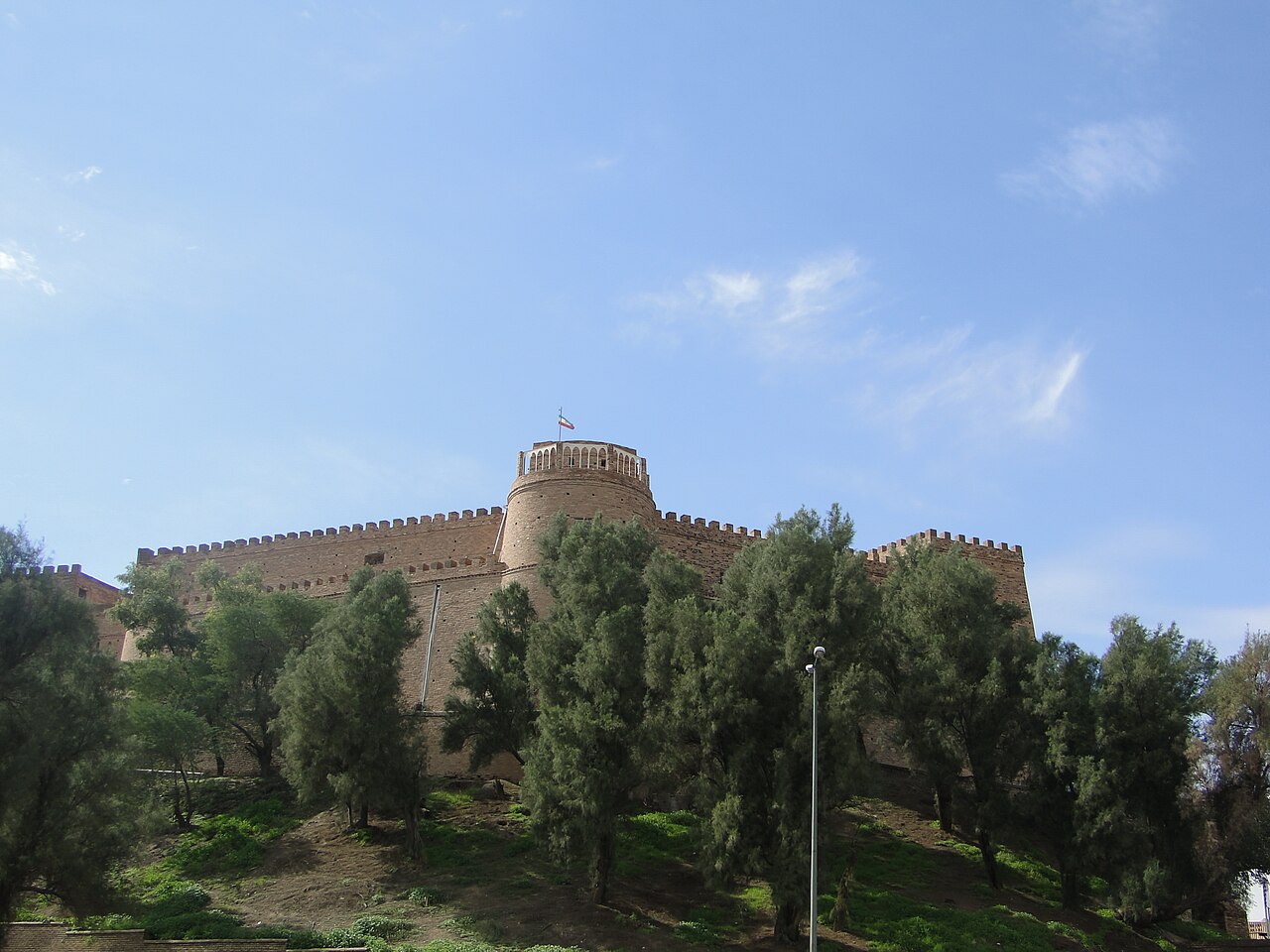
Shush Castle (French: Château de Suse) is located in the ruins of the ancient city of Susa (Shush) in the Khuzestan province of Iran. The structure stands on a hill overlooking the archaeological site and was historically used as a base of operations for European archaeological missions working in the region. Today, the castle remains one of the most recognizable landmarks within the archaeological complex of Susa.
The castle was constructed in the late 1890s by the French archaeologist Jean-Marie Jacques de Morgan, who directed several French archaeological expeditions in Iran. Built primarily from bricks taken from nearby ancient ruins, the fortress-like structure served as a secure headquarters for the storage of artifacts, excavation equipment, and records collected during the archaeological work carried out at the site. Its design was inspired by medieval European castles, giving it a distinctive appearance that contrasts with the surrounding ancient Mesopotamian ruins.
Shush Castle is often seen as an example of the early, pre-scientific era of archaeology, when excavation methods were less careful and preservation standards were limited. During this time, archaeologists sometimes removed building materials or damaged parts of ancient sites while searching for artifacts and inscriptions. Bricks from the ruins of Susa were used to construct the castle, which is often cited as an example of these early practices.
Originally administered by the French archaeological mission and considered property of the French government, the castle remained under French control for several decades. Following the Iranian revolution in 1979 and the establishment of the Islamic Republic, the castle was seized by Iranian authorities. The castle was then incorporated into the national heritage system and adapted for public use.
Text adapted from “Shush Castle” on Wikipedia, CC BY-SA 4.0.
Shush Castle ranks #2,417 of 9,079 worldwide in the atlas's castle fame ranking, and #28 of the 173 mapped in Iran. Founded c. 1897 — one of 717 atlas entries founded in the 19th century. Its Wikipedia articles were opened 1,540 times in the last 60 days, more than 63% of the atlas. 1 more atlas landmarks stand within 25 km. See how Iran compares in the castle statistics.
View on the interactive castle map →