 Poland · 13th century
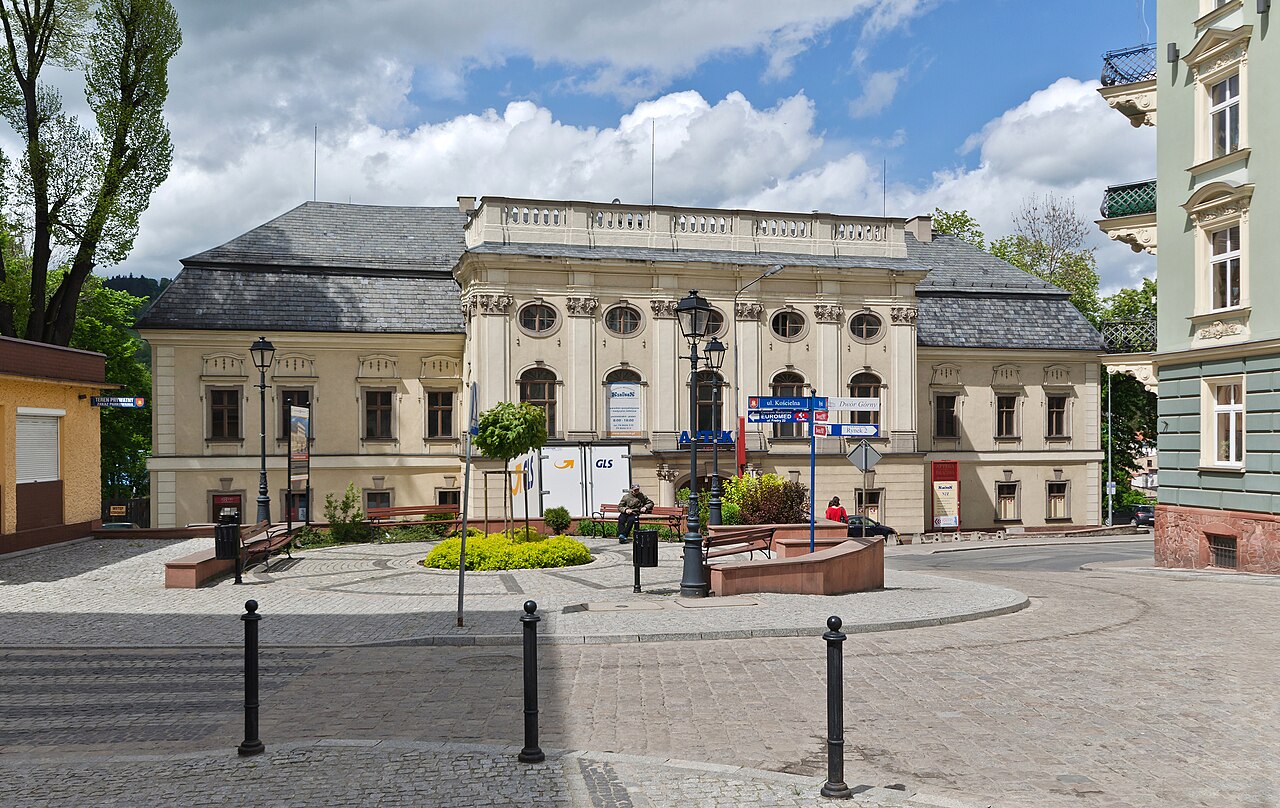
Stillfried Castle ranks #6,835 of 9,040 worldwide in the atlas's castle fame ranking, and #264 of the 397 mapped in Poland. Founded c. 1250, it is older than 67% of the atlas's dated landmarks, one of 1091 atlas entries founded in the 13th century. 16 more atlas landmarks stand within 25 km. The nearest day-trip guide is Wałbrzych, 26 km away. It is one of the 80 landmarks on the atlas's regional map of Lower Silesia. See how Poland compares in the castle statistics.
Stillfried Castle (Polish: Zamek Stillfriedów, German: Palais Stillfried) is a historic building in Nowa Ruda, Poland.
The original building dates back to the 13th century, when it housed the court of Hannus Wustehube. The earliest record naming the property specifically is from 1352, recording its purchase by Hansel Donyn. Destroyed during the Hussite Wars, it was rebuilt and expanded until being burnt down again during the Thirty Years' War. Under the ownership of the Stillfried family, whose members were barons, the castle was rebuilt and expanded again under the direction of the Italian architect Andrea Carove, taking the form of a large square around a courtyard with a tower at its centre. The tower was pulled down in 1730, and the building's last major expansion took place in 1796, when it was given its present baroque facade.
In 1810, the Stillfried family moved to a palace in Bożków, and Stillfried castle from that point was used for the administration of the nearby mines and properties of the family. From 1901, the castle held various state institutions, including the health authority, briefly, in 1945. Most of the original interior has been replaced, but a grand two-speed staircase remains in place. The castle has been in private hands since 2004.
Text adapted from “Stillfried Castle” on Wikipedia, CC BY-SA 4.0.
View on the interactive castle map →