Ruin
Tecklenburg
 Germany · 12th century
- Founded
- 1184
- Heritage status
- architectural heritage monument in North Rhine-Westphalia
- Coordinates
- 52.2197°, 7.80972°
- Open data
- Wikidata Q1014219
- Links
- Wikimedia Commons
Description
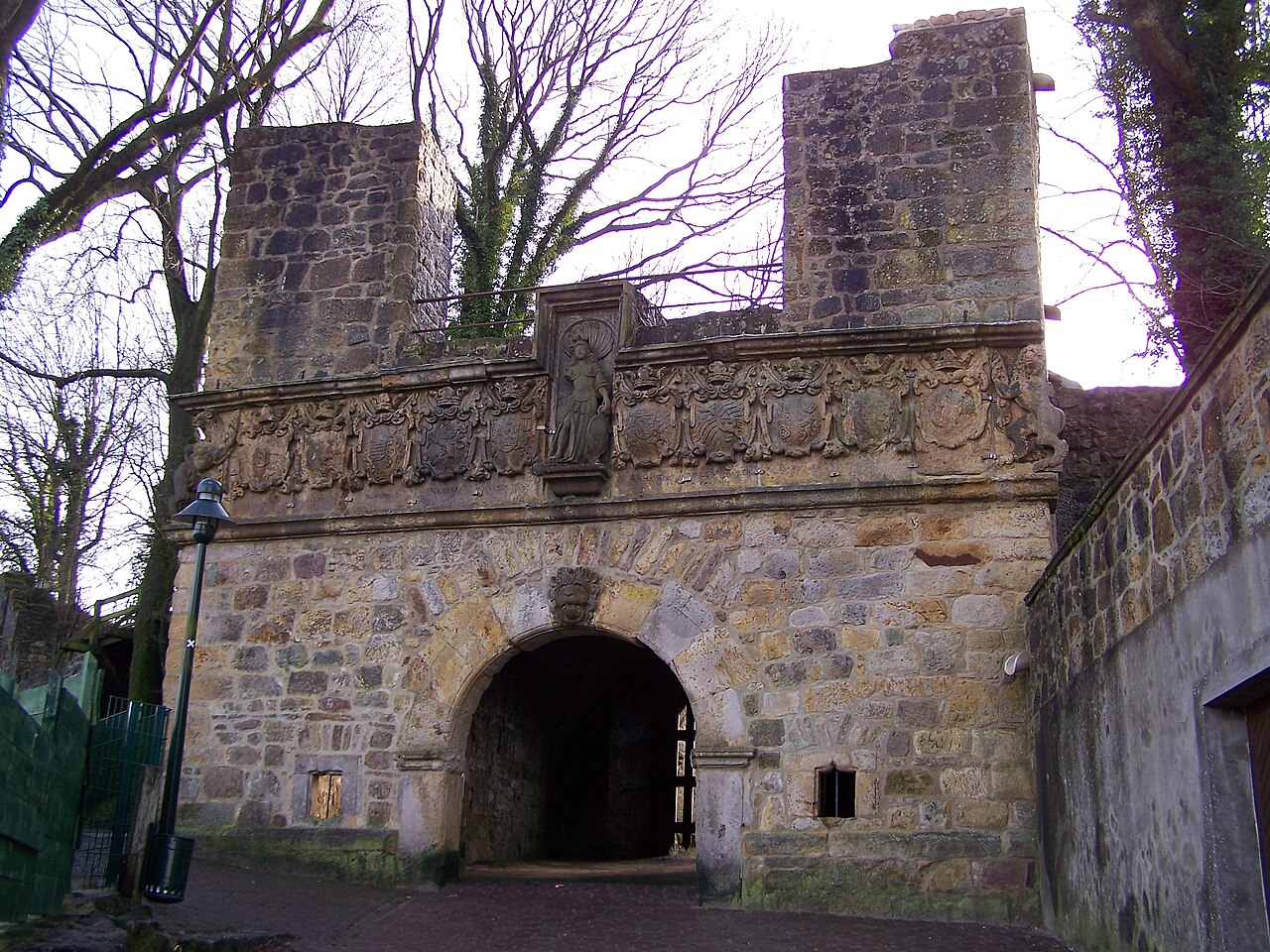
Tecklenburg Castle (German: Burg Tecklenburg), or simply the Tecklenburg, is a ruined castle and venue for the Tecklenburg Open-Air Theatre in the eponymous town of Tecklenburg in the county of Steinfurt in the state of North Rhine-Westphalia, Germany. It was once the seat of the rulers of the County of Tecklenburg.
The castle was probably built around 1100 by the Dutch Count of Zutphen to protect the important trade route from Lübeck via Bremen and Münster to Cologne, in order to be able to control this narrow and easily visible place and to be able to demand customs duties. Later, to secure the access roads to Tecklenburg, some of the lesser nobility were engaged as vassals to secure this route, including lords from the House of Marck, and the estates of Kieseling, Horne, Meeseburg, Kronenburg, Hülshoff and Wondahl.
The castle is first mentioned in an 1184 document. At that time, the Tecklenburg was said to have been the largest and most powerful hilltop castle in northern Germany. Between 1168 and 1190 Archbishop Philip of Cologne acquired the County of Tecklenburg from Count Henry of Guelders and Count Symon of Tecklenburg for the extraordinarily high sum of 3,300 marks. Count Symon received Tecklenburg Castle as a fiefdom and gave his allods for 50 marks to the Archbishopric of Cologne. Connected with this were the lordships of the prince-bishoprics of Münster and Osnabrück, which from now on lay near Cologne and thus formed the basis of the claim of ducal dignity for Westphalia by the Archbishops of Cologne.
In 1226, the papal legate, Conrad of Urach, imposed the ban on the castle and the city of Tecklenburg because Frederick of Isenberg, the alleged murderer of Archbishop Engelbert of Cologne, had hidden himself at the castle in 1225. In 1227, the Cologne church took over Tecklenburg Castle because, according to the people of Cologne, the count had forfeited possession of the castle as a result of his participation in the conspiracy against Engelbert. In 1282, the castle came into the possession of Bishop Conrad II of Osnabrück.
After the Counts of Tecklenburg died out in 1262, the county went into the possession of the Counts of Bentheim. Between 1328 and 1562, it belonged to the Count of Schwerin. He was able to acquire the Barony of Rheda in 1365.
Text adapted from “Tecklenburg Castle” on Wikipedia, CC BY-SA 4.0.
In the rankings
Tecklenburg ranks #6,189 of 9,902 worldwide in the atlas's castle fame ranking, and #622 of the 927 mapped in Germany. Founded 1184, it is older than 78% of the atlas's dated landmarks, one of 810 atlas entries founded in the 12th century. Its Wikipedia articles were opened 1,402 times in the last 60 days, more than 65% of the atlas. 2 more atlas landmarks stand within 25 km. The nearest day-trip guide is Enschede, 62 km away. See how Germany compares in the castle statistics.
Castles nearby
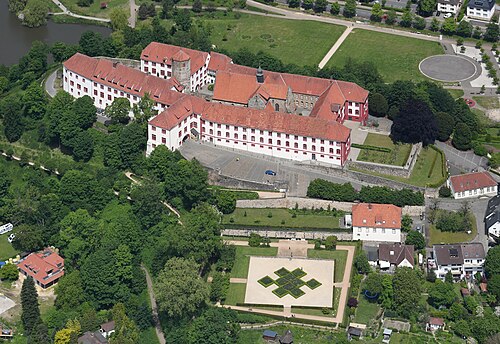
- Iburg Castle17 km · Germany
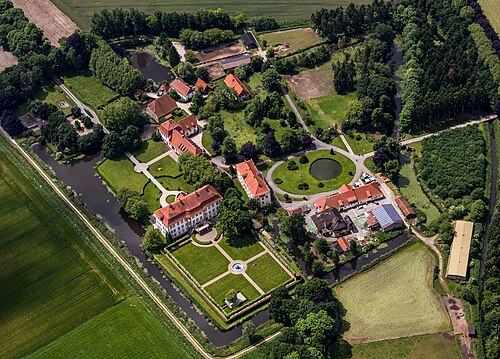
- Schloss Harkotten23 km · Germany
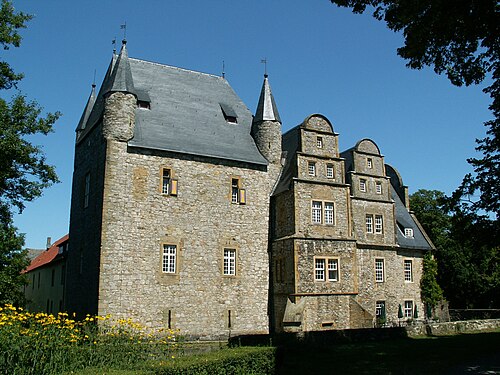
- Schelenburg29 km · Germany
- Wasserschloss Wilkinghege30 km · Germany
More castles in Germany
- Burg OybinGermany · 14th century
- Schloss MerseburgGermany
- Schloss TüßlingGermany
- Paretz PalaceGermany