 Belgium · 12th century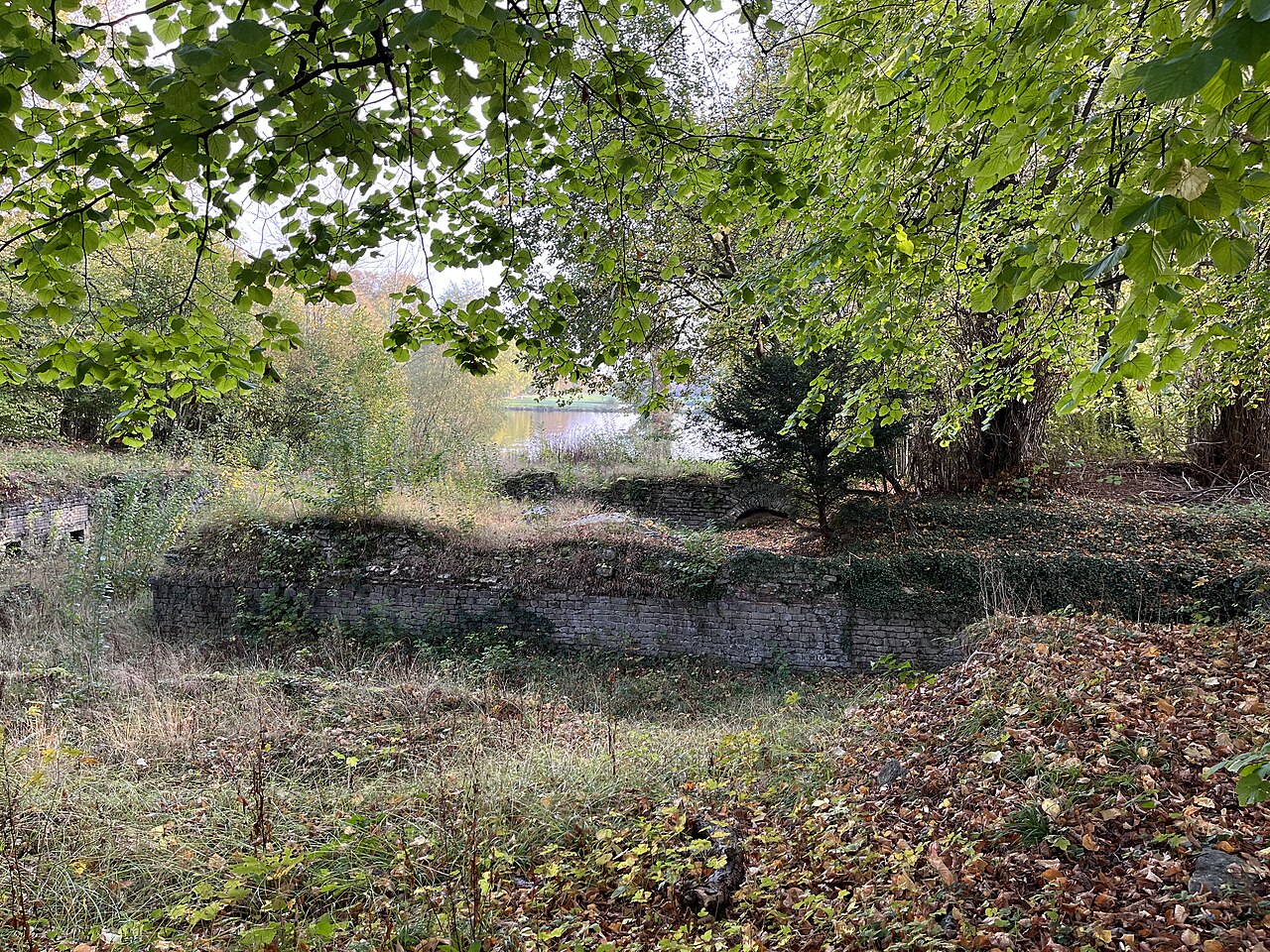
Tervuren Castle (Dutch: Kasteel van Tervuren; French: Château de Tervueren) was a moated castle constructed by the dukes of Brabant, which later became a royal residence and hunting lodge for the governors of the Habsburg Netherlands. It was located in Tervuren, Belgium, just outside Brussels. It was demolished in 1782.
The park later contained the Pavilion of Tervuren, a summer palace for the prince of Orange, the future King William II of the Netherlands, which burned down in 1879. The park was used as the location of the 1897 Brussels International Exposition. Later, in 1910, the Royal Museum for Central Africa was constructed in the park, which can still be visited.
From the castle nothing remains, except some foundations. The St. Hubertus Chapel is still standing just as the stables. The park today covers an area of 207 hectares. The northern part is laid out in the French style and is characterized by a succession of ponds; the central part consists of a wooded ridge with a more natural part to the south.
Text adapted from “Tervuren Castle” on Wikipedia, CC BY-SA 4.0.
Tervuren Castle ranks #5,142 of 9,079 worldwide in the atlas's castle fame ranking, and #70 of the 128 mapped in Belgium. Founded c. 1190, it is older than 78% of the atlas's dated landmarks — one of 756 atlas entries founded in the 12th century. Its Wikipedia articles were opened 1,369 times in the last 60 days, more than 59% of the atlas. 20 more atlas landmarks stand within 25 km. The nearest day-trip guide is Brussels, 12 km away. See how Belgium compares in the castle statistics.
View on the interactive castle map →