 France · 16th century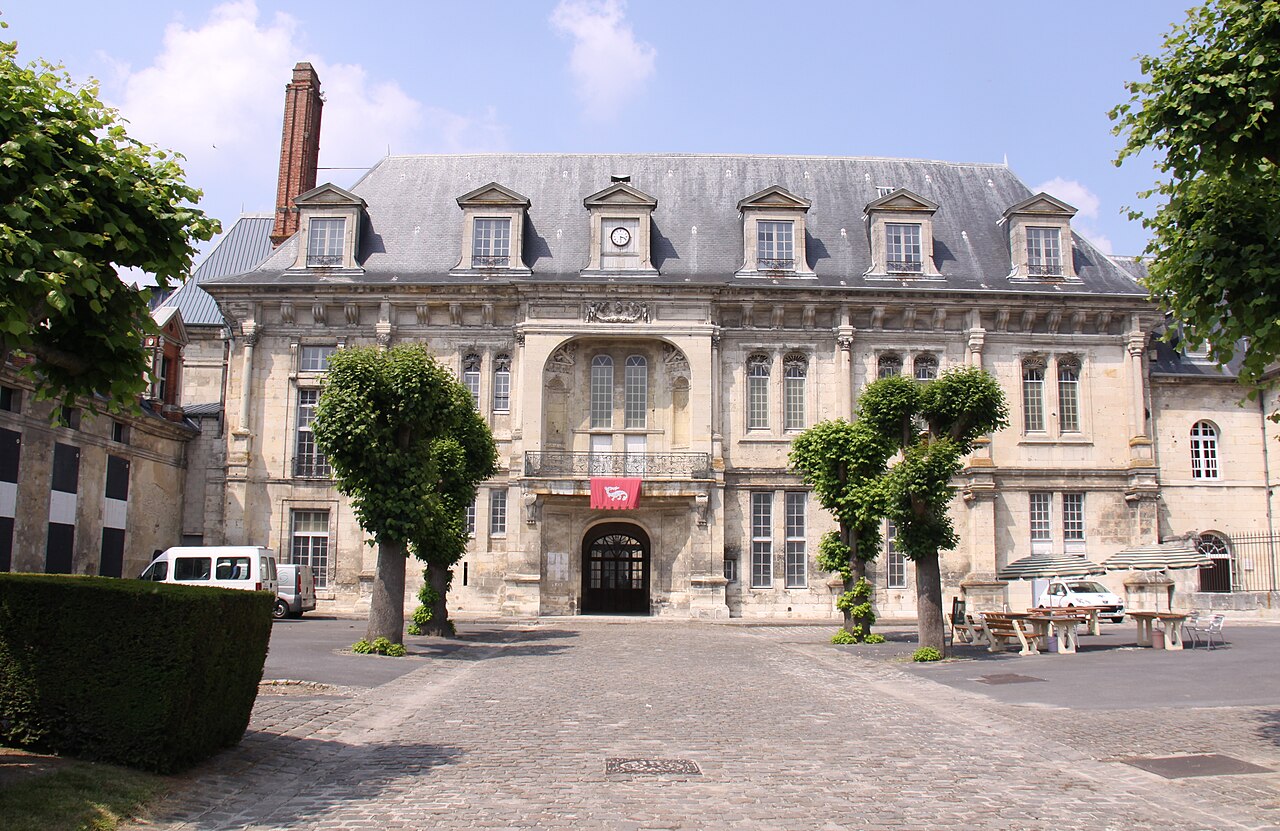
The Château de Villers-Cotterêts (pronounced [ʃɑto d(ə) vilɛʁ kɔt(ə)ʁɛ]) is a historic French château located in the town of Villers-Cotterêts in the Aisne department, Hauts-de-France, about 80 kilometres (50 miles) north-east of Paris. It is a state property and a historic monument since 1997.
The castle was built for Francis I of France on the edge of the Forest of Retz.
In 1539, Francis I of France signed the Ordinance of Villers-Cotterêts which made the use of the French language mandatory in the acts of administration and justice.
In 1661, Louis XIV granted the castle to his brother Philippe I, Duke of Orléans. It remained with the House of Orléans until the Revolution.
In 1787 Louis Philippe II, Duke of Orléans was exiled to the château over opposition to the May Edicts in 1787.
In 1790, the castle was seized as national property.
Napoleon turned it into a beggar's home, a prison and a hospice in 1808. It then became a retirement home in 1889 until the end of 2014.
In 2023, following a colossal restoration campaign, president Emmanuel Macron turned the castle into the Cité Internationale de la Langue Française, dedicated to the French language.
Text adapted from “Château de Villers-Cotterêts” on Wikipedia, CC BY-SA 4.0.
Villers-Cotterêts Castle ranks #5,482 of 9,079 worldwide in the atlas's castle fame ranking, and #487 of the 793 mapped in France. Founded c. 1550, it is older than 37% of the atlas's dated landmarks — one of 891 atlas entries founded in the 16th century. Its Wikipedia articles were opened 2,201 times in the last 60 days, more than 72% of the atlas. 1 more atlas landmarks stand within 25 km. The nearest day-trip guide is Compiègne, 26 km away. See how France compares in the castle statistics.
View on the interactive castle map →