Ruin
Weißenstein Castle
 Germany · 11th century
- Founded
- 1100
- Heritage status
- architectural heritage monument in Bavaria
- Location
- Regen
- Coordinates
- 48.9509°, 13.1414°
- Open data
- Wikidata Q2175485
- Links
- Wikimedia Commons
Description
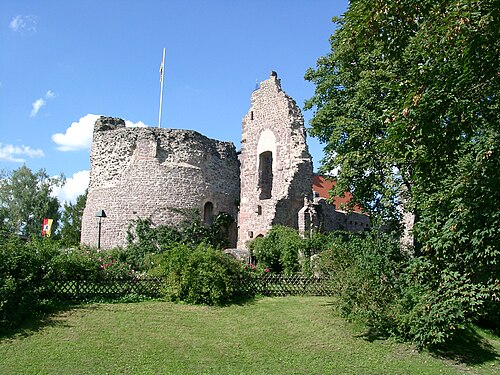
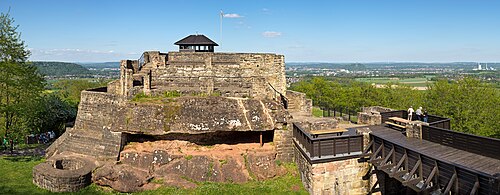
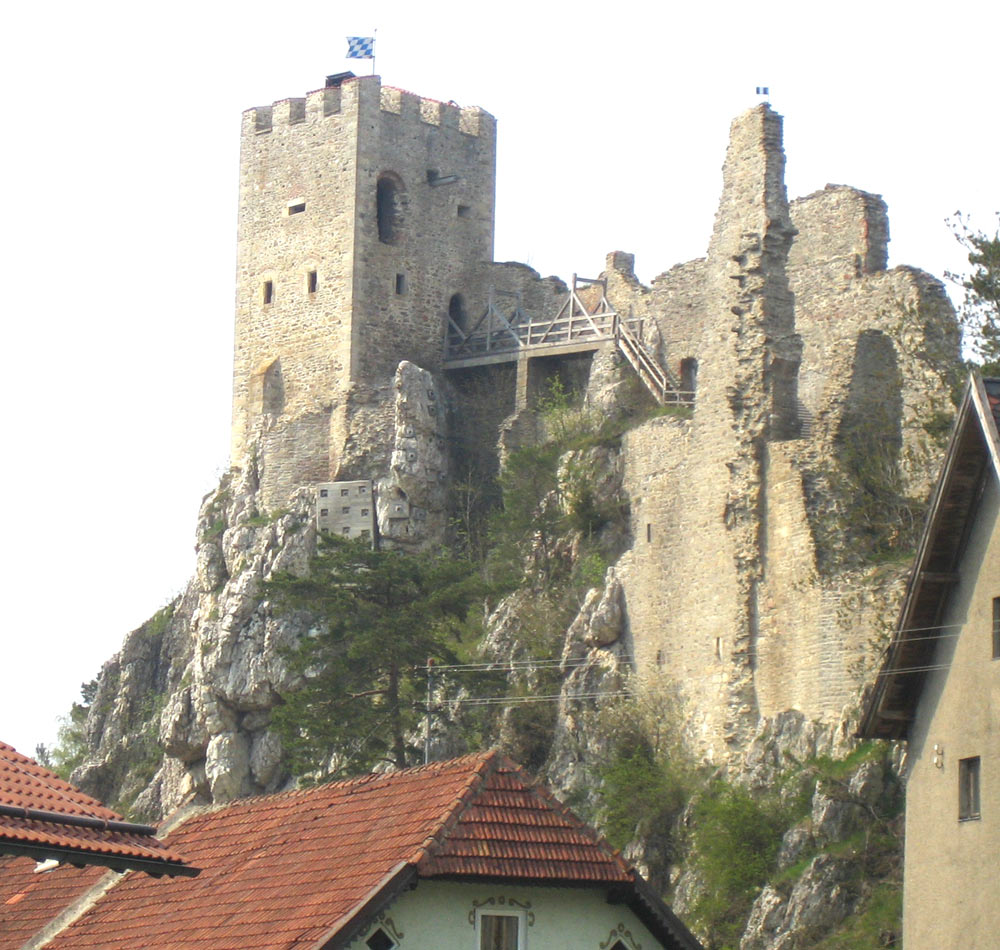
Weißenstein Castle (German: Burgruine Weißenstein) is a ruined rock castle at a height of 758 metres on a quartz ridge, the Pfahl ("Burgberg") in the municipality of Weißenstein in the borough of Regen in the county of Regen in Bavaria.
The castle was built around 1100 by the counts of Bogen. After this dynasty died out in 1242, the castle fell to the Duke of Bavaria. In 1308, the Bavarian Duke Otto and Stephen of Lower Bavaria enfeoffed Lord Eberwein of Degenberg with the castle. In 1339/40, the castle became the property of the Degenbergs.
When the Degenbergs rose up against Duke Albert IV, in the Böckler War, ducal troops under George of Lerchenfeld appeared in front of the castle on 9 December 1468. Shortly before Christmas, Weißenstein Castle was captured and burned down. However, the Degenbergs rebuilt it and remained here until their extinction in 1602 when Hans Sigmund of Degenberg died.
The castle fell to Elector Maximilian I who established the seat of the electoral Pfleger here. In 1633, during the Thirty Years' War, the castle was ravaged by the Swedish. In 1740, the south side of the castle collapsed, in 1742 Franz von der Trenck and his Pandurs finally destroyed the castle.
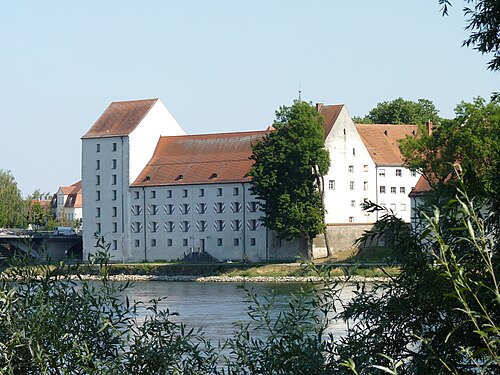
Since then, the castle has been in ruins, while the official residence and farm buildings have been restored. In 1762 a tower-like building was added, which also served as the so-called a "grain box" for the tithes of the subjects. In 1918, the writers, Clara Nordstrom and Siegfried von Vegesack, bought the house and made it their home. They would rent out rooms to artists and tourists. They called it Das Fressende Haus ("The House that Eats"), due to its high costs. This is also the title of his novel published in 1932.
The ruin, an elongated complex on a rock terrace, is separated from its domestic buildings. Besides some masonry, the square tower house has survived. The castle ruins of Weißenstein have been owned by the town of Regen since 1996. From 1991 to 1995 the ruin was renovated and is now accessible to the public.
Since 1985, the Fressende Haus has housed a museum and literary archive on the poet, Siegfried von Vegesack. In addition, sacred art, equipment for flax and linen production and a large collection of snuff are exhibited here. Occasionally poetry readings and other events take place here.
Text adapted from “Weißenstein Castle (Lower Bavaria)” on Wikipedia, CC BY-SA 4.0.
In the rankings
Weißenstein Castle ranks #7,124 of 9,902 worldwide in the atlas's castle fame ranking, and #769 of the 927 mapped in Germany. Founded 1100, it is older than 85% of the atlas's dated landmarks, one of 458 atlas entries founded in the 11th century. Its Wikipedia articles were opened 868 times in the last 60 days, more than 50% of the atlas. 1 more atlas landmarks stand within 25 km. The nearest day-trip guide is Plzeň, 90 km away. See how Germany compares in the castle statistics.
Castles nearby
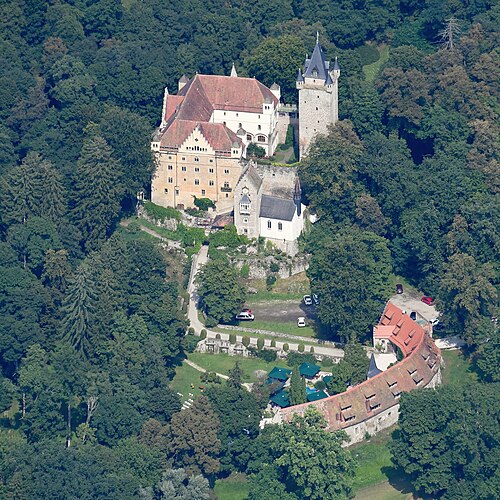
- Schloss Egg18 km · Germany
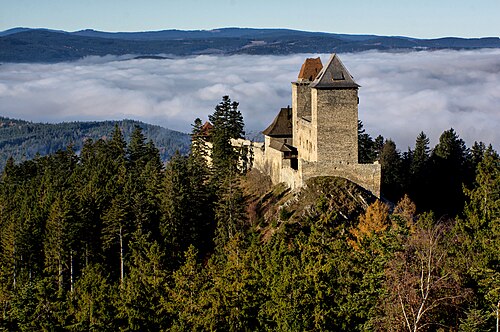
- Kašperk Castle
 39 km · Czech Republic
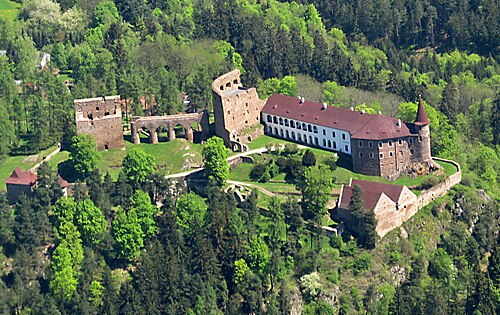
- Castle Velhartice39 km · Czech Republic
- Herzogsschloss42 km · Germany
More castles in Germany
- Burg DreieichenhainGermany
- Schloss SchönsteinGermany · 13th century
- TeufelsburgGermany · 14th century
- Limburg Castle (Hesse)Germany