 Spain · 5th century BC
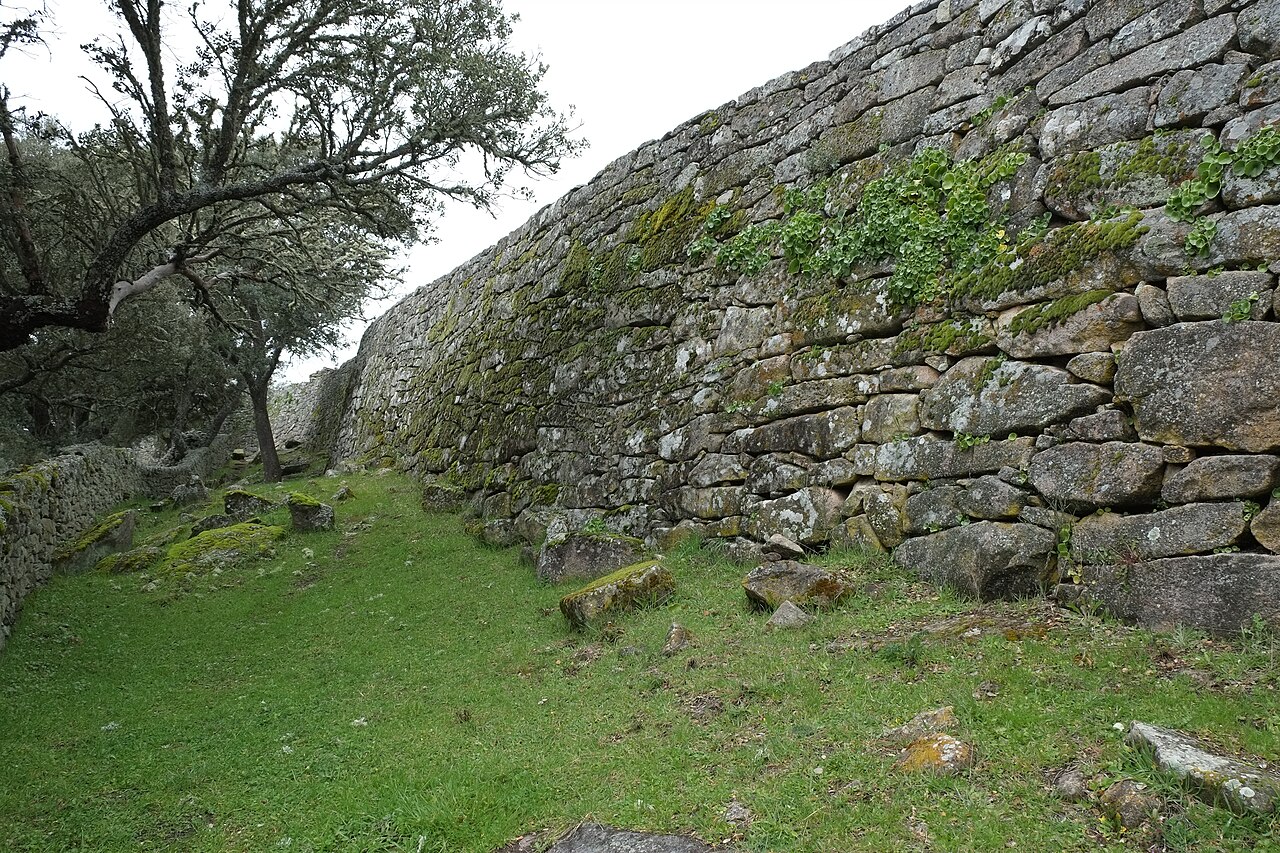
Yecla la Vieja Hill Fort ranks #6,625 of 9,040 worldwide in the atlas's castle fame ranking, and #307 of the 606 mapped in Spain. Founded c. 450 BC, it is older than 99% of the atlas's dated landmarks, one of 11 atlas entries founded in the 5th century BC. See how Spain compares in the castle statistics.
Yecla la Vieja is a hillfort of Vettonian origin located in the Spanish municipality of Yecla de Yeltes, in the province of Salamanca, Castile and León.
It lies south of the village, on a promontory above the Varlaña stream.
It is an archaeological site of some 5 hectares, bounded by thick and well-preserved walls and other defensive structures. Its origin goes back to the 5th century BC, when the Vettones populated the region. It was also used in Roman times and later, until the Early Middle Ages. After its abandonment, in the time of the Catholic Monarchs the hermitage of the Virgen del Castillo was built within the enclosure, still standing and in use.
Besides the imposing walls, the petroglyphs that decorate many of the stones of the walling stand out, generally horses, some with a rider. On the west side of the hillfort, outside the walls, there are several areas of vertically set stones, possibly protection against cavalry assaults, since that is the most open flank of the settlement.
Machine-translated from “Castro de Yecla la Vieja” on the Spanish Wikipedia, CC BY-SA 4.0.
View on the interactive castle map →