 Ukraine · 16th century
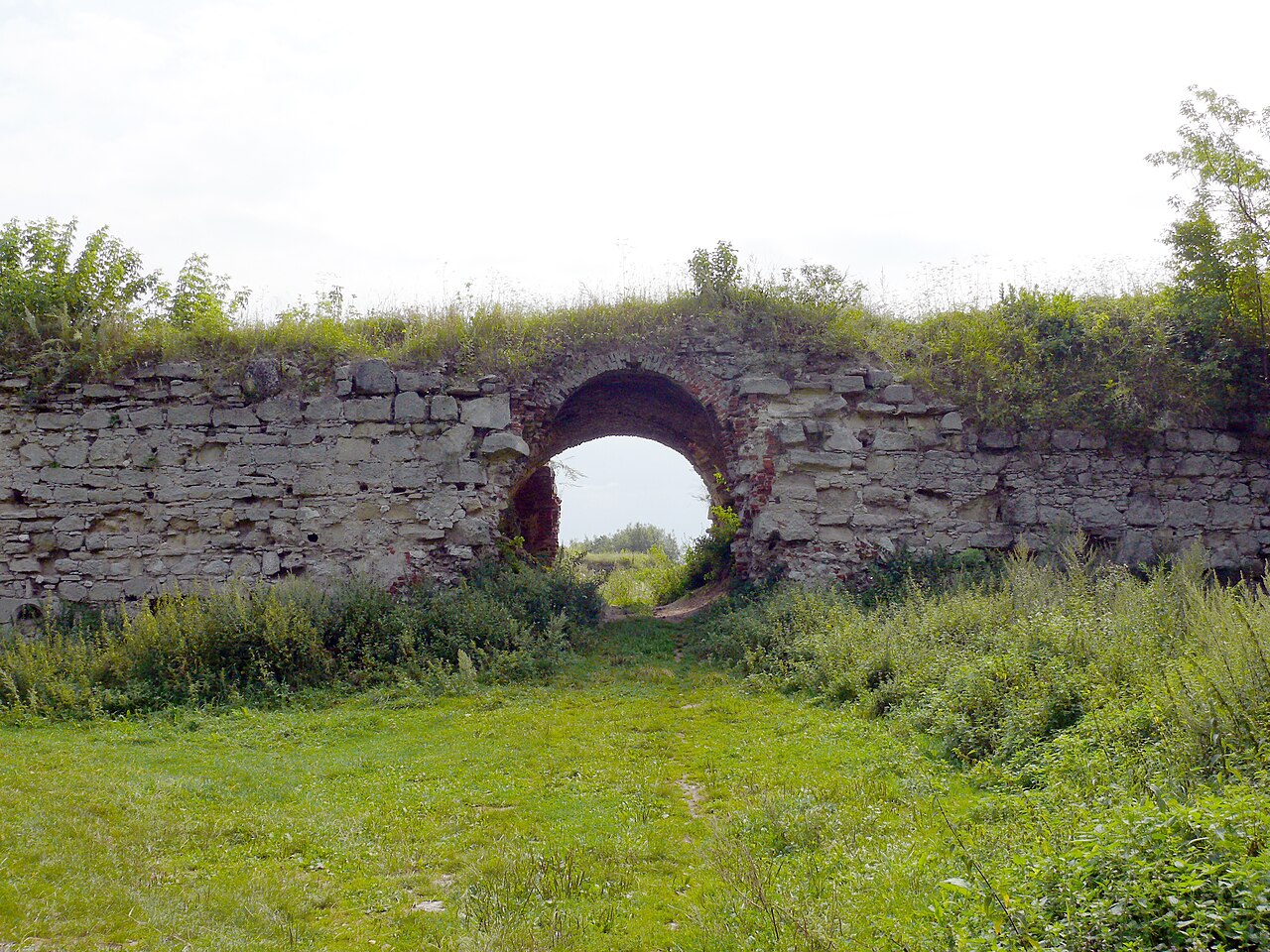
Zaliztsi Castle ranks #8,160 of 9,040 worldwide in the atlas's castle fame ranking, and #128 of the 195 mapped in Ukraine. Founded 1516, it is older than 41% of the atlas's dated landmarks, one of 887 atlas entries founded in the 16th century. See how Ukraine compares in the castle statistics.
The Zaliztsi Castle (Ukrainian: Залозецький замок, romanized: Zalozets'kyi zamok) is located in Zaliztsi, Ternopil Oblast, Ukraine. A defensive castle built in 1516 by Marcin Kamieniecki of the coat of arms of Pilawa, Voivode of Podolia, on the Seret River, and an architectural monument of national importance.
The village of Zaliztsi, along with surrounding villages, belonged in the 15th century to the vast Olesko estate, which, after the death of Jan of Sienno, fell to his son Piotr, from a division made in 1477. Piotr left two daughters: Anna, married to Fryderyk Herburt, castellan of Bielecki, and Jadwiga, married to Marcin Kamieniecki, governor of Podolia. At the time when the castle was owned by Prince Konstanty Wiśniowiecki, Tsar False Dmitry I was a guest within the walls of the fortress in 1603, and there he devised a plan for an expedition to Moscow. Prince Jeremi Wiśniowiecki, father of Polish King Michał Korybut Wiśniowiecki, spent his youth in the castle.
In 1649 the stronghold was captured and destroyed by Cossack troops. Prince Dymitr Wiśniowiecki rebuilt the castle and restored it to its former glory. In 1675 it was besieged again, this time by Turkish troops. The Bashas, according to Turkish custom, decided to seek divination before proceeding with the siege. A black hen was released from the Turkish camp towards the castle, tracking where it would turn. With a clucking sound, the hen returned to the Muslim ranks. The Turks abandoned the siege. The next owners were the Sobieski family and after them the Potocki family.
At the end of the 16th century, the castle was a huge four-winged fortress, built of stone and brick on a quadrangular plan. It was built two stories high and extended along a northwest–southeast axis. Standing in the midst of the inaccessible wetlands of the Seret River, surrounded by a defensive wall, it was a difficult fortress to conquer. The entrance led through a drawbridge and a gate in the south wing. At the corners were four polygonal, three-story towers with shooting holes. In front of the castle was a pre-castle surrounded by a wall and water. The entrance gate, with traces of a drawbridge was located in the south wing. To the right of the gate was a lofty quadrilateral tower with a clock, covered with a dome.
Text adapted from “Zaliztsi Castle” on Wikipedia, CC BY-SA 4.0.
View on the interactive castle map →