Fortaleza
Lalbagh Fort
🇧🇩 Bangladés · siglo XVII
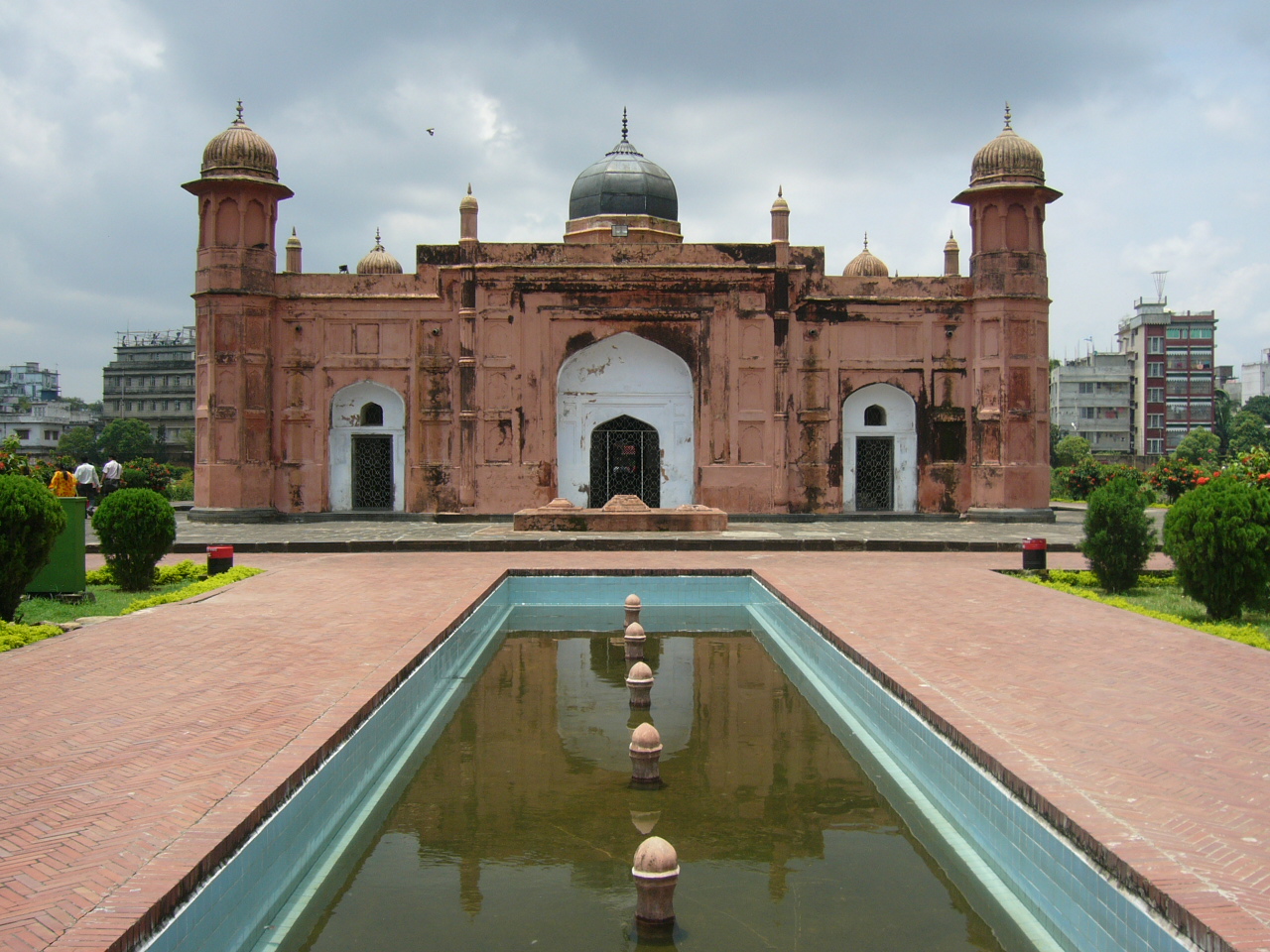
El fuerte de Lalbagh (en bengalí, লালবাগ কেল্লা, romanizado: Lālbāg Kēllā) es un fuerte histórico situado en la ciudad vieja de Daca, Bangladés. Su nombre deriva de su barrio, Lalbagh, que significa Jardín Rojo. El término Lalbagh alude a los tonos rojizos y rosados de la arquitectura mogol. El fuerte original se llamaba fuerte Aurangabad. Su construcción fue iniciada por el príncipe Muhammad Azam Shah, hijo del emperador Aurangzeb y, brevemente, futuro emperador mogol él mismo. Después de que su padre reclamara al príncipe, la construcción del fuerte fue supervisada por Shaista Khan, subahdar de la Bengala mogola. La muerte de la hija de Shaista Khan, Pari Bibi (Dama Hada), provocó la detención del proceso de construcción, al parecer debido a la superstición de Shaista Khan de que el fuerte traía mal presagio. Pari Bibi fue enterrada dentro del fuerte.
El fuerte de Lalbagh se construyó como residencia del gobernador de la provincia mogola de Bengala. El complejo incluye la casa del gobernador, la tumba de Pari Bibi y una mezquita. Está cubierto por céspedes, fuentes y canales de agua. Sus dos puertas meridionales fueron antaño grandes arcos. El gran complejo original abarcaba la casa del gobernador y los dos arcos. La tumba de Pari Bibi se añadió más tarde. El fuerte de Lalbagh fue concebido como una versión en miniatura de grandes fuertes mogoles como el Fuerte Rojo y Fatehpur Sikri. Durante el reinado del emperador Aurangzeb, Bengala se convirtió en el motor económico del imperio, y Aurangzeb la llamó el Paraíso de las Naciones.
Daca creció hasta convertirse en una ciudad imperial con una de las élites más ricas del Imperio mogol, incluidos miembros de la familia imperial. La artillería mogola custodiaba el fuerte. Situado en su día junto al río Buriganga, el río se ha retirado de las inmediaciones del fuerte.
Traducción automática de «Lalbagh Fort» en la Wikipedia en inglés, CC BY-SA 4.0.
Lalbagh Fort ocupa el puesto 491 de 8134 en el mundo en la clasificación de fama de este atlas y el n.º 1 de los 7 que el atlas cartografía en Bangladés. Su fundación, en 1688, es anterior a la del 24% de los monumentos datados del atlas — uno de los 626 monumentos del atlas fundados en el siglo XVII. Sus artículos de Wikipedia se abrieron 7181 veces en los últimos 60 días, más que el 89% del atlas. En 25 km a la redonda hay otros 5 monumentos del atlas. La guía de excursión más cercana es Daca, a 1 km. Compara el dato en las estadísticas de castillos.
Ver en el mapa interactivo de castillos →Preguntas frecuentes
¿Dónde está Lalbagh Fort?
La fortaleza se encuentra en Bangladés, en las coordenadas 23.71903°, 90.38806°.
¿De qué año data Lalbagh Fort?
El atlas fija su fundación en 1688. Pudieron existir construcciones anteriores en el mismo lugar; este es el año documentado más antiguo.
¿Qué puesto ocupa Lalbagh Fort en la clasificación por fama?
En la clasificación por fama de este atlas: n.º 491 de 8134 en el mundo, y n.º 1 en Bangladés. La fama combina en cuántas ediciones de Wikipedia aparece un monumento y cuánta gente las lee.
¿Qué castillo está más cerca de Lalbagh Fort?
Bara Katra, a unos 1 km.
Más castillos en Bangladés
- Idrakpur Fort Bangladés · siglo XVII
- Natore Rajbari Bangladés
Más fortalezas
- Murallas de Jerusalén Israel · siglo I a. C.
- Puerta de Holsten Alemania · siglo XV
- Diyarbakır Fortress Turquía · siglo VI a. C.
- Muralla romana de Lugo España · siglo III