 Bangladesh · 17th century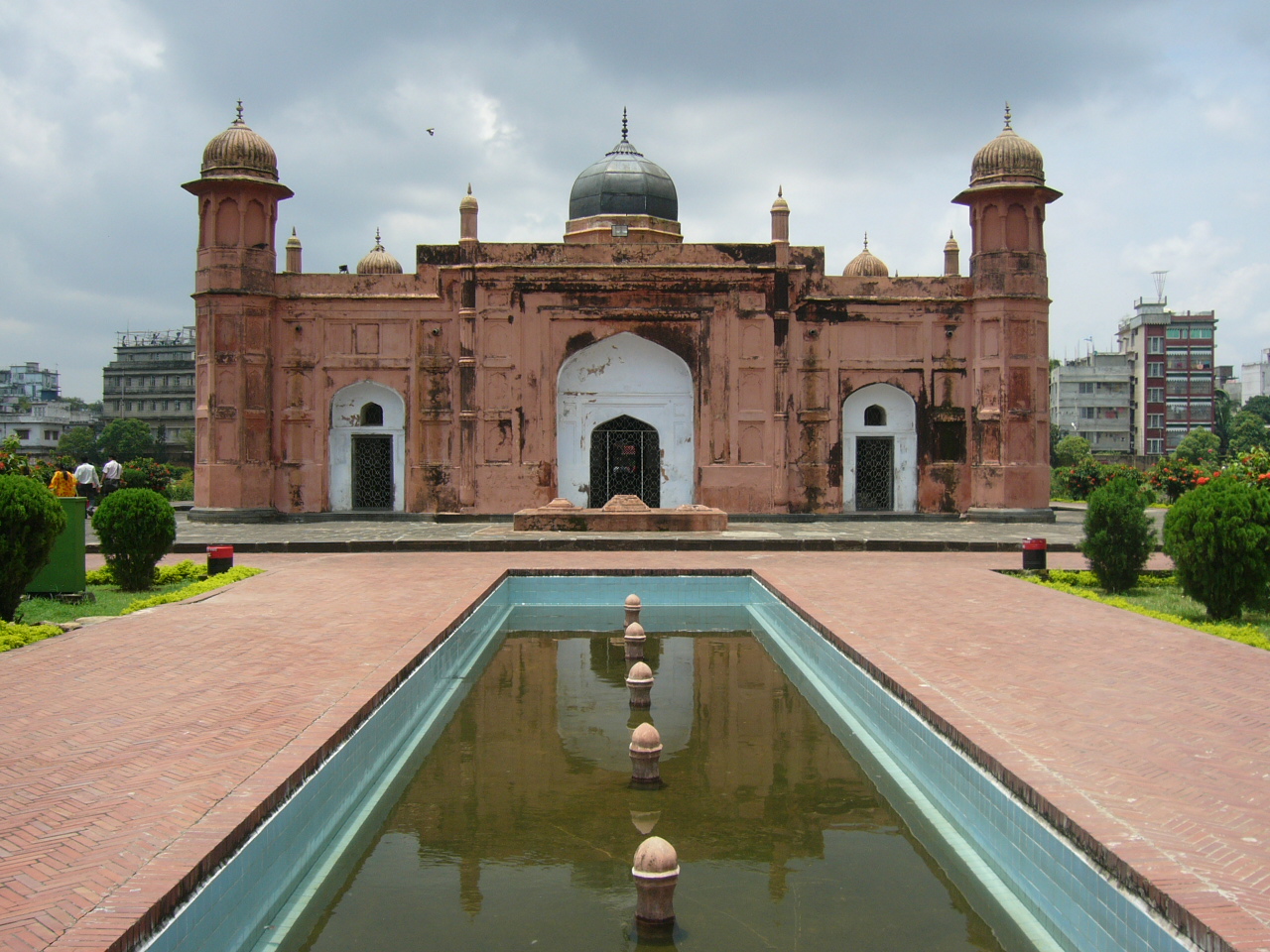
The Lalbagh Fort (Bengali: লালবাগ কেল্লা, romanized: Lālbāg Kēllā) is a historic fort situated in the old city of Dhaka, Bangladesh. Its name is derived from its neighbourhood, Lalbagh, which means Red Garden. The term Lalbagh refers to reddish and pinkish hues in the Mughal architecture. The original fort was called Fort Aurangabad. Its construction was started by Prince Muhammad Azam Shah, a son of the Emperor Aurangzeb, and briefly a future Mughal emperor himself. After the prince was recalled by his father, the fort's construction was overseen by Shaista Khan, the Subahdar of Mughal Bengal. The death of Shaista Khan's daughter, Pari Bibi (Fairy Lady), resulted in a halt to the construction process, apparently due to Shaista Khan's superstition that the fort brought bad omen. Pari Bibi was buried inside the fort.
Lalbagh Fort was built as the residence of the governor of the Mughal province of Bengal. The complex includes the governor's house, the tomb of Pari Bibi and a mosque. It is covered by lawns, fountains and water channels. Its two south gates were previously grand arches. The original grand complex covered the governor's house and the two archways. The tomb of Pari Bibi was later added. Lalbagh Fort was modelled as a miniature version of great Mughal forts like the Red Fort and Fatehpur Sikri. During the reign of Emperor Aurangzeb, Bengal became the economic engine of the empire, and Aurangzeb called it the Paradise of Nations.
Dhaka grew into an imperial city with one of the richest elites in the Mughal Empire, including members of the imperial family. Mughal artillery guarded the fort. Once located beside the Buriganga River, the river has retreated from the vicinity of the fort. The fort was depicted in European paintings during the 18th and 19th centuries.
Today, Lalbagh Fort is one of the most visited sites in Dhaka.
Text adapted from “Lalbagh Fort” on Wikipedia, CC BY-SA 4.0.
Lalbagh Fort ranks #481 of 9,079 worldwide in the atlas's castle fame ranking, and #1 of the 8 mapped in Bangladesh. Founded 1678, it is older than 23% of the atlas's dated landmarks — one of 721 atlas entries founded in the 17th century. Its Wikipedia articles were opened 7,181 times in the last 60 days, more than 91% of the atlas. 5 more atlas landmarks stand within 25 km. The nearest day-trip guide is Dhaka, 1 km away. See how Bangladesh compares in the castle statistics.
View on the interactive castle map →