Paleis
Heijō Palace
🇯🇵 Japan
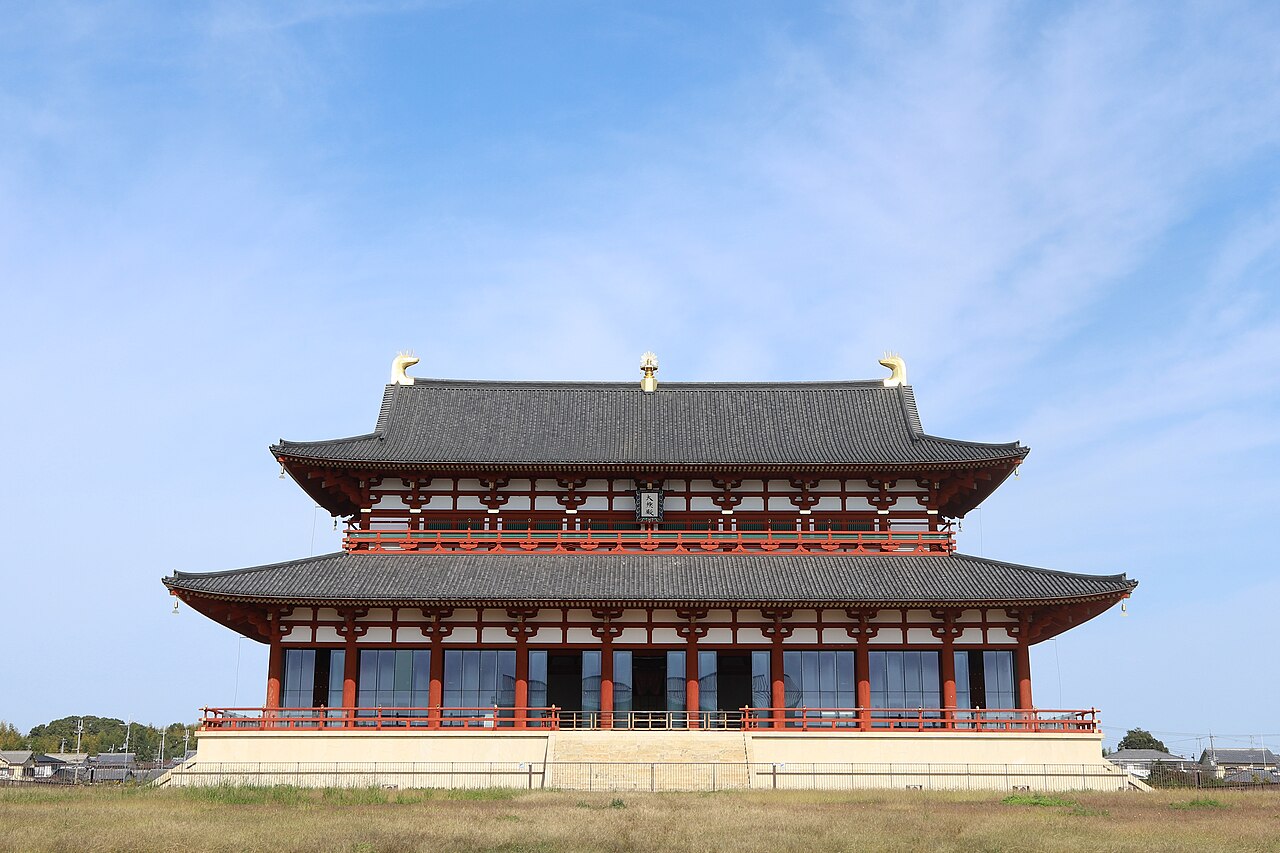
Heijō Palace (平城宮, Heijō-kyū) was de keizerlijke residentie in de Japanse hoofdstad Heijō-kyō (het huidige Nara), gedurende het grootste deel van de Nara-periode. Het paleis, dat gedurende het grootste deel van de Nara-periode van 710 tot 794 diende als keizerlijke residentie en bestuurlijk centrum, lag in het noord-centrale deel van de stad, in overeenstemming met de Chinese modellen die voor het ontwerp van de hoofdstad werden gebruikt.
Het paleis bestond uit een daidairi (大内裏; ook uitgesproken als taidairi), een grote rechthoekige omheinde ruimte met verscheidene ceremoniële en bestuurlijke gebouwen, waaronder de regeringsministeries. Binnen deze omheining lag het apart ommuurde residentiële complex van de keizer, het Binnenpaleis. Naast de woonvertrekken van de keizer bevatte het Binnenpaleis de residenties van de keizerlijke gemalinnen, evenals bepaalde officiële en ceremoniële gebouwen die nauwer met de persoon van de keizer verbonden waren.
De oorspronkelijke rol van het paleis was het belichamen van het gecentraliseerde bestuursmodel dat Japan in de 7e eeuw uit China had overgenomen — de Daijō-kan en zijn ondergeschikte Acht Ministeries. Het paleis was ontworpen om een passend kader te bieden voor de residentie van de keizer, het voeren van staatszaken en de bijbehorende ceremoniële functies.
Nadat de hoofdstad naar Heian was verplaatst, werden de paleisgebouwen ofwel daarheen overgebracht, ofwel getroffen door verscheidene branden en andere rampen, en verdwenen ze. De site werd omgezet in landbouwgrond, en er bleef bijna geen spoor van over; de locatie bleef echter bekend. In de jaren zeventig begonnen opgravingen, en in de jaren 2000 begon een grootschalige reconstructie op basis van hedendaagse literaire bronnen en opgravingen.
Machinaal vertaald uit “Heijō Palace” op de Engelstalige Wikipedia, CC BY-SA 4.0.
Heijō Palace staat op plaats 647 van 8.134 in de bekendheidsranglijst van deze atlas en op plaats 32 van de 297 die de atlas in Japan in kaart brengt. De Wikipedia-artikelen erover werden de afgelopen 60 dagen 7.515 keer geopend, meer dan 90% van de atlas. Binnen 25 km staan nog 5 andere bouwwerken uit de atlas. De dichtstbijzijnde dagtripgids is Osaka, 27 km verderop. Dit is een van de 71 bouwwerken op de regiokaart Kansai. Zie hoe dat zich verhoudt in de kastelenstatistiek.
Bekijk op de interactieve kastelenkaart →Veelgestelde vragen
Waar ligt Heijō Palace?
Heijō Palace ligt in Japan, op 34.69111°, 135.79556°.
Is Heijō Palace UNESCO-werelderfgoed?
Ja — volgens Wikidata maakt het deel uit van een UNESCO-werelderfgoedsite.
Hoe bekend is Heijō Palace?
In de bekendheidsranglijst van deze atlas: plaats 647 van 8.134 wereldwijd, plaats 32 in Japan. Bekendheid combineert het aantal Wikipedia-taalversies met het aantal lezers.
Welk kasteel ligt het dichtst bij Heijō Palace?
Kōriyama Castle, ongeveer 5 km verderop.
Meer kastelen in Japan
- Kasteel Hirosaki Japan · 17e eeuw
- Kasteel Kanazawa Japan · 16e eeuw
- Kōchi Castle Japan · 17e eeuw
- Nakijin Castle Japan · 14e eeuw
Meer paleizen
- Granovitaja palata Rusland · 15e eeuw
- Achilleion Griekenland · 19e eeuw
- Sponza Palace Kroatië · 16e eeuw
- Palazzo Corsini Italië · 18e eeuw