Paleis
Sikandar Bagh
🇮🇳 India · 2e eeuw
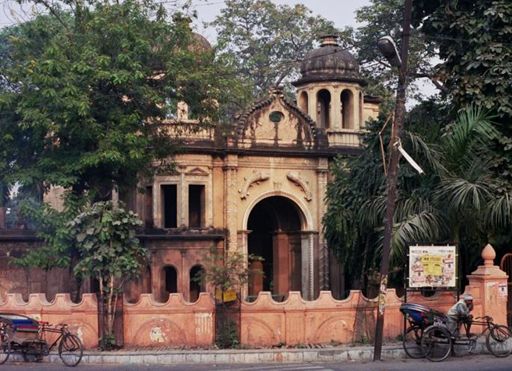
Sikandar Bagh (Hindi: सिकन्दर बाग़, Urdu: سِکندر باغ), door de Britten voorheen ook Sikunder/Sikandra/Secundra Bagh genoemd, is een villa en tuin, omsloten door een versterkte muur met schietgaten, poort en hoekbastions, ongeveer 150 yards vierkant, oftewel circa 1,8 ha, gelegen in de stad Lucknow, Oudh, Uttar Pradesh, India. Ze werd gebouwd door de laatste Nawab van Oudh, Wajid Ali Shah (1822-1887), als zomerresidentie. De naam van de villa betekent "Tuin van Sikandar", naar Sikandar Mahal Begum, de favoriete echtgenote van de Nawab. Ze werd in 1857 door de Britten bestormd tijdens de Indiase Opstand, en binnen haar muren vond de slachting plaats van alle 2.200 sepoy-muiters die er hun bolwerk van hadden gemaakt tijdens het Beleg van Lucknow. Op de plek bevindt zich nu het National Botanical Research Institute of India.
Machinaal vertaald uit “Sikandar Bagh” op de Engelstalige Wikipedia, CC BY-SA 4.0.
Sikandar Bagh staat op plaats 2.901 van 8.134 in de bekendheidsranglijst van deze atlas en op plaats 110 van de 179 die de atlas in India in kaart brengt. Gebouwd in ca. 150, en daarmee ouder dan 98% van de gedateerde bouwwerken in de atlas — een van de 25 bouwwerken in de atlas die uit de 2e eeuw stammen. De Wikipedia-artikelen erover werden de afgelopen 60 dagen 1.632 keer geopend, meer dan 61% van de atlas. Binnen 25 km staan nog 1 andere bouwwerken uit de atlas. Zie hoe dat zich verhoudt in de kastelenstatistiek.
Bekijk op de interactieve kastelenkaart →Veelgestelde vragen
Waar ligt Sikandar Bagh?
Sikandar Bagh ligt in India, op 26.86096°, 80.92544°.
Wanneer werd Sikandar Bagh gebouwd?
De atlas dateert de stichting op ca. 150. Er kunnen eerdere bouwwerken hebben gestaan; dit is het oudste gedocumenteerde bouwjaar.
Hoe bekend is Sikandar Bagh?
In de bekendheidsranglijst van deze atlas: plaats 2.901 van 8.134 wereldwijd, plaats 110 in India. Bekendheid combineert het aantal Wikipedia-taalversies met het aantal lezers.
Welk kasteel ligt het dichtst bij Sikandar Bagh?
Chattar Manzil, ongeveer 1 km verderop.
Meer kastelen in India
- Bengaluru Fort India · 16e eeuw
- Padmanabhapuram Palace India
- Warangal Fort India
- St Thomas Fort, Tangasseri India · 16e eeuw
Meer paleizen
- Palazzo Venier dei Leoni Italië · 18e eeuw
- Tiradentes Palace Brazilië · 20e eeuw
- Prinzessinnenpalais Duitsland · 18e eeuw
- Catete Paleis Brazilië · 19e eeuw