Pałac
Independence Palace
🇻🇳 Wietnam · XX wiek
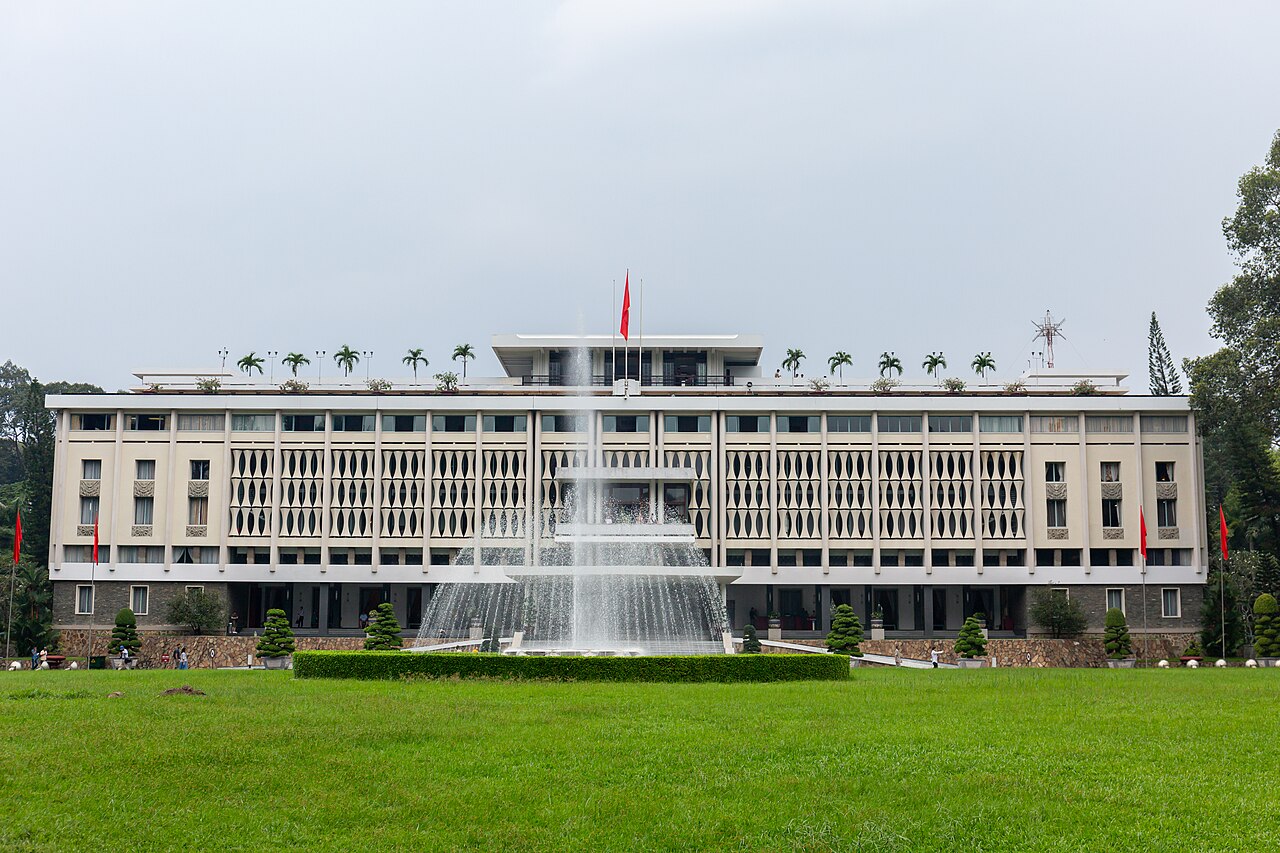
Pałac Niepodległości (wiet. Dinh Độc Lập), znany publicznie i oficjalnie także jako Hala Zjednoczenia lub po prostu Hala Reunifikacji (wiet. Hội trường Thống Nhất), to zabytkowy obiekt i publiczna hala należąca do państwa w Ho Chi Minh (dawnym Sajgonie), w Wietnamie. Zaprojektowany przez architekta Ngô Viết Thụ, był pałacem prezydenckim, domem i miejscem pracy prezydenta Republiki Wietnamu (Wietnamu Południowego). Był to również miejsce upadku Sajgonu 30 kwietnia 1975 roku, który zakończył wojnę wietnamską, gdy czołg Armii Wyzwolenia Wietnamu Południowego wjechał przez jego bramy.
Po zjednoczeniu Wietnamu budynek pełnił nadal funkcję siedziby rządu i prezydenta, aż do 1976 roku, kiedy stolicę Wietnamu Południowego oficjalnie przeniesiono do Hanoi, a funkcje rządowe przeniesiono wraz z nią. Obecnie pałac jest zachowany jako hala kongresowa na uroczystości państwowe, a także jako muzeum otwarte dla publiczności i popularna atrakcja turystyczna w Ho Chi Minh.
Tłumaczenie maszynowe artykułu „Independence Palace” w angielskiej Wikipedii, CC BY-SA 4.0.
Independence Palace zajmuje 468. miejsce na 8134 w rankingu rozpoznawalności zamków tego atlasu i 3. wśród 10 obiektów w Wietnamie. Data powstania — 1962 — jeden z 169 obiektów atlasu powstałych w XX wieku. Artykuły o tym obiekcie w Wikipedii otwarto 18 316 razy w ciągu ostatnich 60 dni — więcej niż 97% obiektów atlasu. Zobacz w statystykach zamków, jak wypada Wietnam.
Zobacz na interaktywnej mapie zamków →Najczęstsze pytania
Gdzie znajduje się Independence Palace?
Independence Palace znajduje się w Wietnamie, na współrzędnych 10.77705°, 106.69537°.
Z którego roku pochodzi Independence Palace?
Atlas podaje rok powstania: 1962. Wcześniejsze budowle mogły stać w tym miejscu — to najstarszy udokumentowany rok.
Które miejsce w rankingu zajmuje Independence Palace?
W rankingu rozpoznawalności tego atlasu: 468. miejsce na 8134, 3. miejsce w Wietnamie. Rozpoznawalność łączy liczbę wersji językowych Wikipedii z liczbą czytelników.
Independence Palace — który zamek leży najbliżej?
Royal Palace (Phnom Penh), około 211 km stąd.
Inne zamki w Wietnamie
- Cổ Loa Wietnam · III wiek p.n.e.
- Son Tay Ancient Citadel Wietnam · XIX wiek
- Citadel of Hai Duong Wietnam
- Citadel of Tuyen Quang Wietnam
Inne obiekty: pałace
- Pałac Kazimierzowski w Warszawie Polska · XVII wiek
- Pałac Letni Piotra I Rosja · XVIII wiek
- Pałac Ajuda Portugalia · XVIII wiek
- Zamek Dolny w Wilnie Litwa · XV wiek