Palace
Abbotsford House
 Scotland · 19th century
- Founded
- 1811
- Style
- Gothic architecture
- Heritage status
- category A listed building
- Location
- Scottish Borders
- Coordinates
- 55.59951°, -2.78212°
- Open data
- Wikidata Q246076
- Links
- Wikimedia Commons
Description
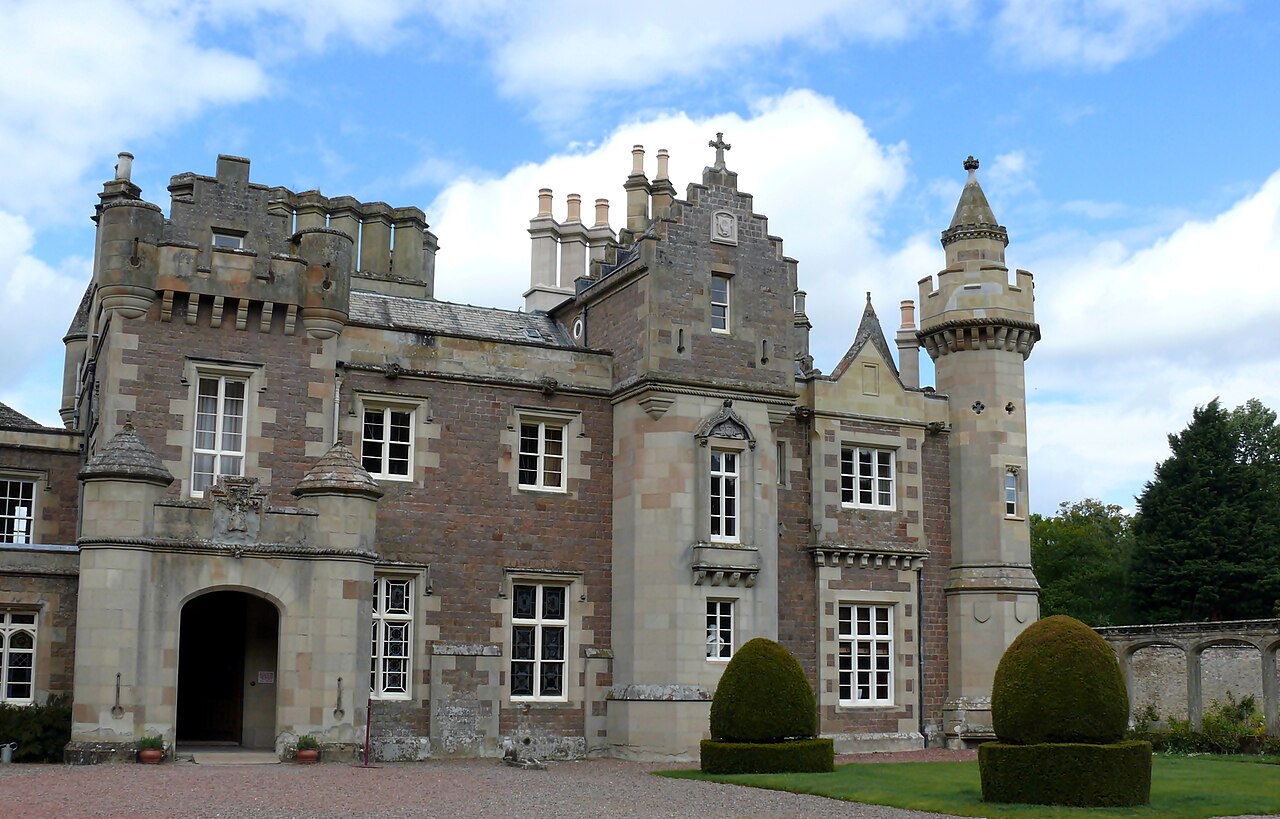
Abbotsford is a historic country house in the Scottish Borders, near Galashiels, on the south bank of the River Tweed. Now open to the public, it was built as the residence of historical novelist and poet Sir Walter Scott between 1817 and 1825. It is a Category A Listed Building and the estate is listed in the Inventory of Gardens and Designed Landscapes in Scotland.
The nucleus of the estate was a farm of 100 acres (0.40 km2), called Cartleyhole, nicknamed Clarty (i.e., muddy) Hole, and was bought by Scott on the lapse of his lease (1811) of the neighbouring house of Ashestiel. Scott renamed it "Abbotsford" after a neighbouring ford used by the monks of Melrose Abbey.
Following a modest enlargement of the original farmhouse in 1811–1812, massive expansions took place in 1816–1819 and 1822–1824. In this mansion Scott gathered a large library, a collection of ancient furniture, arms and armour, and other relics and curiosities especially connected with Scottish history, notably the Celtic Torrs Pony-cap and Horns and the Woodwrae Stone, all now in the Museum of Scotland. Scott described the resulting building as "a sort of romance in Architecture" and "a kind of Conundrum Castle to be sure".
The last and principal acquisition was that of Toftfield (afterwards named Huntlyburn), purchased in 1817. The new house was then begun and completed in 1824.
The general ground-plan is a parallelogram, with irregular outlines, one side overlooking the Tweed; and the style is mainly the Scottish Baronial. With his architects William Atkinson and Edward Blore Scott was a pioneer of the Scottish Baronial style of architecture: the house is recognized as a highly influential creation with themes from Abbotsford being reflected across many buildings in the Scottish Borders and beyond.
The manor as a whole appears as a "castle-in-miniature", with small towers and imitation battlements decorating the house and garden walls. Into various parts of the fabric were built relics and curiosities from historical structures, such as the doorway of the old Tolbooth in Edinburgh.
Scott collected many of these curiosities to be built into the walls of the South Garden, which previously hosted a colonnade of gothic arches along the garden walls. Along the path of the former colonnade sits the remains of Edinburgh's 15th century Mercat Cross and several examples of classical sculpture.
Text adapted from “Abbotsford, Scottish Borders” on Wikipedia, CC BY-SA 4.0.
In the rankings
Abbotsford House ranks #1,121 of 9,902 worldwide in the atlas's castle fame ranking, and #31 of the 252 mapped in Scotland. Founded 1811, it is older than 11% of the atlas's dated landmarks, one of 782 atlas entries founded in the 19th century. Its Wikipedia articles were opened 3,512 times in the last 60 days, more than 84% of the atlas. 10 more atlas landmarks stand within 25 km. The nearest day-trip guide is Edinburgh, 47 km away. See how Scotland compares in the castle statistics.
Castles nearby
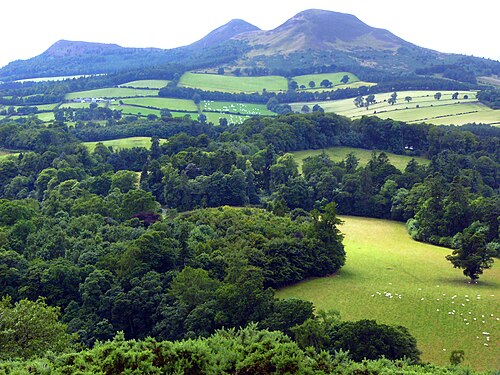
- Trimontium6 km · Scotland
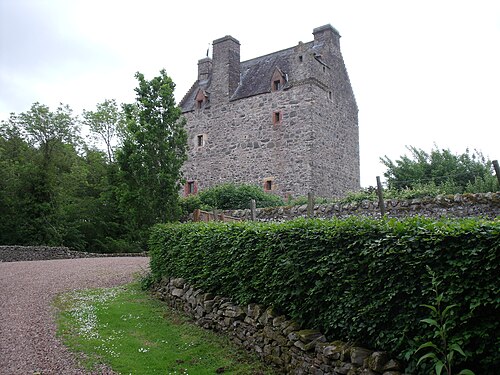
- Aikwood Tower12 km · Scotland
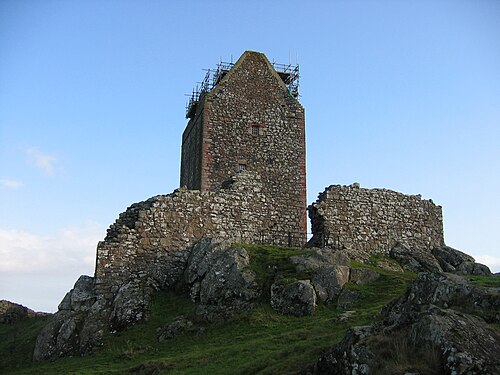
- Smailholm Tower13 km · Scotland
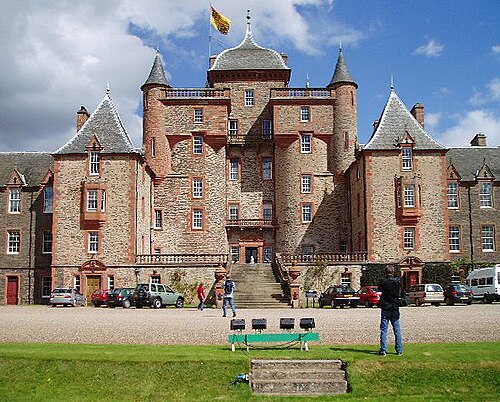
- Thirlestane Castle14 km · Scotland
More castles in Scotland
- Braemar CastleScotland · 17th century
- Scone PalaceScotland · 19th century
- Blair CastleScotland · 13th century
- Craigmillar CastleScotland · 14th century