 Austria · 13th century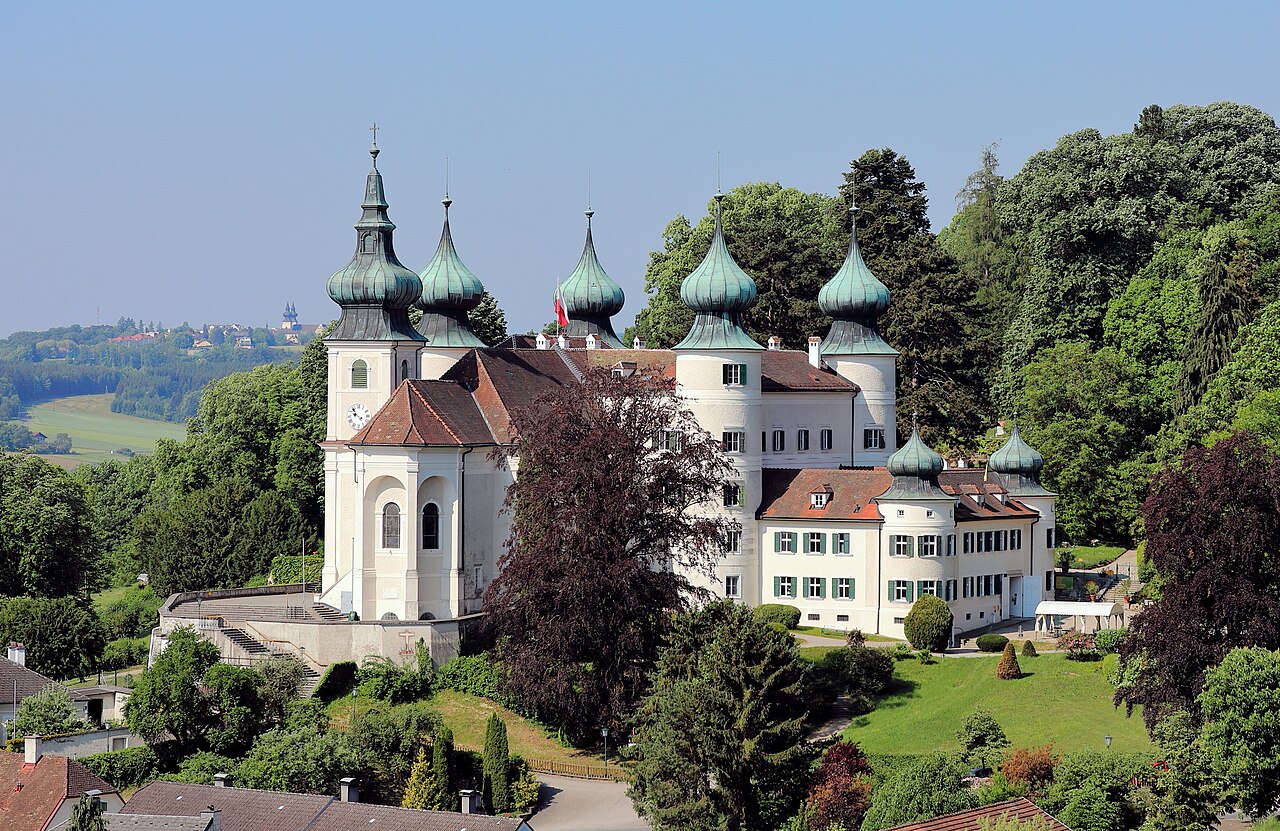
Artstetten Castle (German: Schloss Artstetten, pronounced [ˌʃlɔs ˈaʁtʃtɛtn̩]) is a historic Schloss near the Wachau valley in Lower Austria, in the municipality of Artstetten-Pöbring. It is the final resting place of Archduke Franz Ferdinand of Austria and Sophie, Duchess of Hohenberg, whose assassinations were the immediate cause of World War I.
Artstetten Castle was owned by a number of families over the centuries until it was purchased in 1823 by Emperor Francis I of Austria. In 1852, Archduke Franz Karl of Austria became the owner, then he gave it in 1861 to his third son, Archduke Karl Ludwig of Austria. In 1889, the property was given to Archduke Franz Ferdinand of Austria, who made extensive renovations to the castle.
Formerly used as a summer residence by members of the Habsburg dynasty, the castle is now the final resting place of Archduke Franz Ferdinand and his morganatic wife Sophie, Duchess of Hohenberg, who were assassinated in 1914. Emperor Franz Joseph I refused to allow them to be interred in the traditional Imperial Crypt at the Capuchin Church, Vienna, because of their morganatic marriage. It also houses the Archduke Franz Ferdinand Museum.
After Konopiště Castle was confiscated by Czechoslovakia in 1921 as part of the confiscation of Habsburg properties under the Treaty of Saint-Germain-en-Laye, Arstetten became the Hohenberg family's primary residence. The castle remains their private property, and parts of the castle are open to the public for visits.
After the Anschluss in 1938, Nazi Germany deported the Hohenbergs to Dachau concentration camp for their anti-Nazi views and confiscated the castle. After the Vienna offensive, the Soviet occupation authorities allowed the residents of Arstetten to elect Duke Maximilian as their mayor, and the Republic of Austria formally returned the castle to the family in 1949, being unable to retain ownership as the Hohenbergs were not covered by the Habsburg Law.
After the death of Franz, Duke of Hohenberg in 1977, the property was deeded to his eldest child, Princess Anita of Hohenberg. The Anita Hohenberg Trust was set up in 2003, and she and her family manage the property.
The castle was selected as a main motif for a high-value euro collectors' coin, the Austrian 10 euro Castle of Artstetten commemorative coin, minted on 13 October 2004.
Text adapted from “Artstetten Castle” on Wikipedia, CC BY-SA 4.0.
Artstetten Castle ranks #697 of 9,079 worldwide in the atlas's castle fame ranking, and #16 of the 240 mapped in Austria. Founded 1253, it is older than 67% of the atlas's dated landmarks — one of 1080 atlas entries founded in the 13th century. Its Wikipedia articles were opened 11,826 times in the last 60 days, more than 95% of the atlas. 6 more atlas landmarks stand within 25 km. The nearest day-trip guide is St. Pölten, 31 km away. See how Austria compares in the castle statistics.
View on the interactive castle map →