 India
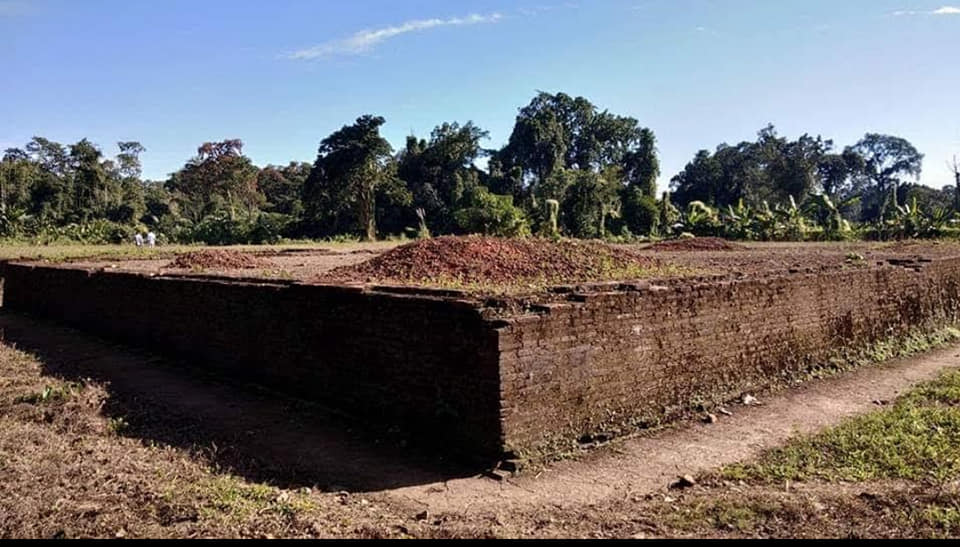
Bhismaknagar is an archeological site in Indian state of Arunachal Pradesh. It is located east of Roing in Lower Dibang Valley district. The remains are ascribed to the rule of the Chutias, a Tibeto-Burmese ethnic group, who ruled over the region of Sadiya from 11th to 16th Century CE. It formed part of the historical Sadhayapura capital region of the Chutia kingdom and can be identified with the fortified hill city of Doi-Thang described in the Buranjis. Doi-Thang (also known as Thanggiri), was one of the three fortified cities mentioned in the Buranjis, the others being Barnagar (Che-lung in Tai) and Chandangiri (Doi-Chantan).
The original fort may have been associated with the line of hill-foot forts attributed to the Chutia king Gaurinarayan. According to the Chutia chronicles, Gaurinarayan, after consolidating his kingdom, “built a line of forts along the foot of the hills”, along with large tanks and temples. Excavations have yielded roof tiles and decorative finials, providing evidence for the use of tiled roofing in at least some structures within the fortified settlement. The discovery of kaolin pottery at Bhismaknagar has been interpreted as evidence of early cultural contact with China and the transmission of ceramic ideas into Northeast India.
Text adapted from “Bhismaknagar” on Wikipedia, CC BY-SA 4.0.
Bhismaknagar ranks #2,889 of 9,035 worldwide in the atlas's castle fame ranking, and #113 of the 223 mapped in India. Its Wikipedia articles were opened 1,235 times in the last 60 days, more than 56% of the atlas. See how India compares in the castle statistics.
View on the interactive castle map →