Castle
Börringekloster Castle
🇸🇪 Sweden · 18th century
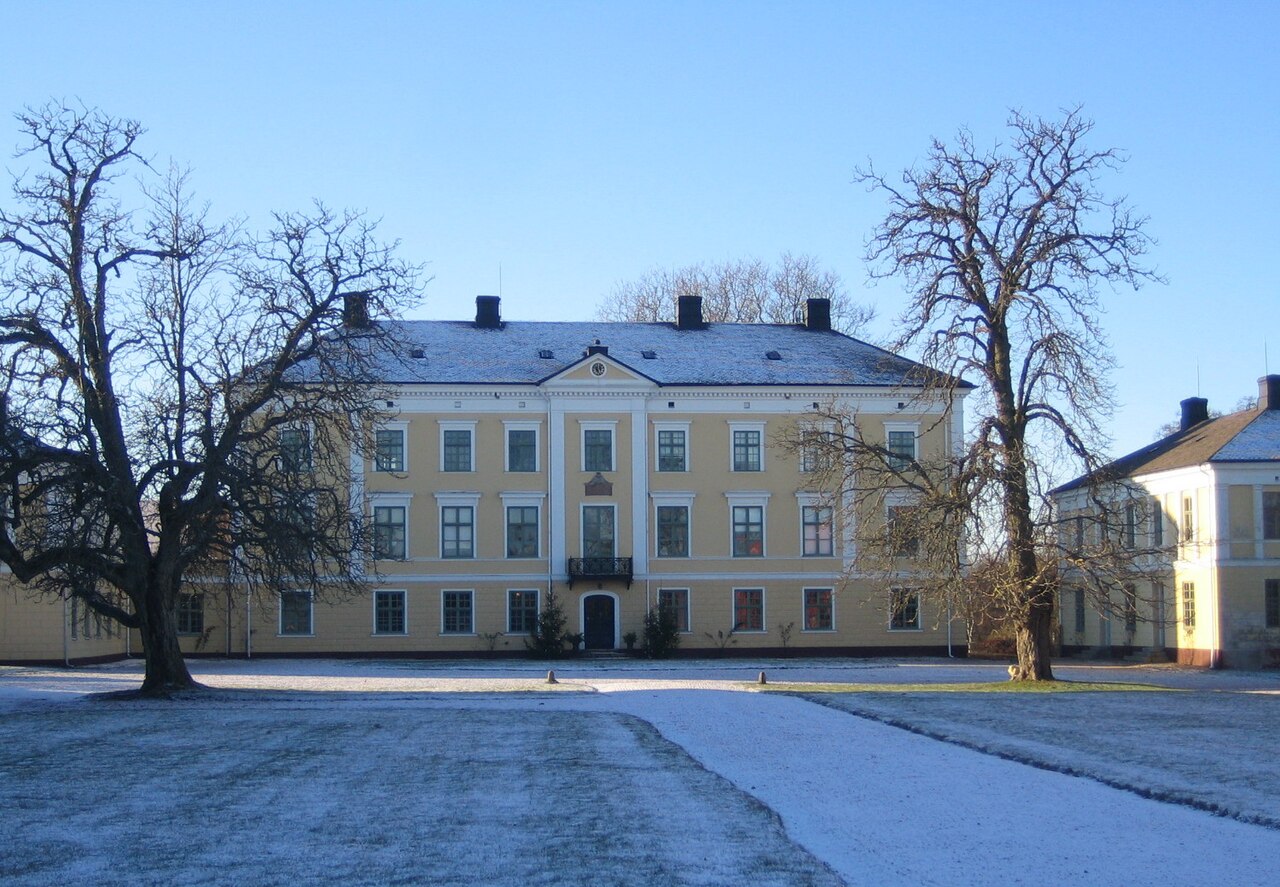
Börringe Priory (Swedish: Börringekloster), also known as Börringekloster Castle is a medieval Benedictine priory in Svedala in Scania, Sweden. Founded in 1150 when Scania was part of Denmark, the priory was secularized in 1536, the site was developed as a home for the Brahe family. The present large building, known as Börringeklosters slott, was built here in 1763.
The priory was founded about 1150 under Eskil, Archbishop of Lund, for Benedictine monks. However, by 1231 Börringe Priory is mentioned in Liber Census Daniae as a convent located on the island of Byrdingø in Börringe Lake, on land which Valdemar II of Denmark had once set aside for hunting. The church was dedicated to the Virgin Mary, and the convent was later also known as St. Mary's Priory.
The building complex began small, but with the income from donations of money and rent properties, the priory was able to expand into three ranges attached to the church forming a four-sided enclosure to separate the nuns from the world. The nuns slept in the dormitory, another range contained a refectory and cellars, and a third was used for laywomen who lived in the priory, often the unmarried daughters or sisters of noble families who lived a religious life but were not strictly bound by the vows the nuns took. Occasionally, a widow exchanged her worldly goods for the opportunity to live out her life at the priory which provided room and board until her death.
Housing these women was one source of income for the priory. Other income came from rent properties such as farms. While not specifically mentioned another common source of income was part of the tithes from nearby churches given by the Archdiocese of Lund for the maintenance of the nuns. Lastly the priory might also receive royal support in the form of rights to fishing grounds in Börringe Lake or landing rights for commerce over streams or rivers.
The priory was rebuilt over several decades during the 14th century in the Gothic style out of brick. Religious leadership and the internal running of the community was the responsibility of the prioress, while a prior, often a local noble who paid for the privilege, was responsible for representing the nuns in worldly affairs.
The kingdom of Denmark became Lutheran in 1536 under Christian III, a staunch Protestant.
Text adapted from “Börringe Priory” on Wikipedia, CC BY-SA 4.0.
Börringekloster Castle ranks #5,473 of 8,134 worldwide in the atlas's castle fame ranking, and #160 of the 206 mapped in Sweden. Founded 1763, it is older than 16% of the atlas's dated landmarks — one of 556 atlas entries founded in the 18th century. 15 more atlas landmarks stand within 25 km. The nearest day-trip guide is Malmö, 22 km away. See how Sweden compares in the castle statistics.
View on the interactive castle map →Frequently asked questions
Where is Börringekloster Castle?
Börringekloster Castle stands in Sweden, at 55.5069°, 13.3256°.
When was Börringekloster Castle built?
The atlas dates its founding to 1763. Earlier structures may have stood on the site; this is the earliest documented founding year.
How famous is Börringekloster Castle?
In this atlas's fame ranking: #5,473 of 8,134 worldwide, and #160 in Sweden. Fame here combines how many Wikipedia language editions cover a landmark with how many people read them.
What is the nearest castle to Börringekloster Castle?
Lindholmen Castle, about 2 km away.
More castles in Sweden
- Örup Castle Sweden
- Elghammar Castle Sweden · 19th century
- Klågerup Castle Sweden · 18th century
- Koberg Castle Sweden
More castles
- Castle of Montesa Spain · 13th century
- Castle of Xinquer Spain
- Castle of Zafra (Badajoz) Spain · 15th century
- Castell de Llagostera Spain