 Slovenia · 13th century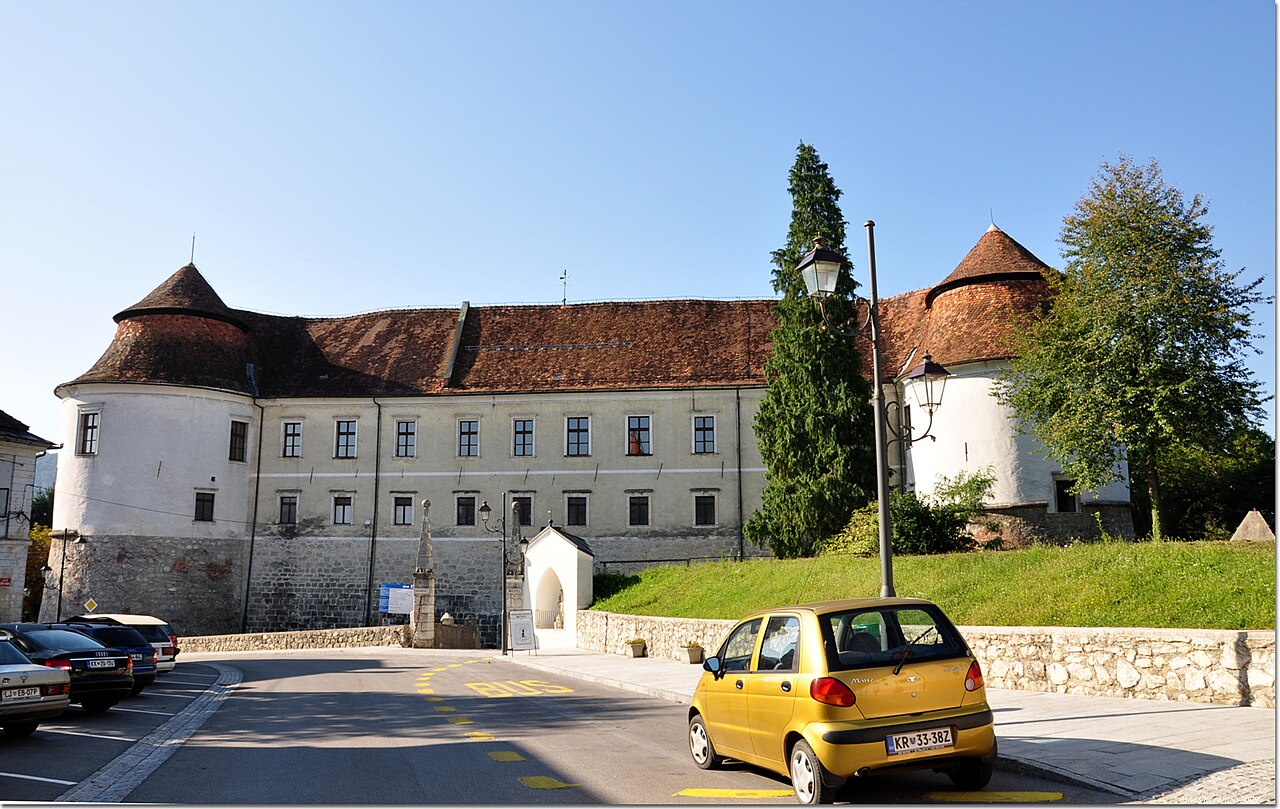
Brežice Castle (Slovene: Grad Brežice, German: Schloss Rann) is a 16th-century castle in the town of Brežice, in southeastern Slovenia, at the street address Cesta prvih borcev 1.
As with the town, the castle's name derives from the diminutive plural of the Slovene word breg, 'riverbank', in reference to the nearby Sava and Krka rivers.
A wooden fortification was present at the site long before 1241, when Brežice (then known as Gradišče) was first mentioned. A castrum was first recorded in 1249; the predecessor of the current castle, it was probably built during the late 12th century, when Brežice became the administrative and economic center of the Bishopric of Salzburg's holdings in the Lower Sava Valley. In addition to a garrison, the castle hosted a mint and judicial chambers. The castle was then known by the German name Rain, as was the surrounding settlement (also meaning 'riverbanks').
In 1479, the Brežice area was caught up in a war between the Emperor Frederick III of Habsburg and Hungarian King Matthias Corvinus; the king's forces took the castle from the Bishopric of Salzburg and occupied it until a peace treaty was signed in 1491, at which point it was transferred to the Habsburgs.
During the great peasant revolt of 1515, local Carniolan nobility appealed for help to the ban of Croatia, who dispatched a force under the knight Marko of Klisa. En route, the knight captured some 500 wives and children of the rebellious peasants and sold them into slavery in the Croatian Littoral. A force of 900 peasants subsequently gathered at Brežice, awaiting Sir Marko, who burned down the town before retreating into the castle, which the enraged rebels then stormed, killing him and his retainers before burning it.
The castle was under repair until 1528, when it again burned down. Due to the intensification of Turkish raids, the Habsburgs now began a rapid building program, intended to fortify the Border March. On 22 January 1529, emperor Ferdinand I approved an outlay of 3,000 florins for the construction of a new castle and the fortification of the town. Between 1530 and 1551, Italian master builders demolished the ruins of the old castle and erected the principal elements of the current structure, four defensive towers connected by double defensive walls. The architects included Julio Dispatio of Meran.
Text adapted from “Brežice Castle” on Wikipedia, CC BY-SA 4.0.
Brežice Castle ranks #3,590 of 9,079 worldwide in the atlas's castle fame ranking, and #15 of the 50 mapped in Slovenia. Founded 1249, it is older than 71% of the atlas's dated landmarks — one of 1080 atlas entries founded in the 13th century. 12 more atlas landmarks stand within 25 km. The nearest day-trip guide is Zagreb, 31 km away. See how Slovenia compares in the castle statistics.
View on the interactive castle map →