 Portugal · 13th century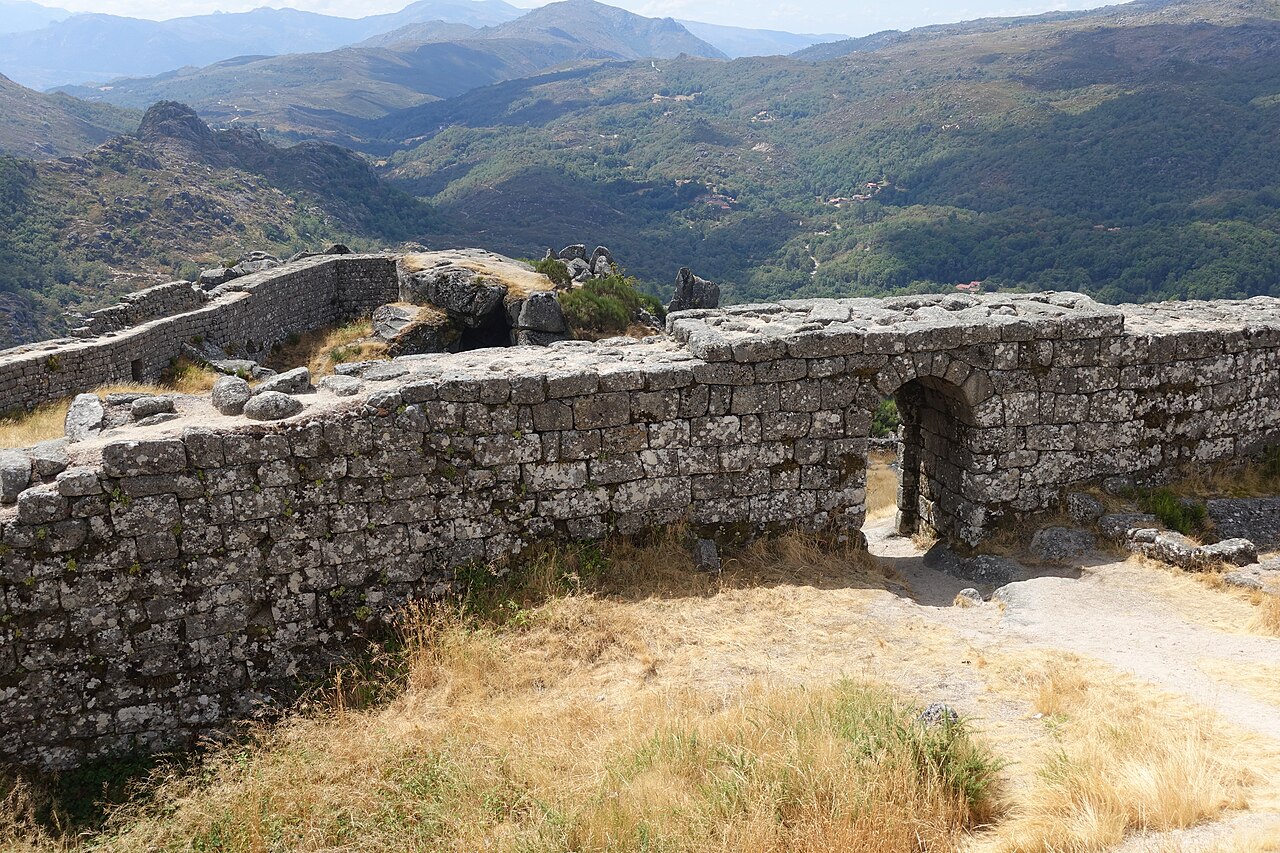
The Castle of Castro Laboreiro (Portuguese: Castelo de Castro Laboreiro) is a Portuguese castle in civil parish of Castro Laboreiro, in the municipality of Melgaço. It is the ruins of a Romanesque castle with a belt of walls around a central keep with a cistern.
In the 9th century, Alfonso III of Asturias, donated the settlement of Castro Laboreiro and the castro to Count Hermenegildo Gutiérrez, grandfather of Saint Rudesind, for his defeat of a rebel called Witiza. During the reign of the Galician count, the castro was adapted to a castle, but would eventually fall into the possession of the Moors.
In 1144, Afonso Henriques reconquered the redoubt, and from 1145 his forces began the task of restoring and expanding the defenses: it was Sancho I of Portugal who finally completed the project in the 12th century. The efforts were for not, as the Leonese raised the castle in 1212, during their invasion. In 1290, Denis of Portugal began the reconstruction, with emphasis on defense from its neighbors.
For many years Gomes de Abreu, of Merufe, was the alcalde of Laboreiro, and in 1375, King Fernando gave the alcaderia to Estevão Anes Marinho.
Following the conquest of Melgaço in the 14th century, King John used Castro Laboreiro to restrain various Castilian incursions from Galicia.
In 1441, the alcalde, Martim de Castro, was removed owing to protest from its residents.
From the drawings of Duarte das Armas around 1506, the castle had five rectangular towers surrounding the central keep, which was preceded by the cistern in the north. Another, unidentified, construction was erected to the south.
In a surprise attack, Baltazar Pantoja took the castle after four hours of skirmishes in May 1666. He left Governor Pedro Esteves Ricarte in charge of the citadel, until it was retaken by the 3rd Count of Prado, Francisco de Sousa.
The King, citing its historical importance, decided to conserve the castle, against the opinion of Michel Lescole. Following the restoration of peace, in 1715, the castle was decommissioned.
From 1746 to 1779, the Governor of Castro Laboreiro was Manuel de Araújo Machado, Count of Bobadela. Then Governor-at-Arms for the Province, he ordered the arrest at the castle of 400 men and women who had refused to present their children for military service in 1766-1778.
In 1801, troops occupied and defended the castle using four military pieces.
Text adapted from “Castle of Castro Laboreiro” on Wikipedia, CC BY-SA 4.0.
Castle of Castro Laboreiro ranks #4,902 of 9,035 worldwide in the atlas's castle fame ranking, and #70 of the 212 mapped in Portugal. Founded 1212, it is older than 74% of the atlas's dated landmarks, one of 1090 atlas entries founded in the 13th century. 3 more atlas landmarks stand within 25 km. The nearest day-trip guide is Braga, 57 km away. See how Portugal compares in the castle statistics.
View on the interactive castle map →