 Italy · 18th century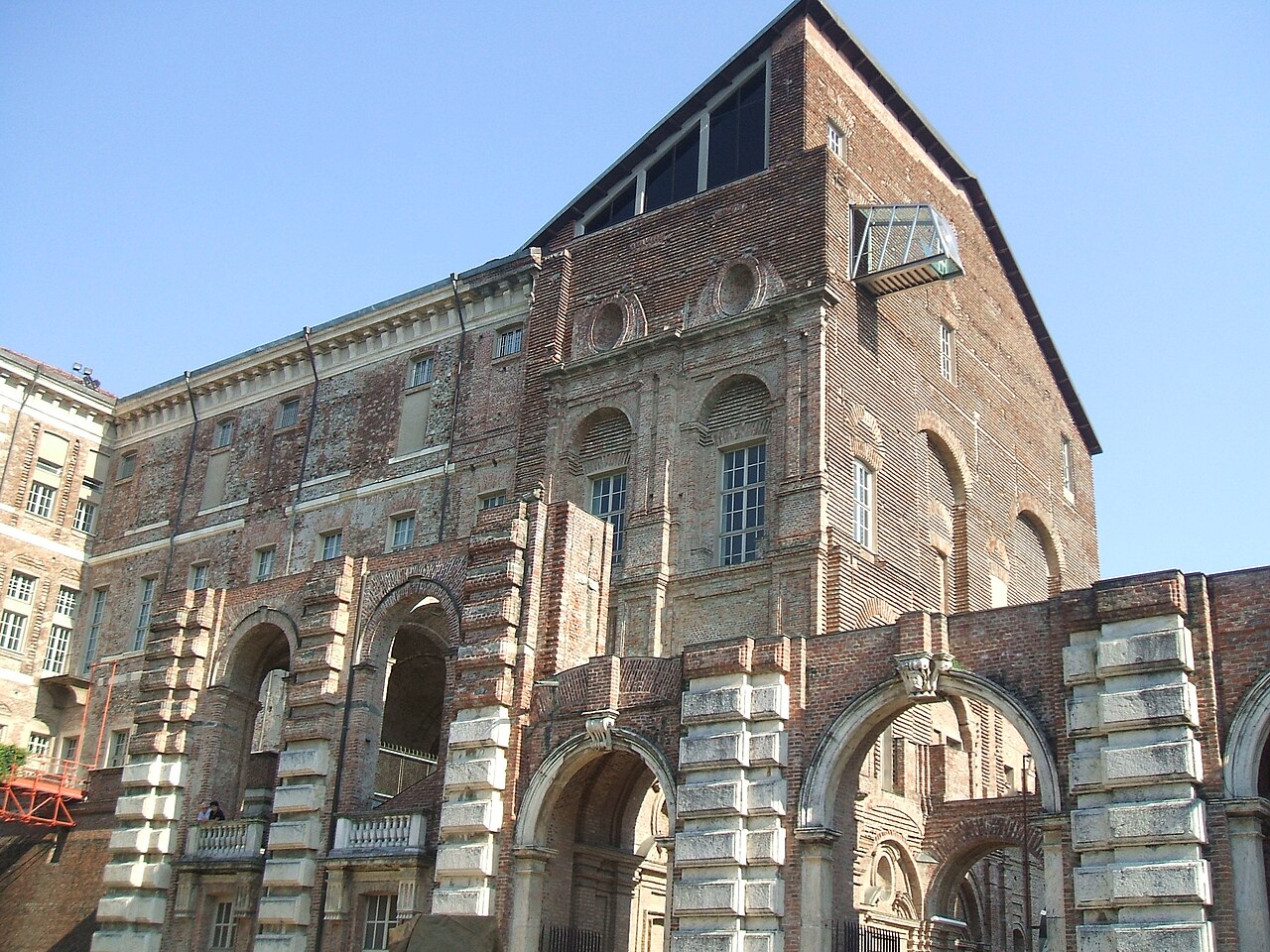
The Rivoli Castle is a former Residence of the Royal House of Savoy in Rivoli (Metropolitan City of Turin, Italy). It is currently home to the Castello di Rivoli – Museo d'Arte Contemporanea, the museum of contemporary art of Turin.
In 1997, it was placed on the UNESCO World Heritage Site list along with 13 other residences of the House of Savoy.
The castle was probably built in the 9th–10th centuries. Its existence is mentioned for the first time in 1159, in a diploma by Emperor Frederick Barbarossa that ceded the Rivolese territories to the bishops of Turin.
The House of Savoy acquired Rivoli in the 11th century. Soon afterwards, a feud began with the bishops, which in 1184 resulted in damage to the castle. In 1273 King Edward I of England visited, returning from crusade to England, he was met by the Count of Savoy's messengers before travelling on to Susa and the Mont Cenis on the way to visit Count Philip I at Saint-Georges-d'Espéranche.
In 1330 Amadeus VI of Savoy allowed the Consiglio dei Principi, which is the senior administrative council of the countryside, to occupy it. The castle was the first place of public veneration of the Shroud of Turin.
The castle then experienced a period of decline. In 1559, the Treaty of Cateau-Cambrésis forbade Emmanuel Philibert, Duke of Savoy from residing in Turin until he had a male child. He therefore resided in the Castle of Rivoli, having it restored by architect Ascanio Vitozzi. In 1562 his heir Charles Emmanuel I was born, and he returned to Turin. Works on Vitozzi's designs were brought on until 1644 under Carlo and Amedeo di Castellamonte, with the construction of the so-called Manica Lunga, intended to house the Savoy Gallery, the sole 17th-century part of the edifice still visible today. Numerous works of art were stolen by French troops in the following years.
At the beginning of the 18th century, the castle and the Manica Lunga were set on fire and sacked by the French, due to the War of the Spanish Succession. After the siege of 1706, Victor Amadeus II regained possession of the territories and ordered the restructuring of the damage suffered, first entrusting the work to Michelangelo Garove, who enlarged the "Manica Lunga", then, after his death, to Antonio Bertola.
Text adapted from “Rivoli Castle” on Wikipedia, CC BY-SA 4.0.
Castle of Rivoli ranks #1,089 of 9,079 worldwide in the atlas's castle fame ranking, and #81 of the 560 mapped in Italy. Founded 1718, it is older than 20% of the atlas's dated landmarks — one of 696 atlas entries founded in the 18th century. Its Wikipedia articles were opened 3,841 times in the last 60 days, more than 82% of the atlas. 10 more atlas landmarks stand within 25 km. The nearest day-trip guide is Turin, 13 km away. See how Italy compares in the castle statistics.
View on the interactive castle map →