Castle
Château Bayard
🇫🇷 France · 15th century
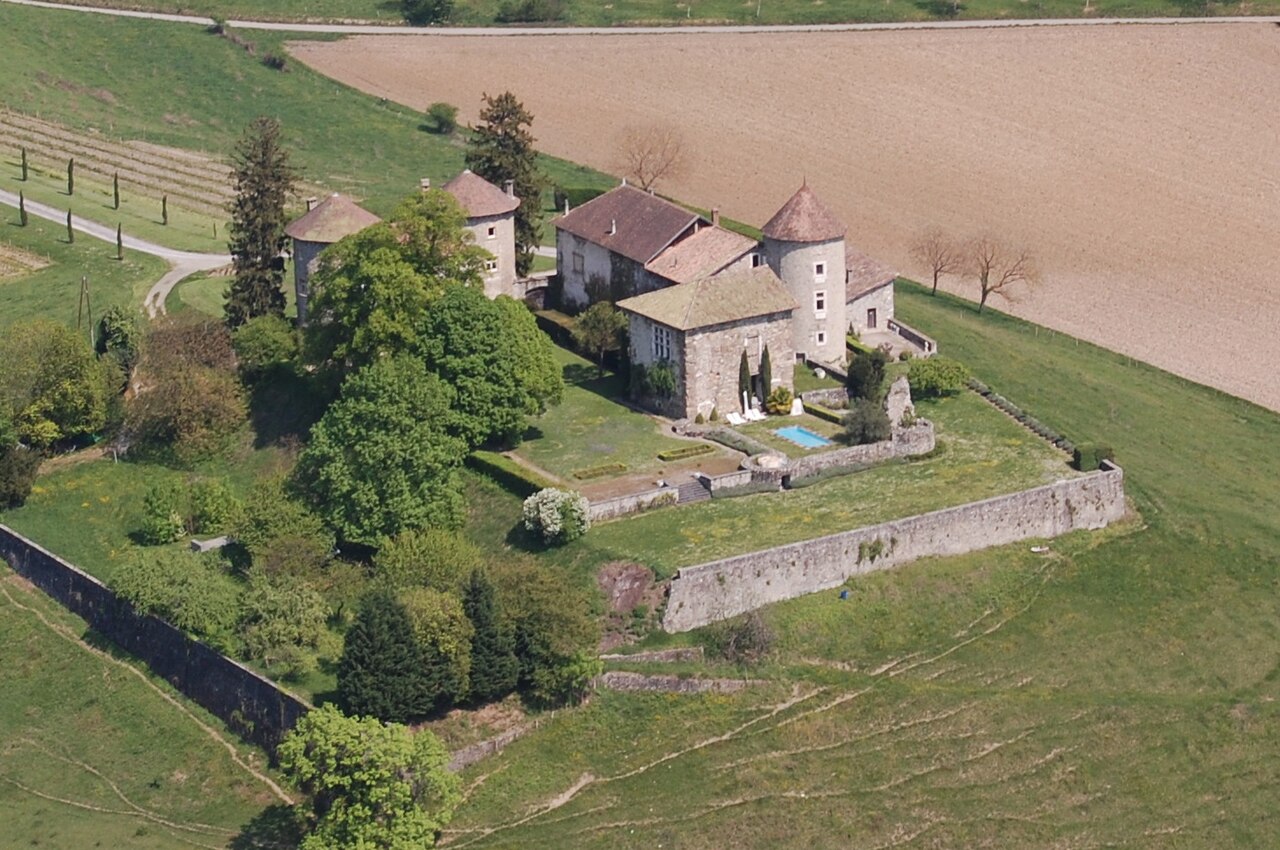
The Château Bayard is a castle in the commune of Pontcharra in the département of Isère (Rhône-Alpes, France), and dominates the valley of Grésivaudan in the Dauphiné Alps.
Château Bayard has been listed as a monument historique by the French Ministry of Culture since 1915.
The castle has housed the Bayard museum since 1975; it presents the life and the myth of Pierre Terrail, seigneur de Bayard, the famous "knight without fear and without reproach" (French: le chevalier sans peur et sans reproche).
Text adapted from “Château Bayard” on Wikipedia, CC BY-SA 4.0.
Château Bayard ranks #5,199 of 8,764 worldwide in the atlas's castle fame ranking, and #442 of the 675 mapped in France. Founded c. 1450, it is older than 49% of the atlas's dated landmarks — one of 490 atlas entries founded in the 15th century. Its Wikipedia articles were opened 1,432 times in the last 60 days, more than 59% of the atlas. 2 more atlas landmarks stand within 25 km. The nearest day-trip guide is Annecy, 54 km away. See how France compares in the castle statistics.
View on the interactive castle map →Frequently asked questions
Where is Château Bayard?
Château Bayard stands in France, at 45.42361°, 6.01889°.
When was Château Bayard built?
The atlas dates its founding to c. 1450. Earlier structures may have stood on the site; this is the earliest documented founding year.
How famous is Château Bayard?
In this atlas's fame ranking: #5,199 of 8,764 worldwide, and #442 in France. Fame here combines how many Wikipedia language editions cover a landmark with how many people read them.
What is the nearest castle to Château Bayard?
Château de Chambéry, about 18 km away.
More castles in France
- Château d'Apcher France · 11th century
- Château d'Apremont France · 16th century
- Château d'Argy France · 12th century
- Château d'Aubenas France · 13th century
More castles
- Château d'Éguilly France · 12th century
- Château de Bailleul France · 16th century
- Château de Balleure France
- Château de Bayac France · 14th century