 Belgium · 13th century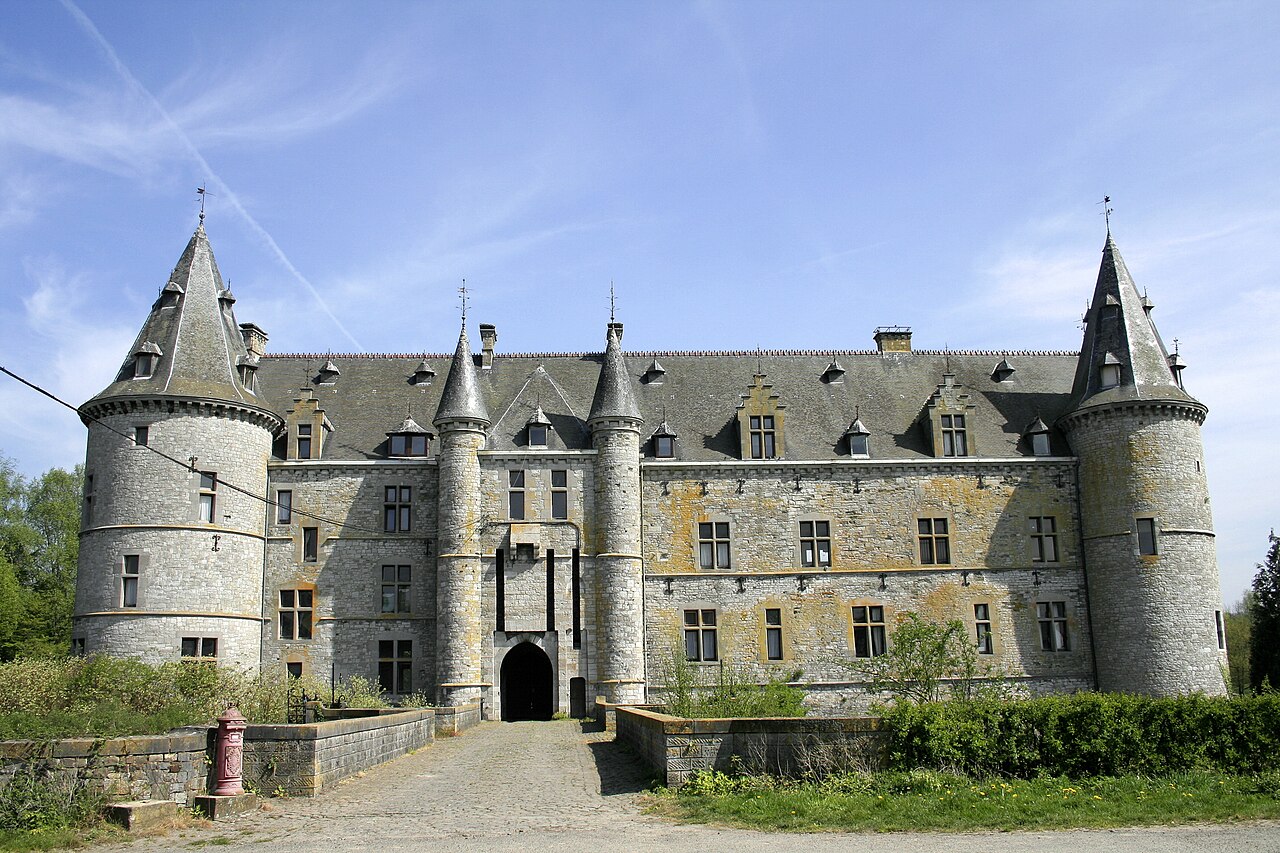
Château de Fallais (French pronunciation: [ʃato də falɛ], "Fallais Castle") is a castle originating in the 11th century in the ancienne commune of Fallais, municipality of Braives, Liège Province, Wallonia, Belgium.
The castle was built in the 13th Century by the Beaufort family. Twice the lords were involved in armed conflicts with the Prince-Bishopric of Liège. The first conflict was the so-called war of cows in the period of 1275–1278, fought between Guy I, Count of Namur, and John of Enghien, Prince-Bishop of Liege.
In 1458 Philip the Good, Duke of Burgundy, made his 18-year-old nephew, Louis de Bourbon, the Prince-Bishop of Liege. When Louis finished his studies and took on his duties in 1465, the First Liège War broke out when Louis was deposed by the citizens of the city of Liège. In October 1465, Louis met with his cousin, Charles the Bold (future Duke of Burgundy) at Château de Fallais. Charles then led the Burgundians to the Battle of Montenaken, where they routed the Liégeoise, suppressing the rebellion and ensuring the loss of autonomy of Liège until 1477.
Text adapted from “Château de Fallais” on Wikipedia, CC BY-SA 4.0.
Château de Fallais ranks #4,869 of 9,079 worldwide in the atlas's castle fame ranking, and #69 of the 128 mapped in Belgium. Founded c. 1250, it is older than 67% of the atlas's dated landmarks — one of 1080 atlas entries founded in the 13th century. 14 more atlas landmarks stand within 25 km. The nearest day-trip guide is Namur, 27 km away. See how Belgium compares in the castle statistics.
View on the interactive castle map →