Fortress
Fort de Loncin
🇧🇪 Belgium · 19th century
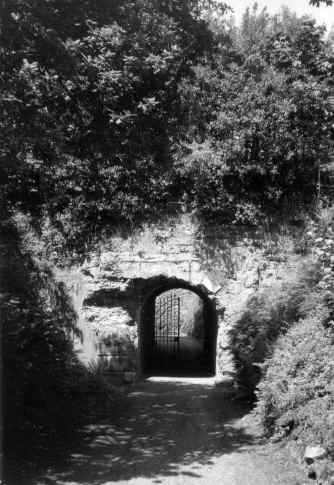
The Fort de Loncin (French pronunciation: [fɔʁ də lɔ̃sɛ̃]) is one of twelve forts built around Liège, Belgium, in the late 19th century. The overall Fortified Position of Liège was a constituent part of the country's National Redoubt. Fort de Loncin was constructed between 1881 and 1884 according to the plans of General Henri Alexis Brialmont. Contrasting with the French forts built in the same era by Raymond Adolphe Séré de Rivières, the fort was built exclusively of unreinforced concrete, a new material, rather than masonry.
The experimental nature of the new material, and the design features of the fort, led to unintended consequences in combat action. Weak concrete made the fort vulnerable to enemy artillery, while poor living conditions reduced the fort's ability to operate under fire.
The fort was destroyed during World War I in the Battle of Liège, when the fort's magazine was hit by a large-calibre German shell, killing most of the fort's occupants. The event marked the debut of the Big Bertha howitzer in combat. Relatively few of the dead were recovered; the site is now a military cemetery. The fort was never reused.
Text adapted from “Fort de Loncin” on Wikipedia, CC BY-SA 4.0.
Fort de Loncin ranks #3,054 of 8,134 worldwide in the atlas's castle fame ranking, and #31 of the 92 mapped in Belgium. Founded 1881, it is older than 5% of the atlas's dated landmarks — one of 607 atlas entries founded in the 19th century. Its Wikipedia articles were opened 2,918 times in the last 60 days, more than 75% of the atlas. 24 more atlas landmarks stand within 25 km. The nearest day-trip guide is Liège, 7 km away. See how Belgium compares in the castle statistics.
View on the interactive castle map →Frequently asked questions
Where is Fort de Loncin?
Fort de Loncin stands in Belgium, at 50.67472°, 5.49194°.
When was Fort de Loncin built?
The atlas dates its founding to 1881. Earlier structures may have stood on the site; this is the earliest documented founding year.
Is Fort de Loncin a UNESCO World Heritage Site?
Yes — it is part of a UNESCO World Heritage Site, per its Wikidata entry.
How famous is Fort de Loncin?
In this atlas's fame ranking: #3,054 of 8,134 worldwide, and #31 in Belgium. Fame here combines how many Wikipedia language editions cover a landmark with how many people read them.
What is the nearest castle to Fort de Loncin?
Fort de Lantin, about 3 km away.
More castles in Belgium
- Fort de Fléron Belgium · 19th century
- Fort de Chaudfontaine Belgium · 19th century
- Fort d'Évegnée Belgium · 19th century
- Kasteel Wissekerke Belgium · 15th century
More fortresses
- Fort Warren United States · 19th century
- Sutter's Fort United States · 19th century
- Naldurg Fort India
- Madh Fort India · 17th century